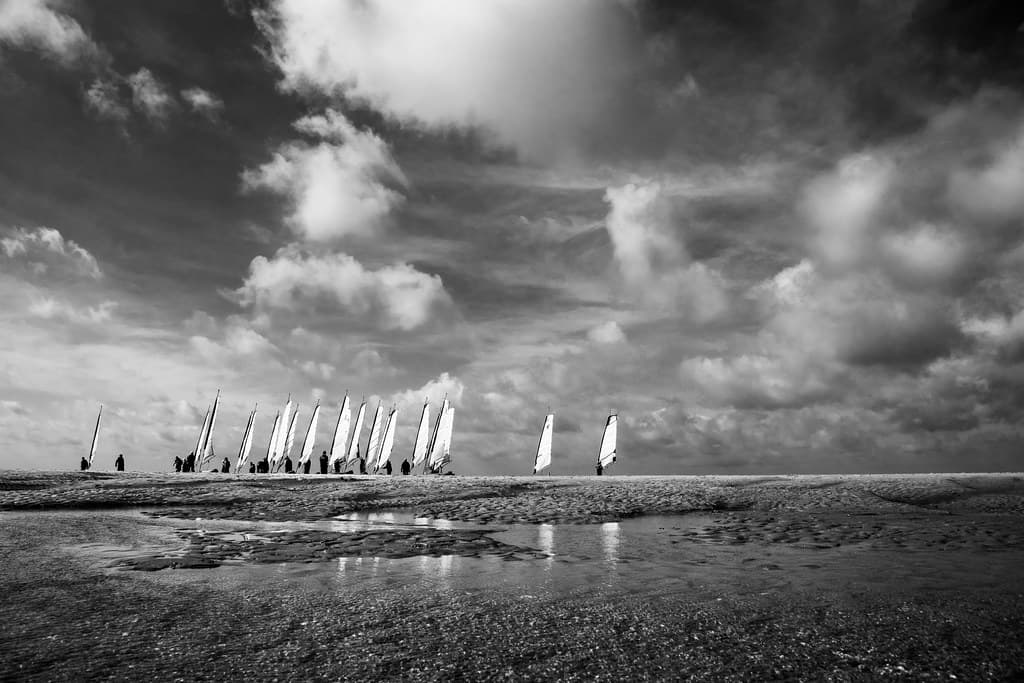
Counting the waves…
Counting the waves…

Fort-Mahon sits at the elbow where the Somme Bay curves toward the cliffs of Picardy, a stretch of blonde sand backed by dunes that ripple south toward Le Touquet. When low tide pulls the sea back, the beach becomes an enormous terrace of hard-packed sand, wide enough that the nearest beachgoers look like distant punctuation marks. The wind rarely stops here—this is the Hauts-de-France coast, where weather sweeps in unobstructed from the Channel—but locals have made peace with it, lining the sand with cheerful striped cabanas that shudder and creak in the gusts. The beach shifts personality with the seasons. Summer brings Parisian and Belgian families who colonize the sand with windbreaks and folding chairs, their children digging moats that fill when the tide races back across the flats. Autumn turns the light pewter and draws surfers who paddle out into the shore break, wetsuits dark against foam. Even January sees walkers bundled against the cold, collecting razor clam shells and watching sanderlings skitter along the waterline. Fort-Mahon refuses to be quaint. The town behind the dunes is functional, built for vacation practicality rather than postcard charm—supermarkets, crêperies, surf shops selling boogie boards and kites. But the beach itself, that broad sweep of sand beneath an enormous sky, holds the kind of unvarnished beauty that doesn't require curation. You come here not for what's been built, but for what remains: space, wind, and a shoreline that feels accountable only to the tide tables.
Places, rentals, tours and events within walking and driving distance of Plage de Fort-Mahon-Plage.
Photos
Plage de Fort-Mahon-Plage is generally safe for swimming during summer months when lifeguards are on duty. The beach features supervised swimming zones marked by flags. Pay attention to flag warnings: green indicates safe conditions, orange means caution, and red prohibits swimming. The Atlantic currents can be strong, especially during high tide, so stay within designated areas. Rip currents occasionally occur, so inexperienced swimmers should remain cautious. The beach's gentle slope makes it suitable for families with children, though supervision is always recommended.
July and August offer the warmest weather with temperatures reaching 20-24°C, ideal for beach activities and swimming. June and September provide pleasant conditions with fewer crowds and comfortable temperatures around 18-20°C. The beach remains accessible year-round for walks and sunset viewing. Spring can be windy but attracts surfers and kite enthusiasts. Winter visits offer dramatic seascapes and peaceful strolls, though swimming isn't recommended. For family beach holidays with full amenities and lifeguard supervision, visit between mid-June and early September when facilities are fully operational.
Fort-Mahon-Plage is accessible by car via the D940 from Abbeville (30km) or the A16 motorway from Paris (approximately 2.5 hours). Several free and paid parking areas are located near the beach along Avenue de la Plage and surrounding streets. During peak summer season, arrive early as parking fills quickly. The nearest train station is Rue, about 8km away, requiring a taxi or bus connection. Local buses operate seasonally. The beach is within walking distance from most accommodations in the town centre, making car-free visits feasible.
The beachfront promenade features numerous restaurants, cafés, and crêperies serving fresh seafood and traditional French cuisine. Beach clubs offer seasonal dining with ocean views. Essential amenities include public toilets, showers, and changing facilities near the main beach access points. Several shops sell beach equipment, snacks, and souvenirs. The town centre, a short walk inland, provides supermarkets, bakeries, and additional dining options. Hotels, holiday apartments, and campsites cater to various budgets. During summer, beach equipment rentals including chairs, umbrellas, and water sports gear are widely available.
Yes, Fort-Mahon-Plage is renowned for sand yachting (char à voile), with its vast, firm sand flats providing ideal conditions for this popular local activity. The beach's consistent winds and extensive low-tide zones create perfect terrain for both beginners and experienced sailors. Several clubs and schools offer lessons and equipment rentals during appropriate tide and weather conditions. Sessions typically operate during low tide when the beach expands significantly. This unique sport is a regional specialty of the Somme Bay area, making it a distinctive experience for visitors seeking adventure beyond traditional beach activities.