Counting the waves…
Counting the waves…
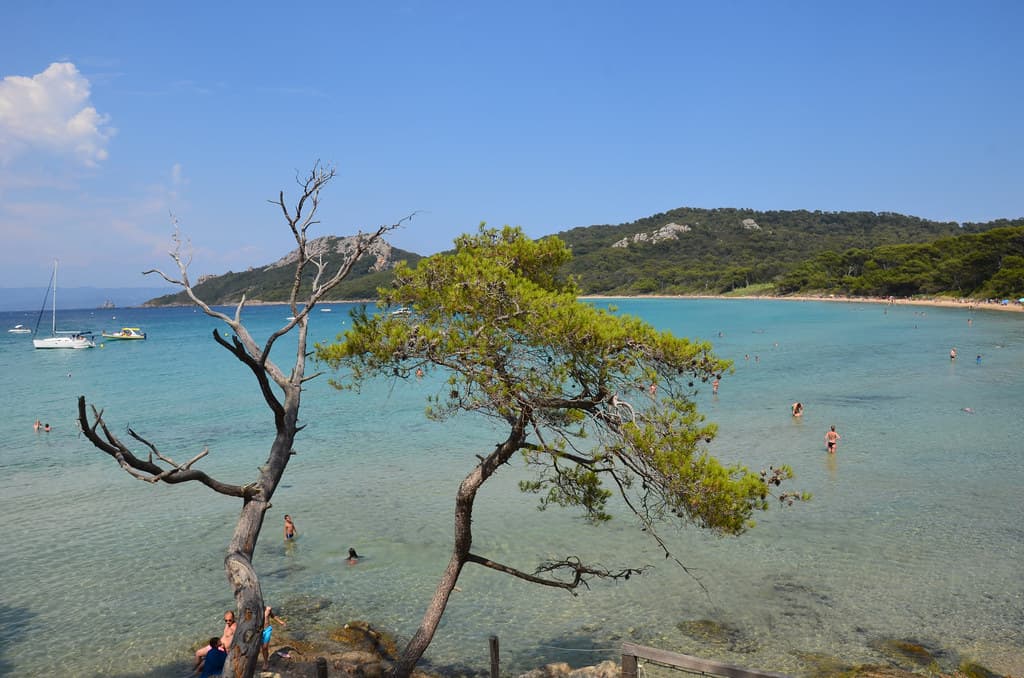
You leave the eucalyptus groves and vineyard tracks of northern Porquerolles behind, crossing the island's spine on a rutted path until the Mediterranean reappears—this time raw and undressed. Calanque de l'Indienne carves into the southern cliffs like a sculptor's afterthought, its narrow mouth guarded by boulders worn smooth by winter storms. The rocks glow rust and ochre in afternoon light, stained by iron oxide that bleeds into the water at the tideline. Entry demands commitment. You'll lower yourself from ledge to ledge, towel wedged under one arm, watching where the locals place their feet on algae-slick stone. Once in, the seabed drops fast—cobalt giving way to indigo—and shoals of saupes and girelles dart between submerged rocks crusted with violet sea urchins. The water holds the Mediterranean's summer warmth well into October, trapped in this stone bowl that never sees a beach umbrella or lounger. The wind funnels through the calanque from the southeast, carrying the scent of wild fennel and the distant thrum of sailboats rounding the Pointe du Grand Langoustier. A few sunbathers claim the flat rocks like seals, rotating to follow the light. There are no showers, no snack bars, no lifeguards—just the occasional yacht anchoring offshore and the rhythmic scrape of wavelets rearranging pebbles in the shallows.

Places, rentals, tours and events within walking and driving distance of Calanque de l'Indienne.
Photos
Swimming at Calanque de l'Indienne is generally safe in calm conditions, with stunning turquoise waters ideal for snorkeling. The southern exposure means this cove can experience stronger winds and waves than northern beaches, particularly with mistral or southerly conditions. The rocky entry requires careful footing—water shoes are recommended. There are no lifeguards at this remote location. Check weather forecasts before visiting, as conditions can change quickly. The sheltered cove shape provides some protection, but always assess wave conditions before entering the water and swim within your comfort level.
Visit during May-June or September-early October for pleasant weather with fewer crowds and calmer seas. Summer months (July-August) bring more visitors but also the warmest water temperatures. Early morning visits offer the calmest conditions and best light for photography of the turquoise waters. The southern exposure means afternoon sun, making it warm later in the day. Avoid periods with strong southerly winds or mistral conditions when the sea becomes rough. Weekdays are significantly quieter than weekends. Spring and autumn provide ideal hiking temperatures for reaching this more remote cove.
First, take a ferry to Porquerolles from Tour Fondue in Giens (about 20 minutes). From Porquerolles village, Calanque de l'Indienne is on the southern coast, requiring a hike of approximately 5-6 kilometers through Mediterranean forest and coastal paths. The walk takes roughly 1.5-2 hours and includes some uneven terrain. Alternatively, rent a bike in the village (about 30-40 minutes cycling, though some paths may require walking the bike). The trail is marked but more rugged than routes to northern beaches. Some visitors arrive by private boat when sea conditions permit.
Calanque de l'Indienne is completely undeveloped with no facilities whatsoever—no restaurants, shops, toilets, or shade structures. This is a wild, natural cove within the protected island environment. Bring all supplies including food, plenty of water, sun protection, and portable shade. The nearest services are in Porquerolles village, 5-6 kilometers away. Pack out all trash to preserve the pristine environment. Given the distance and lack of facilities, prepare a full day pack with everything needed. All accommodations are in Porquerolles village or on the mainland.
Calanque de l'Indienne showcases Porquerolles' wilder southern coastline with dramatic rocky formations and exceptionally turquoise waters, contrasting with the gentler sandy northern beaches. The cove's remote location and challenging access mean it attracts fewer visitors seeking a more adventurous, untouched experience. The rugged Mediterranean landscape surrounding the calanque offers stunning scenic beauty and excellent snorkeling among rocks and clear waters. Its southern exposure provides different coastal character—more dramatic and exposed than the sheltered northern bays. The sense of discovery and natural preservation makes it special for hikers and nature enthusiasts.