

Follow the coastal path east from the Port-Cros harbor for ten minutes, past the stone fortifications and through a corridor of holm oak that smells of iodine and wild thyme, and you'll drop into a cove barely wider than a tennis court. Plage de la Fausse Monnaie is all stone—round cobbles the size of your fist, gray and rose and ochre, smoothed by centuries of wave action. There's no sand to speak of, so you'll want a towel thick enough to cushion the rocks, but the discomfort is minor currency for the solitude.
“The national park's strict protection means fish approach within arm's reach, fearless and abundant.”
 Credit: Unsplash
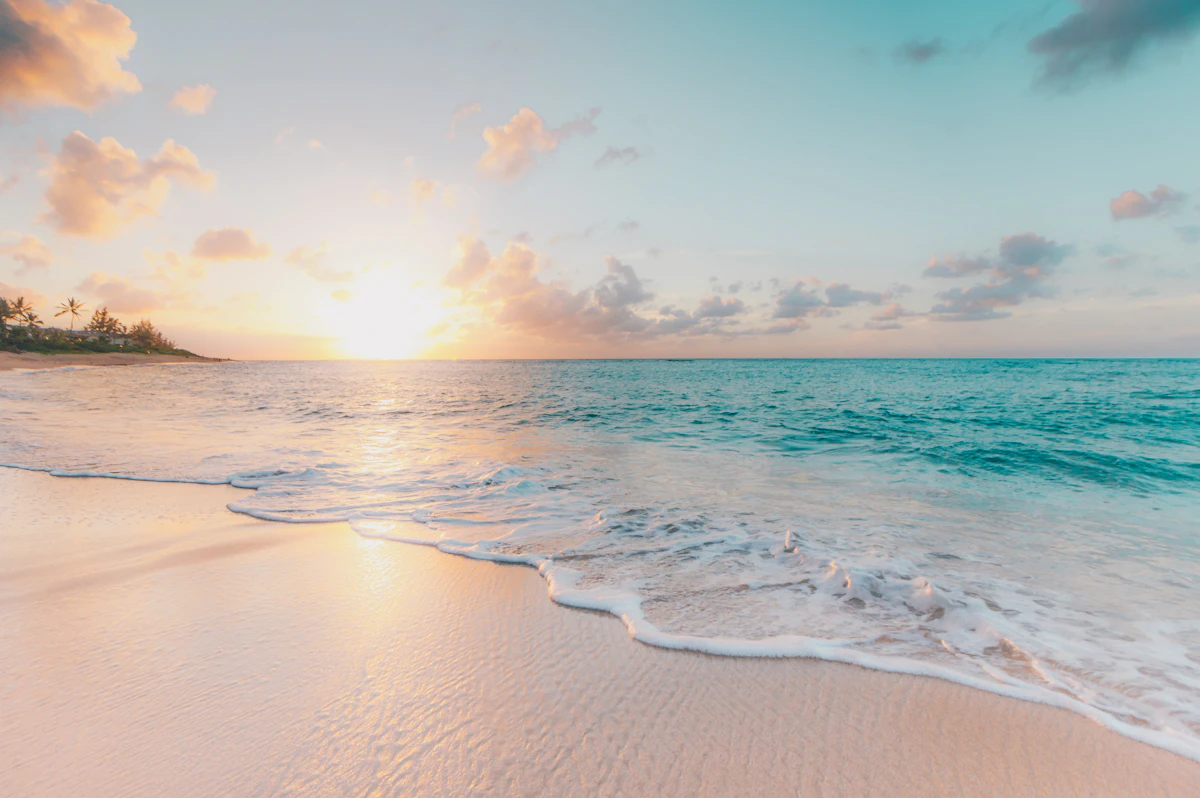
Aerial view of turquoise tropical bay
The water is absurdly clear, the kind of visibility that makes you forget you're looking through liquid. Schools of saupes and girelles patrol the rocks just offshore, and if you swim out twenty meters with a mask, you'll find yourself above a sloping meadow of posidonia where sea urchins nestle in the crevices and octopuses hide beneath ledges. The national park prohibits fishing here, and the marine life has grown bold—damselfish hover inches from your mask, unbothered.
Because the beach faces southeast, it catches morning sun but falls into shadow by mid-afternoon when the island's ridge blocks the light. The stones radiate stored heat even as the shade creeps across the cove, and the water remains warm enough for long floats. A few mooring buoys bob offshore, occasionally hosting a sailboat whose crew dives in for a swim before motoring on to busier anchorages, leaving you to the rocks and the fish.


