
Counting the waves…
Counting the waves…

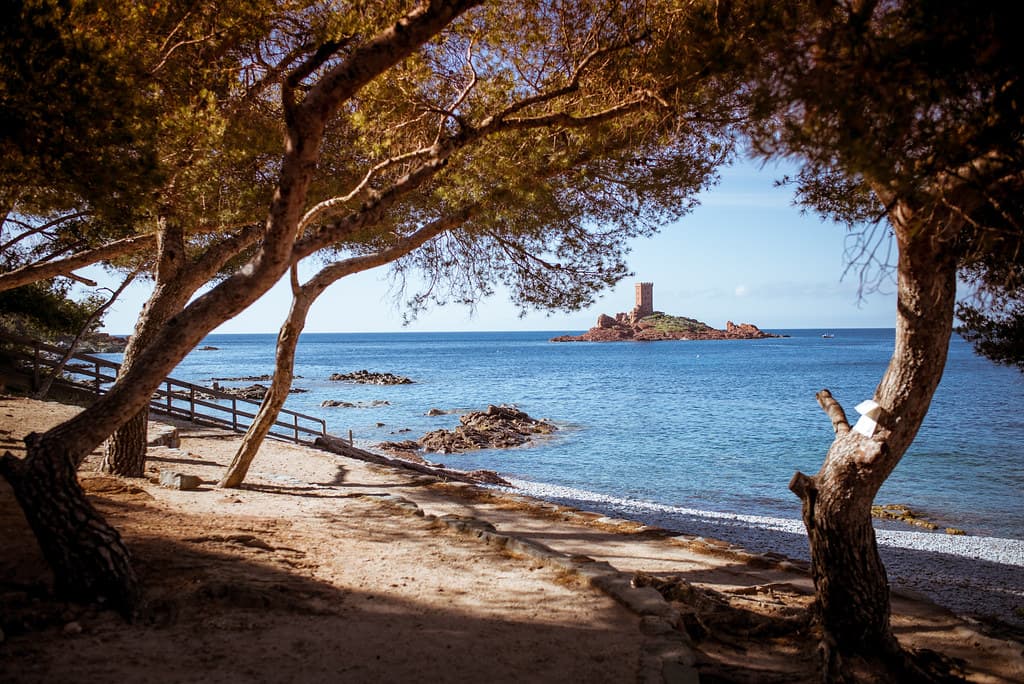
The beach announces itself not with sand but with smooth, liver-colored pebbles that click underfoot like worry beads. Above, the Estérel massif erupts in jagged rhyolite towers—volcanic remnants that glow burnt sienna in the afternoon light. You wade in over rounded stones that massage your soles, the water so transparent you count individual rocks three meters down. Snorkelers fin along the eastern outcrop where damselfish dart between rust-stained boulders and sea grass sways in the gentle current. The seabed slopes gradually, making this a favorite of local families who arrive with coolers and striped parasols, settling in for hours of unhurried swimming. By mid-morning the pebbles radiate enough heat to warm a damp towel in minutes. The railway viaduct arching overhead—nineteen stone arches built in 1903—frames the scene like a Renaissance painting. Trains rumble past every half-hour, passengers pressing faces to windows for a three-second glimpse of what you have all day. A single beach shack sells socca and citron pressé; otherwise you provision yourself from the Saint-Raphaël market and claim a spot where red rock meets blue water, the Côte d'Azur stripped of pretense.
Places, rentals, tours and events within walking and driving distance of Plage d'Anthéor.
Photos
Plage d'Anthéor is generally safe for swimming, though as a pebble beach, water shoes are recommended for comfortable entry. The beach's exposure to open water means conditions can vary with weather and wind, so check forecasts before swimming. Lifeguard presence may be limited compared to major beaches, requiring swimmers to use personal judgment. The clear waters offer good visibility for snorkeling around rocks. The pebble composition means less sand in the water but rockier footing. Families should supervise children carefully, especially on the pebbles and entering the water. The dramatic red-rock setting is beautiful but adds rocky terrain to navigate.
Plage d'Anthéor is naturally quieter than major resort beaches, making it pleasant even during summer months. However, for the least crowds, visit during May-June or September when weather remains good but tourist numbers decrease. Weekdays are significantly calmer than weekends throughout the season. Early mornings offer the most peaceful experience and best photography light on the distinctive red Estérel rocks. July-August see maximum visitors but the beach rarely feels overcrowded given its less commercial nature. Calmer sea conditions typically occur in mornings before afternoon winds develop, ideal for swimming and snorkeling. Off-season offers solitude but cooler water temperatures.
Plage d'Anthéor is located along the scenic Corniche d'Or coastal road between Saint-Raphaël and Théoule-sur-Mer. By car, follow the coastal road and look for signage to Anthéor beach; parking areas exist but can fill during summer, especially weekends. The beach is served by regional trains on the Nice-Marseille line, with Anthéor-Cap Rouet station very close to the beach, making it accessible without a car. Local buses also connect the area to Saint-Raphaël. The dramatic coastal setting means access involves some walking on uneven terrain. Arriving early ensures parking availability during peak season and better beach positioning.
Plage d'Anthéor has limited commercial development, with fewer facilities than major resort beaches. Small beachside establishments may offer basic refreshments during summer, but options are modest. Visitors often bring picnics to enjoy the scenic setting. The small Anthéor community has minimal restaurants and shops, with more extensive dining in nearby Agay or Saint-Raphaël. Accommodation in Anthéor itself is limited to vacation rentals and small properties. Most visitors stay in Saint-Raphaël or surrounding towns and visit for day trips. The quiet, undeveloped character is part of the beach's appeal for those seeking authentic, non-commercialized coastal experiences.
Plage d'Anthéor stands out for its dramatic backdrop of red Estérel volcanic rocks contrasting with blue Mediterranean waters, creating spectacular natural scenery. This geological setting distinguishes it from typical sandy Côte d'Azur beaches, offering distinctive photo opportunities and wild beauty. The beach maintains quieter, more authentic character compared to developed resort areas, attracting visitors seeking natural landscapes over tourist infrastructure. The pebble composition and rocky coastline provide excellent snorkeling conditions with clear water. The combination of striking red-rock formations, relative seclusion, and unspoiled coastal environment makes it special for nature lovers and those appreciating dramatic Mediterranean landscapes beyond typical beach resort experiences.