Counting the waves…
Counting the waves…
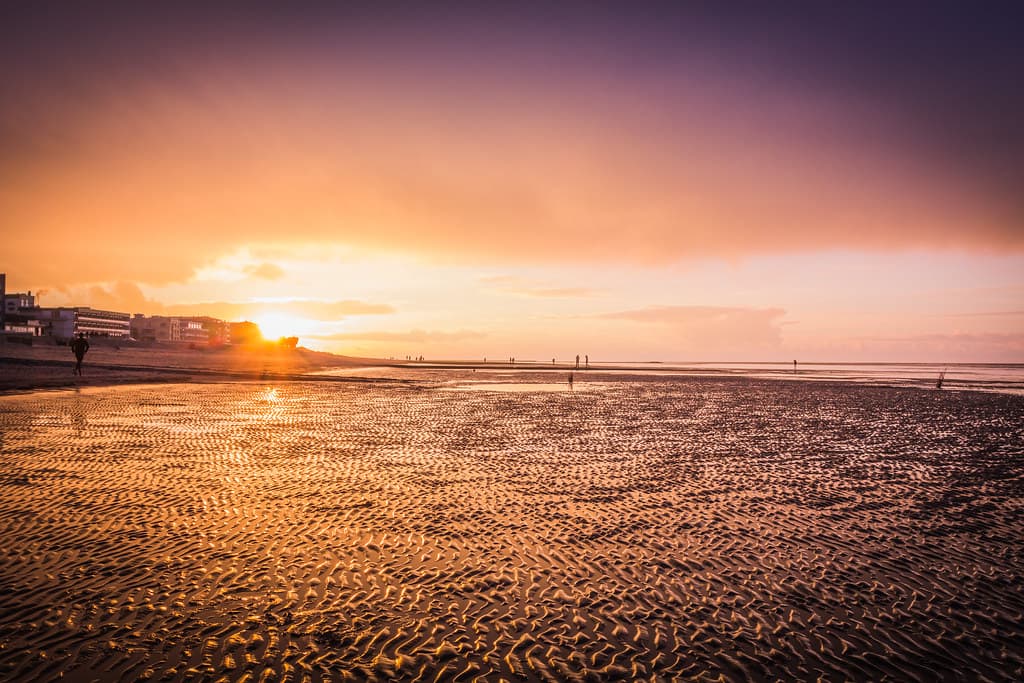
The dunes here don't simply frame the beach—they dominate it. Marram-topped ridges cascade thirty meters high in places, their seaward flanks ribbed by wind into geometries that shift weekly. Boardwalks snake through the dune valleys, offering access without erosion, leading you past scrub willow and sea buckthorn heavy with orange berries come autumn. Behind this coastal sculpture, the Wernerwald pines exhale resin-scented air, and the Duhner Heide heath blooms purple each August. The beach itself stretches wide and firm at low tide, the packed sand ideal for cycling or running toward the vanishing waterline. Families colonize the strand near the parking areas, but walk twenty minutes north and you'll find stretches occupied only by oystercatchers and the occasional seal hauled out on an offshore bank. The Wadden Sea UNESCO zone begins here, its ecological significance announced by interpretive signs and the sheer abundance of wading birds working the mudflats. Tide rhythms dictate everything. At flood, the North Sea advances purposefully, filling channels and covering sandbars until only a modest beach remains. At ebb, the world doubles in size—a vast gleaming plain appears, scored with rivulets and dotted with tide pools where shrimp dart between bladderwrack fronds. The horizon becomes ambiguous, water and sky merging in silvery indistinction.
Places, rentals, tours and events within walking and driving distance of Sahlenburg Beach.
Photos
Sahlenburg Beach is generally family-friendly and safe during high tide periods when water is present. Like all Wadden Sea beaches, swimming is only possible at high tide; low tide exposes extensive mudflats. Lifeguards supervise designated swimming areas during summer season. The beach slopes gently, making it suitable for children during high water, though adult supervision is essential. Strong currents are uncommon close to shore. The surrounding dune and heath landscape provides sheltered areas for play. Always check daily tide times before visiting, and stay within marked swimming zones where surveillance is provided during peak season.
For quieter visits, choose May, June, or September when weather remains pleasant but German school holidays haven't begun or have ended. Weekdays are consistently less busy than weekends year-round. Early mornings offer the most peaceful experience regardless of season. While July and August provide the warmest weather, they also bring peak crowds. Spring and autumn attract nature enthusiasts interested in bird migration and Wadden Sea ecology rather than sunbathing. Winter months see very few visitors but offer dramatic coastal scenery for walkers. Sahlenburg generally feels less crowded than neighbouring Duhnen throughout the season.
Sahlenburg lies about 5 km east of central Cuxhaven, easily reached by car in 10-15 minutes via Sahlenburger Straße. Parking areas are available near the beach access points. Public bus line 4 connects Cuxhaven train station to Sahlenburg regularly, with increased frequency during summer. The journey takes approximately 20 minutes. Cycling is popular, with dedicated bike paths through the coastal forest connecting Cuxhaven to Sahlenburg. Many visitors walk the scenic coastal path from Duhnen through the dunes (approximately one hour). Once in Sahlenburg village, the beach is well-signposted and accessible via several footpaths through the dune belt.
Sahlenburg village offers holiday apartments, guesthouses, and small hotels with a quieter, more residential character than Duhnen. Several restaurants and cafés serve regional North Sea cuisine, including fresh fish and local specialties. A beach café operates near the main beach access during warmer months. The village has a small supermarket for self-catering guests. Dining options are more limited than in Duhnen but adequate for a beach holiday. Many properties offer Frühstück (breakfast). For wider restaurant choice, nearby Cuxhaven centre is easily accessible. Advance booking is recommended for summer and holiday periods despite the quieter atmosphere.
Sahlenburg distinguishes itself through its natural setting between protected dune landscapes, coastal heath, and the Wadden Sea National Park. The Werner's Wood (Wernerwald) coastal forest directly behind the beach creates a unique microclimate and offers shaded walking trails uncommon at North Sea beaches. This beach feels more secluded and nature-oriented than resort-focused Duhnen. The surrounding area is excellent for birdwatching and observing Wadden Sea ecology. Sahlenburg maintains a quieter, village atmosphere while still providing essential amenities. The combination of sandy beach, dune systems, forest, and heath within close proximity creates diverse landscapes rare on Germany's North Sea coast.