Counting the waves…
Counting the waves…

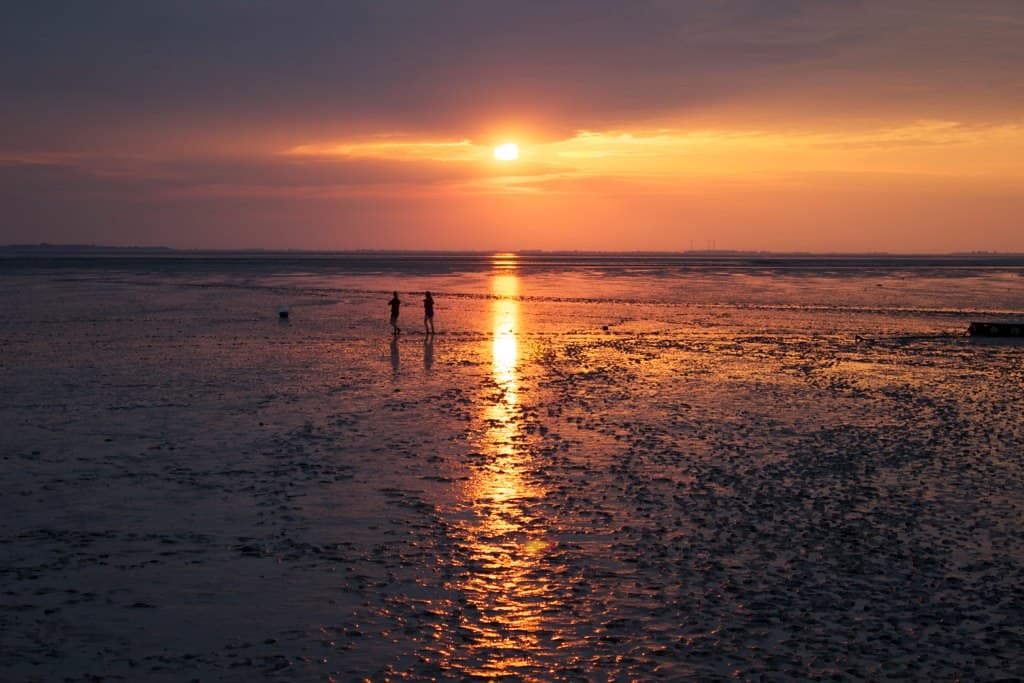
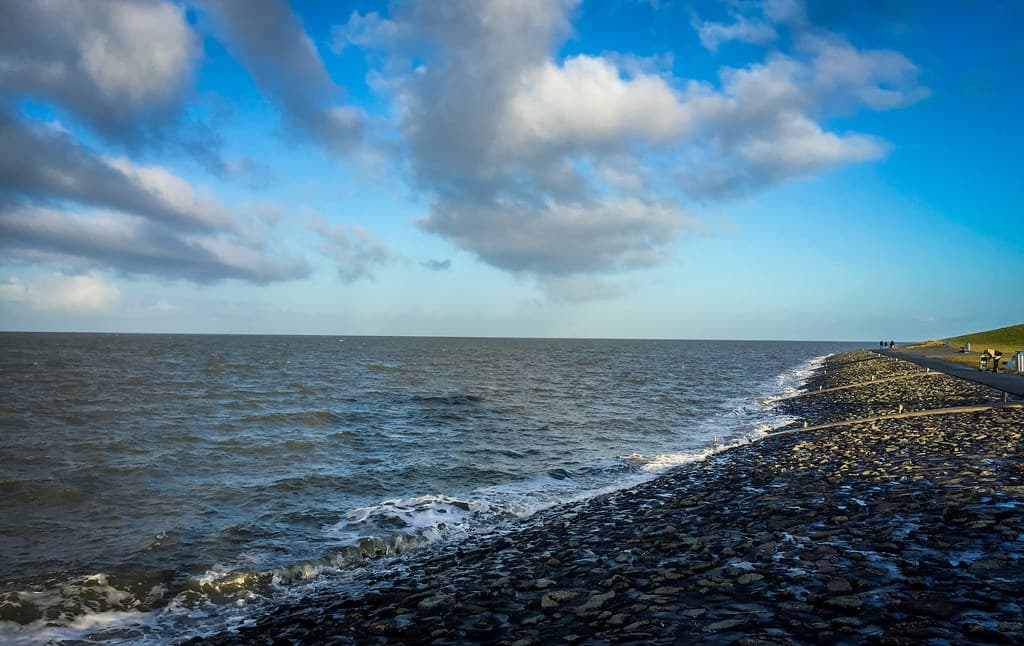
You descend wooden steps from the Kurpark to a beach that feels more estuary than ocean—Jade Bay's sheltered waters lap gently at sand mixed with shell fragments and bladder wrack. The artist colony atmosphere lingers in galleries lining Edo-Wiemken-Straße, where you browsed ceramics before heading seaward. Children wade in shallows warmer than the open North Sea, while you settle into a Strandkorb facing west, watching sailboats tilt in the afternoon breeze. The Kunstpfad—art path—winds along the dike, sculptures emerging from tall grasses: rusted steel forms, driftwood installations, a bronze heron mid-strike. You follow it south past the Kurhaus, its white facade unchanged since Weimar-era vacationers arrived by rail. At low tide, the bay drains to reveal mudbanks stippled with bird tracks, and you walk out in bare feet, the muck cool and giving, squishing between your toes. Evening brings the faithful to the beach wall with cameras and wine. The sun sinks behind Wilhelmshaven's distant cranes, painting the tidal flats copper and rose, the sky layered in peach and violet. You taste salt on your lips, hear the muted conversations of strangers become friends in the spectacle. When darkness finally comes, you wander back through the village, past lit studio windows where potters' wheels still spin.
Places, rentals, tours and events within walking and driving distance of Dangast Beach.
Photos
Dangast Beach on Jade Bay offers calmer waters than open North Sea beaches, making it relatively family-friendly. However, tidal variations still occur, so always supervise children closely and check tide times. During high tide, the shallow waters are suitable for paddling and supervised swimming. The sandy beach allows children to play safely, but be mindful of changing water levels. Lifeguard services may be limited, so always exercise caution.
Late spring through early autumn offers the best weather, with July and August being warmest but busiest. For fewer crowds with pleasant conditions, visit in May, June, or September. Weekdays are quieter than weekends year-round. High tide provides better beach experiences as low tide exposes extensive mudflats. Sunset visits are particularly rewarding thanks to Dangast's artistic heritage and scenic bay views. Winter attracts those seeking peaceful coastal walks.
Dangast is located near Varel in Lower Saxony, approximately 60 kilometers northwest of Bremen. By car, take the A29 autobahn then follow signs to Varel and Dangast. Regional trains serve Varel station, from where local buses connect to Dangast village, roughly 5 kilometers away. The beach is within walking distance of the village center. Parking is available near the beach promenade, though it can fill during peak summer weekends.
Dangast offers several restaurants and cafés along the beach promenade, serving fresh seafood, traditional German cuisine, and international dishes. The village's artistic character is reflected in cozy tea rooms and bistros. Accommodation ranges from family-run guesthouses to holiday apartments and small hotels with sea views. Nearby Varel provides additional dining and lodging options. Reservations are recommended during summer months and local events celebrating the village's artistic heritage.
Dangast became famous as an artists' colony in the early 20th century, attracting expressionist painters drawn to the unique coastal light and landscapes. This heritage continues today with galleries, studios, and cultural events throughout the village. The beach and surrounding mudflats provided inspiration for the Brücke art movement. Unlike typical resort towns, Dangast maintains a quieter, culturally-focused atmosphere, combining beach relaxation with art appreciation and preserving its bohemian character.