Counting the waves…
Counting the waves…
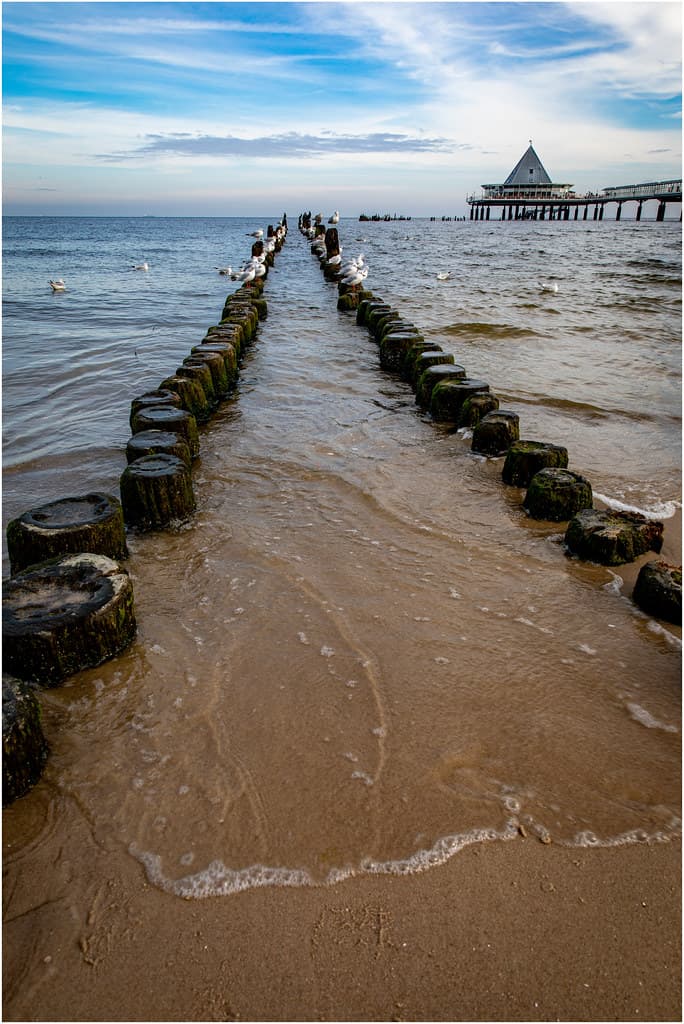
The sand here runs broad and clean, stretching in a generous ribbon that curves gently westward toward Heringsdorf's pier, visible as a dark stroke on the horizon two kilometers distant. Behind you, the dune belt rises five meters high, topped with beach grass and the occasional wind-sculptured pine. Beyond the dunes, Bansin's villa quarter spreads in orderly streets—Bergstraße climbing the gentle slope where homes painted butter-yellow and sage-green peer through oak branches, their carved wooden balconies and tower rooms speaking the same Bäderarchitektur language as their more famous neighbors, just in quieter tones. The promenade here feels less frenetic than Heringsdorf's perpetual parade. Families claim Strandkörbe and settle in for hours, children building elaborate sand fortifications while parents rotate between chair and water. The Baltic shelves gradually, safe for young swimmers, and you can wade thirty meters out before needing to actually swim. A small pier—modest compared to Ahlbeck and Heringsdorf's giants—extends just far enough for fishing and a single café where retirees nurse afternoon Kaffee while watching Polish cargo ships track across the horizon. You walk the waterline and notice Bansin's particular rhythm: it wakes later than its siblings, empties earlier, maintains pockets of actual quiet even at midsummer peak. The beachside restaurants serve the same herring and schnitzel as elsewhere but with shorter wait times and slightly lower prices. When afternoon clouds build inland, you retreat to the Kurpark—a manicured forest garden behind the villas where fountains trickle and peacocks strut between the rose beds, a nineteenth-century vision of what refined leisure should resemble.
Places, rentals, tours and events within walking and driving distance of Bansin Beach.
Photos
Bansin Beach is generally safe for swimming during the summer months when lifeguards are on duty. The Baltic Sea here has gentle waves and a gradual slope, making it suitable for families with children. Water quality is regularly monitored and typically excellent. However, always check local warnings and flag systems before entering the water. The beach is well-maintained with clear access points, and the mature resort infrastructure includes medical facilities nearby. Outside peak season, exercise normal caution as lifeguard coverage may be reduced.
The best time to visit Bansin Beach is June through August when temperatures are warmest, typically ranging from 18-24°C, and the water reaches its most comfortable temperature of around 17-20°C. July and August offer the most reliable sunshine and longest days. Late spring (May) and early autumn (September) provide quieter alternatives with milder weather, though swimming may be cooler. Winter visits appeal to those seeking bracing walks along the promenade. Peak summer weekends can be crowded, so weekdays or shoulder season offer more space.
Bansin is accessible by train from major German cities, with connections through Züssow station to the Usedomer Bäderbahn narrow-gauge railway that runs directly to Bansin. The journey from Berlin takes approximately 3-4 hours. If driving, take the B110 or B111 roads onto Usedom Island. Ample parking is available near the beach, though it fills quickly in summer. Once on the island, the UBB local train connects all major beach resorts. The beach is a short walk from the town center and train station through villa-lined streets.
Bansin offers diverse accommodation ranging from historic spa hotels and guesthouses to holiday apartments and pensions, many in renovated Imperial-era villas. The beachfront promenade features cafés, ice cream parlours, and restaurants serving fresh Baltic fish, German cuisine, and international dishes. Beach chair rental operators often sell snacks and drinks. The town center has supermarkets for self-catering. Booking ahead is essential during summer peak season. Many hotels offer spa facilities reflecting Bansin's heritage as a Kaiserbad (Imperial spa resort).
Bansin is one of the three historic Kaiserbäder (Imperial Spas), giving it distinctive Belle Époque architecture and a refined atmosphere. The beach is backed by beautifully preserved and restored villas from the late 19th and early 20th centuries, creating an elegant backdrop uncommon at other beaches. Natural dunes provide scenic beauty between the villas and sand. Bansin maintains a more tranquil character than neighboring Heringsdorf while offering excellent resort infrastructure. The combination of architectural heritage, mature landscaping, and quality facilities creates a sophisticated seaside experience.