Counting the waves…
Counting the waves…
A refined fusion of water purity, environmental stability, and communal vibrancy for Gahlkow Beach.
View MethodologyAnalyzed via live sensors and environmental data.
Wave height, wind, and atmospheric stability.
Live footfall and crowd balance metrics.
Community reviews and curated sentiment.
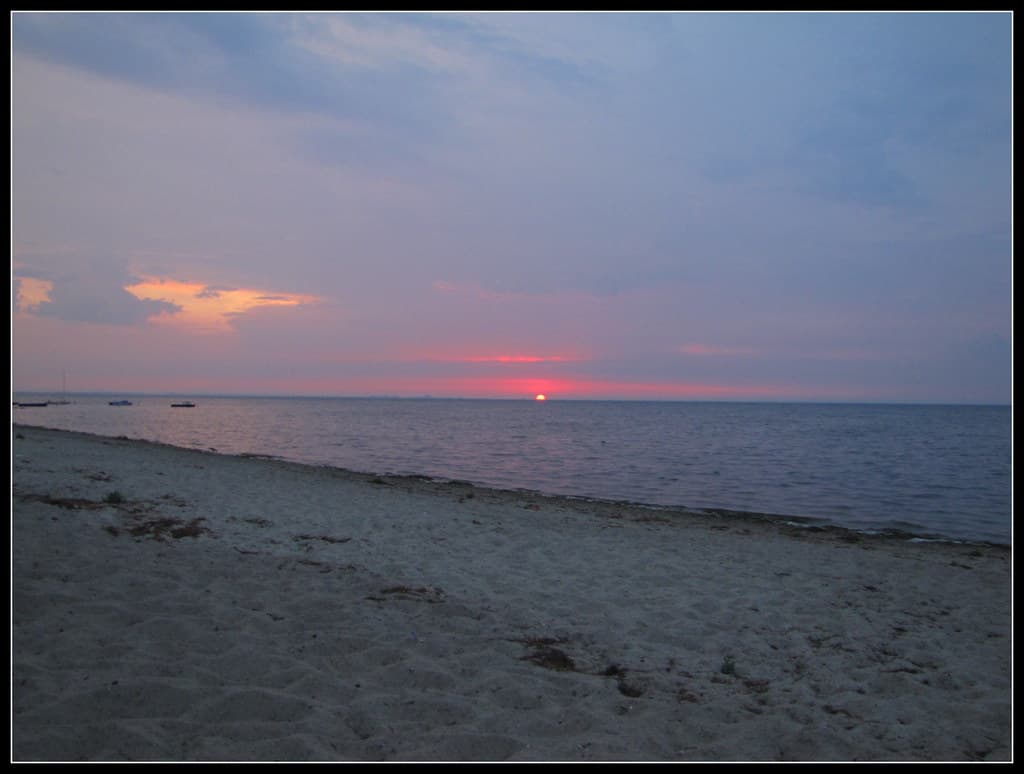
“Between Loissin and Lubmin, this narrow strip of sand belongs more to gulls and anchored dinghies than to sun-seekers. Reeds whisper against timber posts, and the Bodden's brackish calm rarely breaks into waves.”
Limited recent visitor reports — live OBI telemetry is your best guide for current conditions.
You'll find Gahlkow Beach at the end of a lane that dead-ends past half-timbered farmhouses, where the village dissolves into a fringe of marram grass and warped boat sheds. The sand here is coarse and blonde, embedded with mussel fragments that crunch underfoot. Unlike the Baltic proper, the Bodden lagoon warms early in summer, its water tea-stained from peat and gentle enough that children wade out thirty meters before it reaches their waists.
A handful of weathered benches face the water, and local families claim them by mid-morning, unpacking thermoses and stacking towels on driftwood logs smoothed by decades of tides. Sailboats tack slowly across the middle distance, their canvas bright against the pewter sheen of the lagoon. To the west, the shoreline curves toward Ludwigsburg; to the east, the silhouette of Greifswald's St. Nikolai spire punctures the horizon on clear days.
 Credit: Unsplash
a wooden pier with a sign that says kuhlungsborn
 Credit: Unsplash
people walking on beach during daytime
Knee-deep for fifty meters out
Weathered jetties and dinghies
Driftwood and local conversations
Prime Visitation
Best Weather|Less Crowds
Where it is
Gahlkow Beach
Gahlkow, Mecklenburg-Vorpommern, Germany
54.113800°, 13.563800°
Weather
Loading…
Swell
—
Temp
Warm · Restorative
UV Index
Moderate
Wind
—
Tidal State
Last known
Max Sunlight
—
Ideal Shade
—
May - Sep (Peak)
Jan - Dec (Off-season)
Best Weather|Less Crowds
Near Gahlkow Beach
Explore dining, stays, nightlife, and activities near Gahlkow Beach in Gahlkow, Germany. Every listing below is a real place linked to this beach — open a card for reviews, maps, and booking options.
Food, cafés, and dining close to Gahlkow Beach — curated from places linked to this beach.
Stays and lodging options near Gahlkow Beach for your beach trip.
Activities, tours, and attractions near Gahlkow Beach.
Select a category to load nearby places.
Unlock restaurants, luxury stays and curated maritime experiences within 2km
Gahlkow Beach is generally safe for families with children. As a Bodden shore beach, it features calmer, shallower waters compared to open Baltic beaches, making it ideal for young swimmers. The gentle slope and lack of strong currents provide a more controlled swimming environment. However, supervision is always recommended, and there are typically no lifeguards on duty at this quieter beach. Check local conditions before swimming, and be mindful that as a hidden, village-character beach, facilities may be limited.
The best time to visit Gahlkow Beach is during late spring through early autumn (May to September) for the warmest weather and comfortable swimming temperatures. Summer months (June-August) offer the best conditions, though the beach's 'less crowds' designation means it remains peaceful even during peak season. For those seeking solitude and beautiful sunsets, visit during shoulder seasons or weekday evenings. The village-coast character means it's particularly charming during quieter periods when you can enjoy the scenic Bodden landscape without tourist crowds.
Gahlkow Beach is located between the villages of Loissin and Lubmin on the Vorpommern mainland coast. Access is easiest by car, following signs to the small village of Gahlkow. The beach is somewhat remote, reflecting its hidden character, so public transportation options may be limited. The nearest larger towns are Greifswald and Lubmin, from where you can drive or potentially cycle to the beach. Plan for basic parking near the village, and be prepared for a more rural, less developed access compared to major tourist beaches.
Gahlkow is a small village, so dining and lodging options are limited directly at the beach. You'll find more choices in nearby Loissin and Lubmin, which offer guesthouses, holiday apartments, and local restaurants serving regional German and seafood cuisine. For a wider selection of hotels and dining, the cities of Greifswald and Stralsund are within reasonable driving distance. Many visitors opt for self-catering accommodation or day trips from larger towns. The village-coast character means advance booking is recommended during summer months.
Gahlkow Beach stands out for its authentic village-coast character and position on the quieter Bodden shore rather than the open Baltic Sea. This creates calmer, more sheltered waters ideal for families seeking a peaceful alternative to busier beaches. The beach maintains a hidden, local feel with minimal development and commercial activity. Its location between Loissin and Lubmin offers stunning sunset views across the Bodden waters, and the surrounding area preserves a traditional coastal village atmosphere that's increasingly rare along more touristed stretches of the Mecklenburg-Vorpommern coast.
Photos