Counting the waves…
Counting the waves…
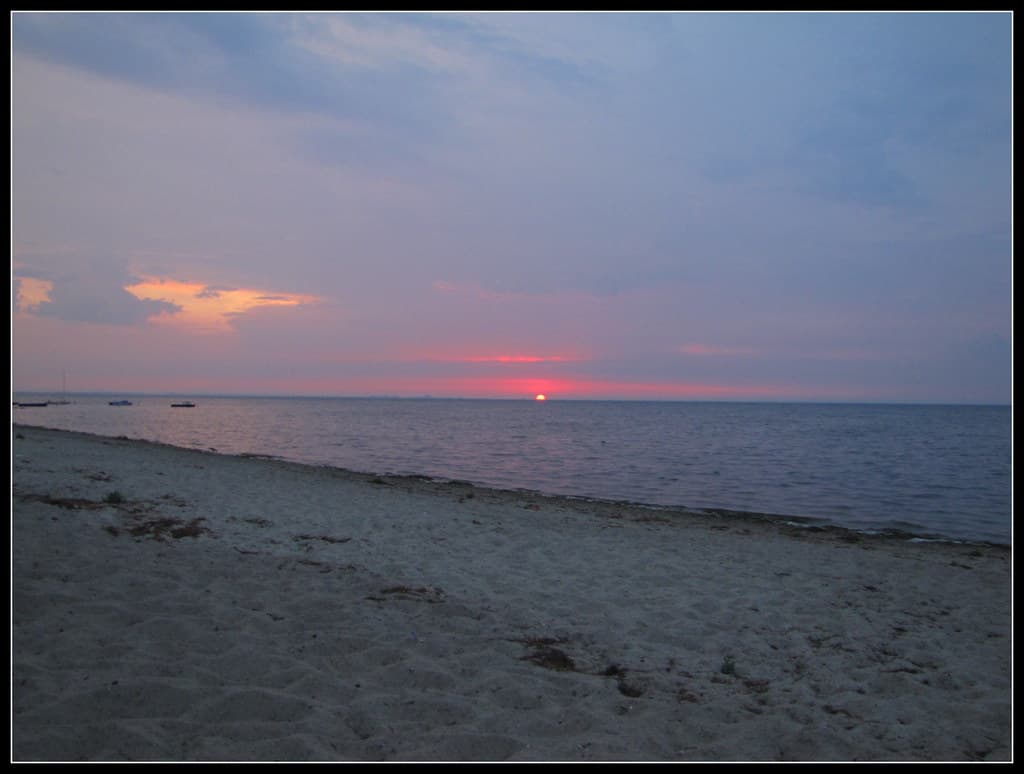
The sand here is a narrow strip pressed between the riverbank promenade and the reedy shallows of the Greifswalder Bodden, a shallow lagoon that connects to the Baltic. You can hear the grind and creak of the wooden bascule bridge each time it opens—a 19th-century timber span painted rust-red, lifting to let sailboats pass from the Ryck into open water. The beach fills at lunchtime with university students on bicycles, professors walking spaniels, and young families whose toddlers wade in water so shallow it barely reaches their knees. Behind you, the fishing quarter of Wieck rises in a cluster of thatched-roof cottages and brick warehouses, their façades painted butter-yellow and sky-blue. A gravel footpath lines the shore, dotted with wooden benches where older residents sit with newspapers and thermoses of coffee, watching the parade of dinghies and gulls. The water is calm—almost pond-like—with a faint green tinge from algae and reeds, warmed by the sun in summer to bath-like temperatures. The beach is too small for long walks—you can pace its length in three minutes—but that intimacy is the point. You're here for a quick dip between errands, a sandwich on the grass, a front-row seat to the bridge's hourly ballet. Sailboats glide past so close you can read their names, and the spire of the university church rises in the distance, a reminder that this is a town beach, woven into the daily rhythms of Greifswald rather than carved out for tourists.
Places, rentals, tours and events within walking and driving distance of Wieck Beach.
Photos
Wieck Beach is generally safe for swimming and well-suited for families. The sandy bottom and calm waters of the Greifswalder Bodden make it ideal for children. However, it's a compact urban beach without lifeguard supervision, so parents should watch children closely. The water is shallower and less exposed than open Baltic beaches. Facilities are basic, and the beach gets busy during summer weekends when local families gather. Check local water quality reports before swimming, as lagoon conditions can vary.
Wieck Beach can be enjoyed year-round, though swimming is most pleasant from June through August when water temperatures reach 17-20°C. Spring and autumn offer scenic walks along the harbor with fewer crowds. Summer weekends are busiest with local families. Visit early morning or weekday afternoons for a quieter experience. The historic bascule bridge operates on a schedule, adding charm to any visit. Evening visits during summer offer beautiful light over the harbor and fishing village atmosphere that makes Wieck special beyond just beach time.
Wieck Beach is easily accessible from Greifswald, located about 4 kilometers south of the city center. The most scenic route is by bicycle along the flat, well-marked path following the Ryck River—approximately 15-20 minutes. Public buses connect Greifswald with Wieck village regularly. By car, follow signs toward Greifswald-Wieck and park near the harbor; parking can be limited in summer. Walking from central Greifswald takes roughly 45 minutes along the riverside path, making for a pleasant outing combining exercise with sightseeing.
Wieck village offers several fish restaurants and cafés around the picturesque harbor, many serving fresh catches and regional Mecklenburg cuisine. The famous Fischgaststätte serves traditional smoked fish. Accommodation options include small guesthouses and holiday apartments in Wieck itself, though most visitors stay in Greifswald proper, which has more extensive hotel choices just minutes away. The fishing village atmosphere means dining focuses on casual, maritime fare rather than upscale options. Reservations are recommended during summer weekends when locals and university visitors fill the harbor-side terraces.
Wieck Beach's defining feature is its location beside one of Germany's oldest wooden bascule bridges, built in 1887, which still opens for boat traffic. The beach offers an authentic fishing village atmosphere rather than resort development, with colorful boats and working harbor adjacent to the bathing area. It serves as a local gathering spot for Greifswald residents rather than a tourist destination. The combination of maritime heritage, the historic bridge, charming fishermen's cottages, and proximity to the university town creates a distinctive cultural-coastal experience unique among Vorpommern beaches.