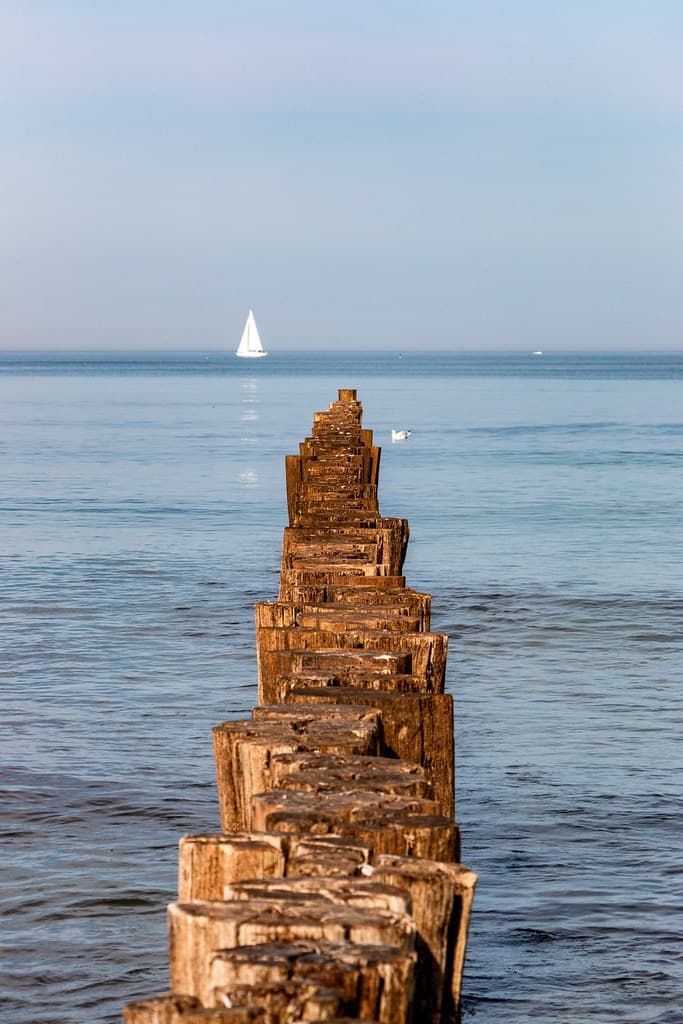
Counting the waves…
Counting the waves…
Six gleaming white structures march along the coast in perfect symmetry, their columns and porticos reflected in wet sand at low tide. This is Heiligendamm, Germany's first seaside spa, where Grand Duke Friedrich Franz I established a bathing resort that transformed the Baltic from fishing grounds into fashionable destination. You descend the broad stairs from the Grand Hotel to a beach that has been groomed, promenaded, and celebrated for 230 years. The sand here is fine and pale, raked smooth each morning by crews maintaining standards set in another century. Beach chairs—those iconic hooded Strandkörbe—line up in neat rows, their blue-and-white stripes echoing the resort's aesthetic. The water remains shallow for thirty meters out, warming to swimmable temperatures by June. A historic pier extends into the Baltic, rebuilt after storm damage but following the original 1814 footprint. This beach carries the weight of its history visibly. You're swimming where Goethe swam, walking where Cold War borders once divided the shore. The Doberan Narrow-Gauge Railway—the Molli—still whistles into the station behind the dunes, connecting Heiligendamm to Bad Doberan just as it did when the tracks were laid in 1886. The resort maintains its exclusive atmosphere; day-trippers mingle with hotel guests, but everyone observes an unspoken code of comportment that keeps this beach feeling more refined than the livelier stretches up the coast.
Places, rentals, tours and events within walking and driving distance of Heiligendamm Beach.
Photos
Heiligendamm Beach is generally safe for swimming during the summer months when lifeguards are on duty. The Baltic Sea here has gentle slopes and usually calm waters, making it suitable for most swimmers. However, always check local warning flags before entering the water, as conditions can change. Strong currents and jellyfish occasionally occur. The beach is well-maintained and patrolled during peak season. Swimming outside supervised hours or in colder months is at your own risk.
The best time to visit Heiligendamm Beach is from late May through September when temperatures are warmest and the resort facilities are fully operational. July and August offer the warmest water temperatures, typically 17-20°C, ideal for swimming and sunbathing. June and September provide pleasant weather with fewer crowds. The historic white villas and promenade are beautiful year-round, but many amenities close in winter. Spring and autumn offer scenic walks along the shore with milder temperatures.
Heiligendamm is accessible by car via the B105 coastal road, located approximately 25 kilometers northwest of Rostock. Limited parking is available near the beach and historic resort buildings. The historic Molli steam train connects Heiligendamm with Bad Doberan and Kühlungsborn, offering a scenic route to the beach. Regional buses also serve the area. The nearest major airport is Rostock-Laage. The compact resort area is easily walkable once you arrive, with the beach just steps from the famous white buildings.
Heiligendamm is home to the Grand Hotel Heiligendamm, a luxury five-star resort offering upscale accommodation and dining in the historic white buildings. Several restaurants and cafes operate within the resort area, serving regional and international cuisine. For more budget-friendly options, nearby Kühlungsborn and Bad Doberan offer diverse hotels, guesthouses, and restaurants within a short drive. Beach kiosks provide snacks and refreshments during summer. Advance booking is recommended during peak season, as accommodation fills quickly in this historic spa destination.
Heiligendamm Beach is Germany's oldest seaside resort, founded in 1793, and is famous for its stunning white neoclassical buildings that earned it the nickname 'White Town by the Sea.' The architectural ensemble of historic spa buildings creates an elegant backdrop unlike any other German beach. The beach hosted the 2007 G8 Summit, adding to its prestige. Its combination of sandy shores, aristocratic heritage, and luxury spa tradition offers a unique blend of history and seaside relaxation that distinguishes it from typical Baltic resort beaches.