Counting the waves…
Counting the waves…
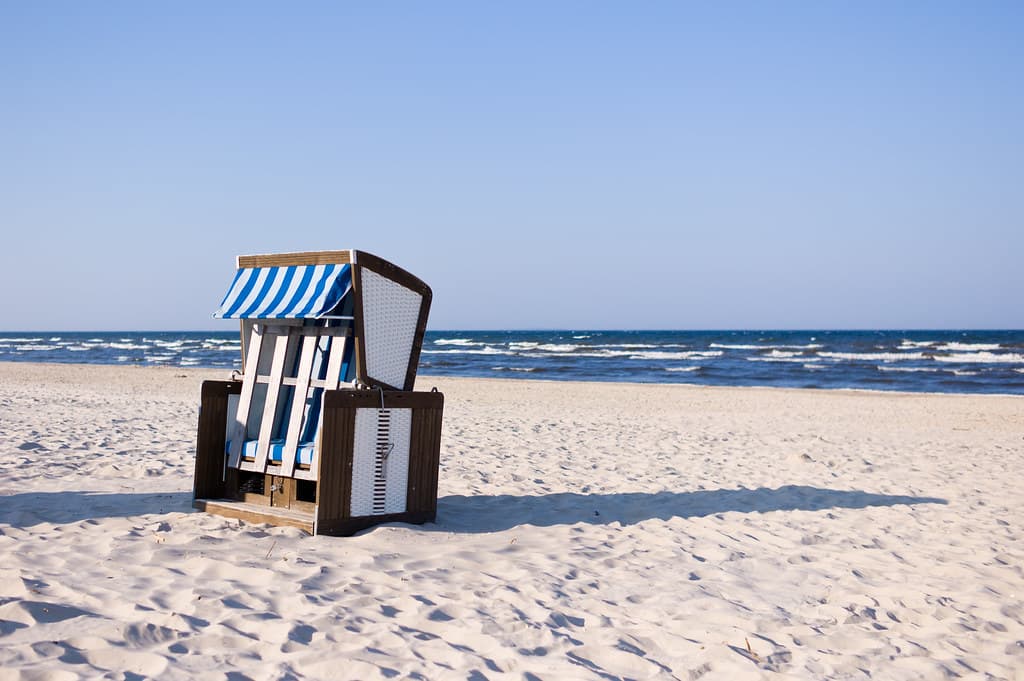
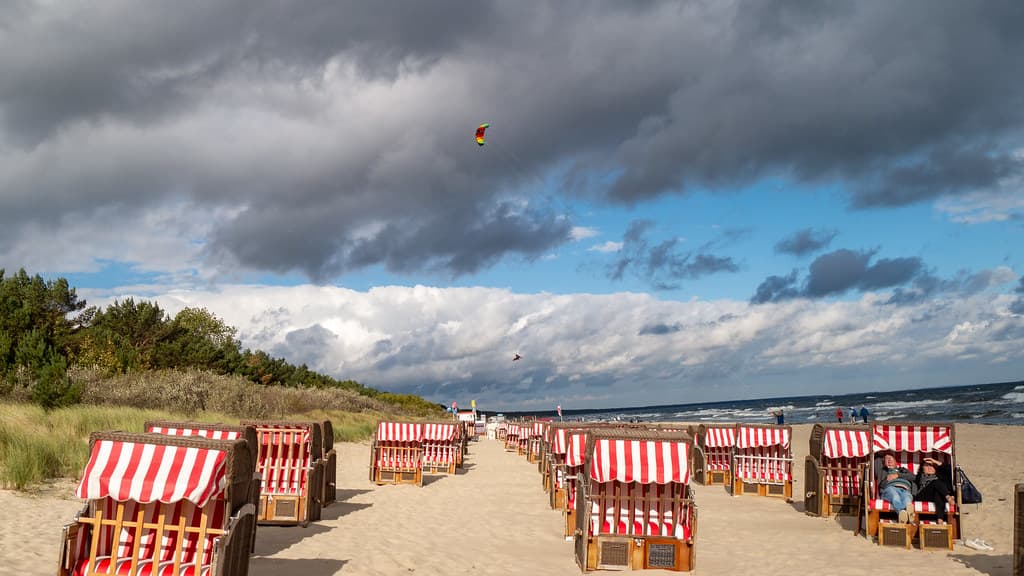
The approach to Peenemünde reveals itself slowly: a gravel path threading between marram grass and low dunes, the crunch of your footsteps swallowed by wind that never quite stops. When the sand finally opens before you, it's wide and pale, rippled by tides that leave shallow pools reflecting the changeable northern sky. To your left, the Peene River empties into the Greifswalder Bodden, its brackish waters mixing with the Baltic in lazy currents. The dunes here rise and fall in irregular humps, stabilized by beach grass that hisses when the wind picks up from the north. You'll find hollows sheltered enough for a towel, though the air remains brisk even in summer—bring an extra layer for when clouds roll in from Sweden. The sand is fine-grained and cool underfoot, marked only by gull tracks and the occasional amber hunter's bootprint. Behind the beach, pine forest crowds close, its resinous scent mixing with iodine from kelp drying along the tide line. The village itself sits back from the shore, its wartime past present but not intrusive. You come here not for amenities but for the particular solitude of a beach that ends at a river mouth, where two bodies of water negotiate their boundary and you can watch from a towel.
Places, rentals, tours and events within walking and driving distance of Peenemünde Beach.
Photos
Swimming at Peenemünde Beach requires more caution than at busier Usedom beaches due to its remote location and limited lifeguard coverage. Supervision may be minimal or absent, especially outside peak summer weeks. The beach's position near the Peene river mouth can create variable currents. The Baltic Sea conditions here can change quickly with weather. Only confident swimmers should enter the water, and always observe any posted warnings. The remote atmosphere that makes this beach appealing also means fewer safety resources, so exercise personal judgment and never swim alone in unsupervised areas.
Peenemünde Beach offers solitude throughout most of the year due to its remote northern location. Late spring (May-June) and early autumn (September) provide mild weather with minimal crowds. Even during July and August, this beach sees far fewer visitors than southern Usedom resorts. Weekdays are significantly quieter than weekends. Early mornings and evenings offer the most peaceful atmosphere. Winter and early spring attract hardy beachcombers seeking complete isolation. The trade-off for fewer crowds is fewer amenities and services, so plan accordingly for more self-sufficient beach visits.
Peenemünde is located at the northern tip of Usedom Island, accessible by car via the B111 road from Wolgast or other island towns. Parking is available near the beach and historical sites. The Usedomer Bäderbahn railway terminates at Peenemünde station, making car-free access possible from other island destinations. From mainland Germany, cross onto Usedom via Wolgast bridge. The journey from Berlin takes approximately 3-4 hours by car. From Peenemünde village, the beach is walkable, though distances in this spread-out area can be considerable.
Peenemünde has limited accommodation compared to larger Usedom resorts, with a few guesthouses, holiday apartments, and a campground serving visitors. The village has basic restaurants and cafés, often focused on serving tourists visiting the historical-technical museum. Dining options emphasize German regional cuisine and fresh fish. A small grocery store provides essentials for self-catering. For more extensive dining and lodging choices, consider staying in nearby Karlshagen or other island towns and making Peenemünde a day trip. The remote character means fewer services but also authentic local atmosphere.
Peenemünde Beach's unique character comes from its remote northern position near the Peene river mouth, creating a wilder, more isolated Baltic atmosphere than southern Usedom beaches. The area carries significant historical weight as the former German rocket development site during World War II, with a major museum nearby. The beach features extensive dune landscapes and feels genuinely off-the-beaten-path. Its position facing both the Baltic Sea and Peene estuary creates distinctive coastal scenery. This combination of natural remoteness and historical significance makes Peenemünde appeal to visitors seeking solitude and historical interest.