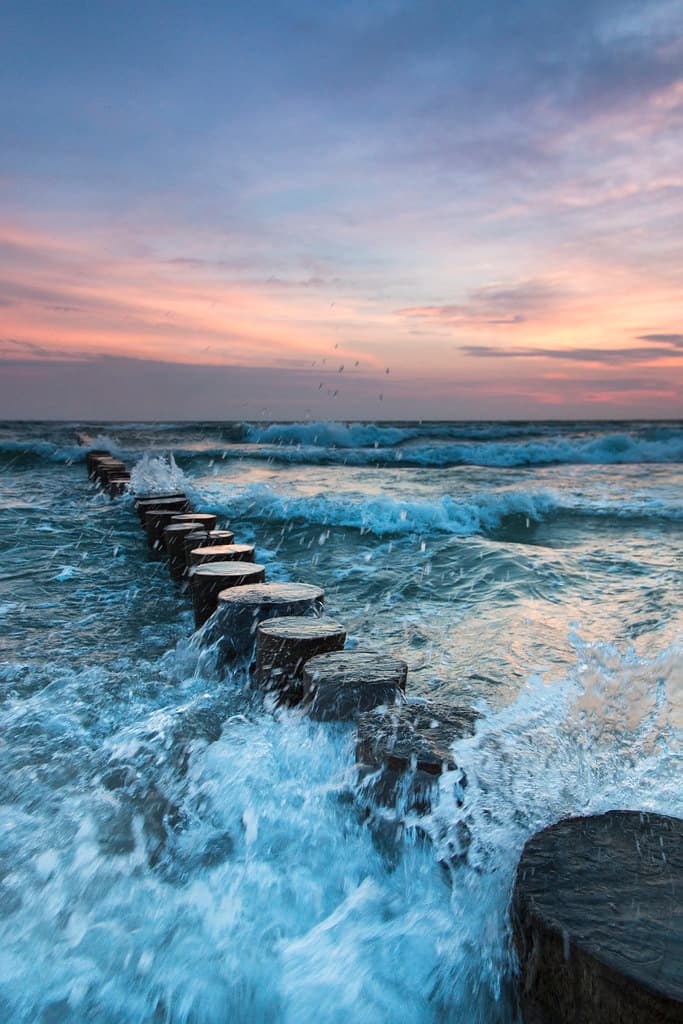
Counting the waves…
Counting the waves…
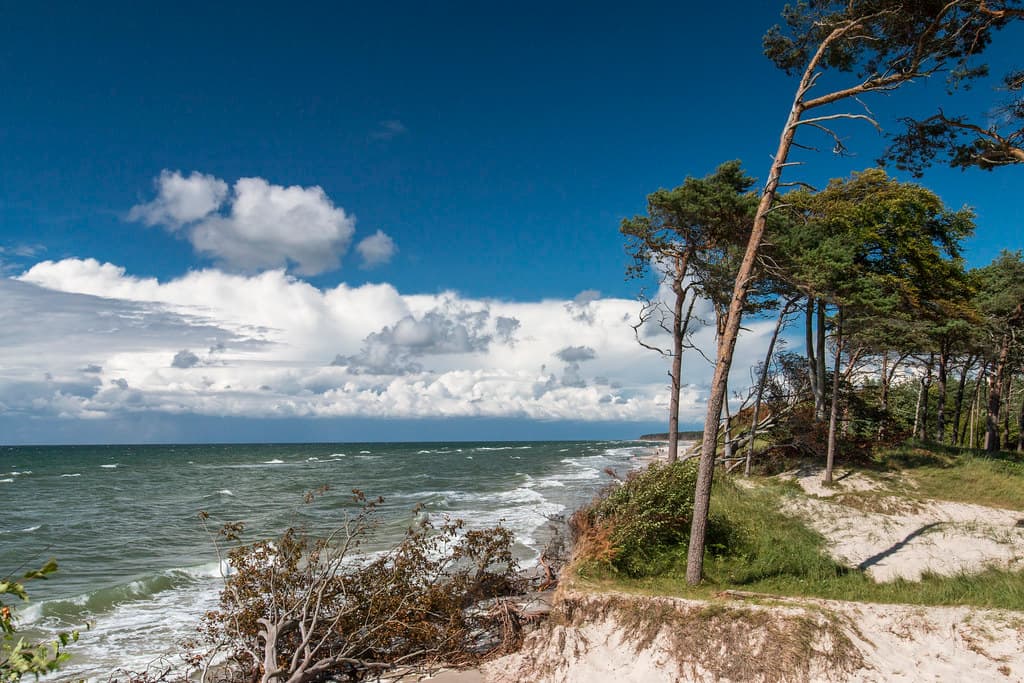
You arrive through the Darß forest, where centuries-old beeches and oaks filter the coastal light into shafts of green-gold. The trees thin suddenly, and the beach opens before you—a ribbon of white sand stretching three kilometers along the peninsula's northern edge. Families stake territory near the wooden boardwalks; nudists claim the eastern stretches where clothing-optional culture has thrived for decades. The width of the shore surprises first-time visitors. At low tide, you can walk fifty meters from the dune grass to the waterline, passing weathered logs deposited by winter storms. The Baltic here is brisk even in July, numbing your shins before you've waded knee-deep. Offshore, the Hohe Düne lighthouse marks the harbor entrance at Warnemünde, a white needle against the northern horizon. By late afternoon, the beach takes on the amber tones of old photographs. Couples walk the hard-packed sand near the surf line, their footprints filling with foam. Behind you, the forest darkens to silhouette, and the air carries the resinous scent of pine mixed with brine. This is where the peninsula earns its reputation—not through spectacle, but through the steady accumulation of sensory detail that registers only after you've left.
Places, rentals, tours and events within walking and driving distance of Prerow North Beach.
Photos
Prerow North Beach is generally safe for swimming with gently sloping sandy bottom and good conditions during summer months. The beach has supervised sections with lifeguards during peak season, particularly near main access points. Water quality is typically excellent. The Baltic Sea can develop currents during windy weather, so observe posted warnings and flags. Families appreciate the gradual depth increase, suitable for children. The beach's popularity means you're rarely alone. As with any natural beach, conditions vary with weather—calm summer days offer safest swimming. Avoid swimming during storms or when red flags are displayed.
Visit between June and September for optimal beach weather, with July and August offering warmest water temperatures (17-20°C) but also peak crowds. June and September provide excellent conditions with fewer visitors and lower accommodation costs. The wide beach never feels overcrowded even in high season. For photography and solitude, consider May or early October when weather can still be pleasant. The beach is stunning year-round, with autumn and winter offering dramatic landscapes and peaceful forest walks. Early morning visits any season provide special tranquility and light, particularly appealing for the beach's famous white sand.
Prerow North Beach is accessed from Prerow village on the Darß peninsula. By car, follow B105 then local roads to Prerow; parking is available at several lots near the beach (fees apply, fill early in summer). From Berlin it's approximately 260 kilometers. By public transport, take a train to Velgast or Ribnitz-Damgarten, then bus to Prerow. The beach is a short walk or bike ride from the village center through pleasant forest paths. Bicycle rental is widely available and highly recommended—dedicated paths lead through the Darß forest to various beach access points along the extensive shoreline.
Prerow village offers diverse accommodation including hotels, guesthouses, holiday apartments, and campgrounds suitable for families and various budgets. Summer bookings should be made well in advance. The village has restaurants featuring regional cuisine and Baltic seafood, cafes, bakeries, and ice cream shops. Supermarkets serve self-catering needs. Some seasonal beach kiosks operate near main access points offering snacks and drinks, though facilities directly on this natural beach are limited. Most dining and shopping is in the village, a short walk or bike ride from the beach. Many accommodations offer breakfast or half-board options.
Prerow North Beach is renowned for its exceptional width and fine white sand, creating an almost Caribbean appearance unusual for the Baltic coast. The beach stretches for kilometers, backed by the protected Darß forest—a dramatic combination of dense woodland meeting pristine shore. This natural setting, part of Vorpommersche Boddenlandschaft National Park, ensures preservation of its unspoiled character. The beach's expanse means space for everyone even during peak season. Its reputation as one of Germany's finest beaches is well-deserved, offering a balance between natural beauty and reasonable accessibility, without the complete wildness of Weststrand or full development of major resorts.