
Counting the waves…
Counting the waves…

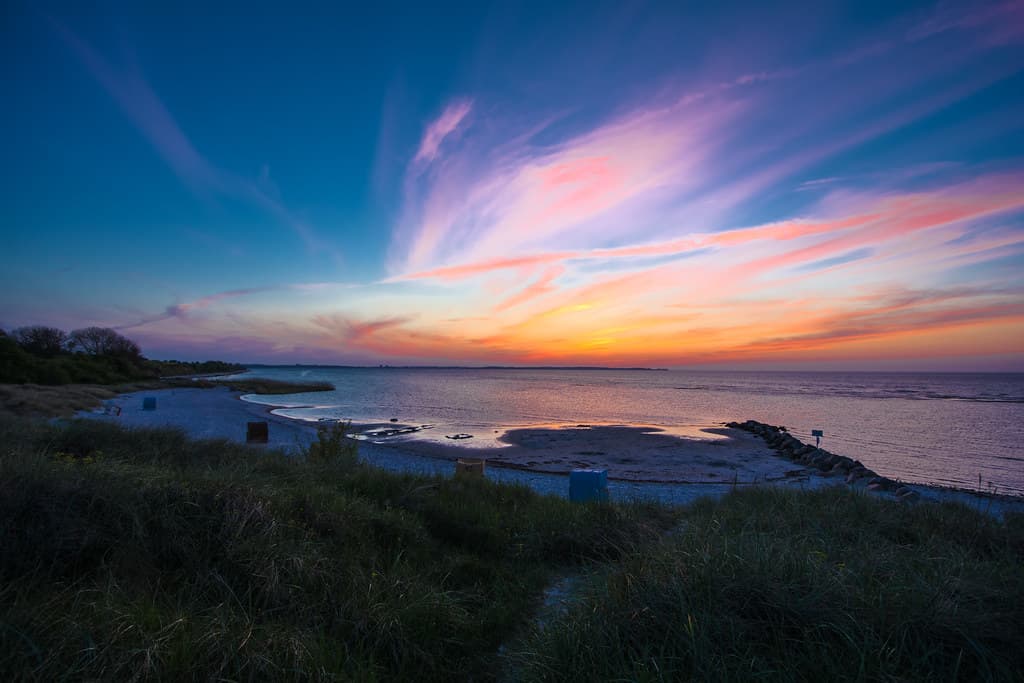
This stretch of Kiel Bay coastline barely qualifies as a beach in the resort sense. The shore alternates between coarse sand and cobble, backed by agricultural land that runs right to the water in places. A gravel track provides access past a working farm; the Baltic appears suddenly beyond a stand of windbreak poplars, grey-green and stippled with whitecaps when the wind blows. No promenade, no changing rooms, no designated swimming area. Local families know to park near the old boat shed and walk west, where the shore widens slightly and the stones give way to packed sand. The water stays cold here—Kiel Bay's circulation patterns favour the southern shore. By late afternoon, the sun backlights the rapeseed fields inland, turning them radioactive yellow against darker clouds. Seabirds outnumber people: oystercatchers work the tideline, and cormorants dry their wings on the remaining groyne posts. The village of Brodersdorf sits a kilometre inland, invisible from the water. Come in September when the combines work the grain fields and you can hear the harvest machinery over the wave-wash, a reminder that this coast still serves purposes beyond recreation.
Places, rentals, tours and events within walking and driving distance of Brodersdorf Coast Beach.
Photos
Brodersdorf Coast Beach offers calm waters typical of sheltered Kiel Bay locations, making it generally safe for swimming during suitable weather. However, this is a low-key, less developed beach without regular lifeguard services, so swimmers should exercise personal caution and supervise children closely. The calm conditions are usually gentle for families, but always check weather forecasts as Baltic conditions can change. The beach's quieter nature means fewer people around in case of emergency. If you're unfamiliar with Baltic swimming, visit during peak season when other beachgoers are present.
Brodersdorf Coast Beach is naturally less crowded than mainstream Baltic destinations, but visiting during shoulder seasons (May-June or September) or weekdays offers even greater solitude. This hidden gem rarely appears in major travel guides, so it maintains a local character even in summer. Early mornings and evenings provide the most peaceful atmosphere and excellent sunset viewing opportunities. Avoid sunny summer weekends if you seek complete tranquility, as regional visitors may discover this spot. Winter visits offer dramatic coastal scenery and near-total privacy, though facilities will be minimal.
Brodersdorf is a small community in Schleswig-Holstein, best reached by car from nearby cities like Kiel (approximately 30 kilometers) or Lübeck. Follow local roads toward the coastal village of Brodersdorf and look for beach access signs. Public transportation to this hidden beach is limited, with infrequent bus connections that may require transfers from larger towns. The nearest significant train station is in Lütjenburg or Plön, both requiring additional transport. Parking near the beach access is typically informal and limited. A personal vehicle or bicycle is strongly recommended for visiting this off-the-beaten-path location.
Brodersdorf is a quiet coastal area with limited commercial development, so accommodation and dining options are sparse. You may find private vacation rentals, holiday homes, or small guesthouses in the village, often requiring advance booking. Larger towns like Lütjenburg, Schönberg, or Plön offer more comprehensive hotel and restaurant choices within a short drive. There are unlikely to be beach facilities or cafés directly at this low-key location, so bringing your own refreshments is advisable. The lack of development is part of the beach's appeal for those seeking an authentic, uncommercialized coastal experience.
Brodersdorf Coast Beach stands out for its uncommercialized, authentic character—a rarity along increasingly developed coastlines. Rarely featured in mainstream travel guides, it offers visitors a genuine local experience without tourist infrastructure. The calm waters and peaceful setting make it ideal for quiet contemplation, sunset watching, and escaping busier resort areas. Its hidden status means you're more likely to share the beach with local families than international tourists. This is a place for those who value natural, unspoiled coastal landscapes over amenities and activities, offering a glimpse of the Baltic's quieter side.