Counting the waves…
Counting the waves…
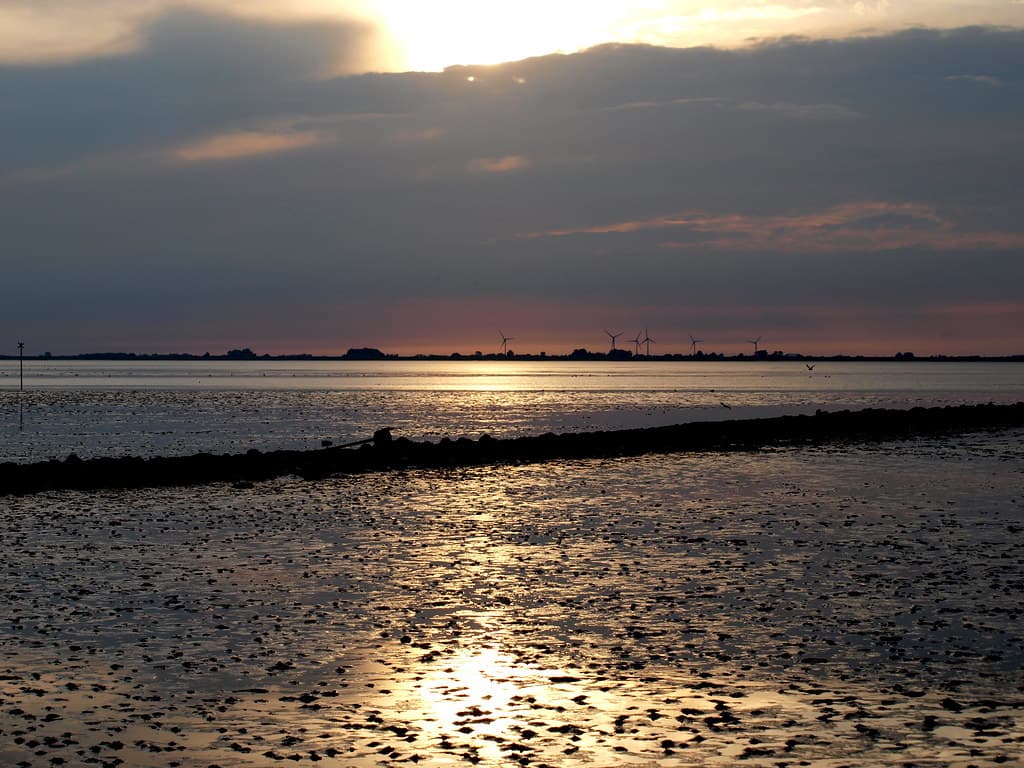
The dike rises behind you like a grassy wall, its slope dotted with sheep and the occasional cyclist pausing to scan the Wadden Sea. Below, the beach spreads wide and flat, a canvas of sand and mud flats that shifts with every tide. You spread your towel near wooden groynes weathered silver by decades of salt spray, their splintered posts marking the boundary between dry sand and the wet expanse where children dig for lugworms. Husum's harbor bustle feels distant here, replaced by the rhythmic hiss of small waves and the distant clang of a buoy. The sun warms your shoulders as you watch the water creep back across the flats, filling channels and pooling around sandbanks. Families arrive with beach chairs and thermoses, settling in for hours of tidal watching and sandcastle construction on sand that packs firm as concrete. By late afternoon, the beach takes on a golden cast, the low sun turning the wet sand into a mirror. You climb back up the dike as the wind picks up, glancing back at the footprints and holes that will vanish with the next high tide. The sheep continue grazing, indifferent to the slow dance of land and sea below.
Places, rentals, tours and events within walking and driving distance of Dockkoog Beach.
Photos
Swimming at Dockkoog Beach is possible but limited by tidal conditions typical of the Wadden Sea. The beach area is protected by dikes and offers designated bathing zones during high tide. Water is generally shallow and calm, making it suitable for families with children, though always supervise young swimmers. Check tide tables before visiting, as the swimming area may be mudflats at low tide. Lifeguard presence varies by season and time. The calm, sheltered nature makes it safer for inexperienced swimmers when water is present.
Visit Dockkoog Beach between May and September for the most favorable weather conditions and warmest water temperatures. Summer months (July-August) offer the best chance for comfortable swimming and sunbathing, though the beach is less crowded than major resorts. Spring and early autumn provide pleasant conditions for walking and nature observation with fewer visitors. The beach is accessible year-round for walks, but facilities and services are reduced outside summer season. Always consult tide schedules, as timing your visit to high tide significantly improves the beach experience.
Dockkoog Beach is located just outside Husum and easily accessible by car via Dockkoogstraße, with parking available near the beach area. The distance from Husum town center is approximately 3-4 kilometers. Cycling is a popular option, with flat, well-maintained bike paths connecting Husum to the beach. Local buses may provide seasonal service, though schedules can be limited. Walking from central Husum takes about 45-60 minutes. Husum itself is well-connected by regional trains from larger cities like Hamburg and Flensburg.
Dockkoog Beach itself has limited on-site dining facilities, though seasonal beach kiosks may operate during summer months. The nearby town of Husum, just a few kilometers away, offers numerous restaurants, cafés, and bakeries serving regional North Sea cuisine. Accommodation options include hotels, guesthouses, and holiday apartments primarily located in Husum rather than directly at Dockkoog. The beach is better suited for day visits, with full amenities available in town. Consider bringing snacks and drinks, especially during off-peak seasons.
Dockkoog Beach offers a quieter, more local alternative to busier North Sea resorts while remaining easily accessible from Husum, a historic port town. The beach sits behind protective dikes, creating sheltered bathing zones particularly suitable for families seeking calm waters. Its proximity to Husum allows visitors to combine beach relaxation with cultural exploration of the town's maritime heritage and historic harbor. The beach provides authentic Wadden Sea experiences without heavy tourist development, appealing to those seeking tranquility while maintaining access to town amenities.