Counting the waves…
Counting the waves…

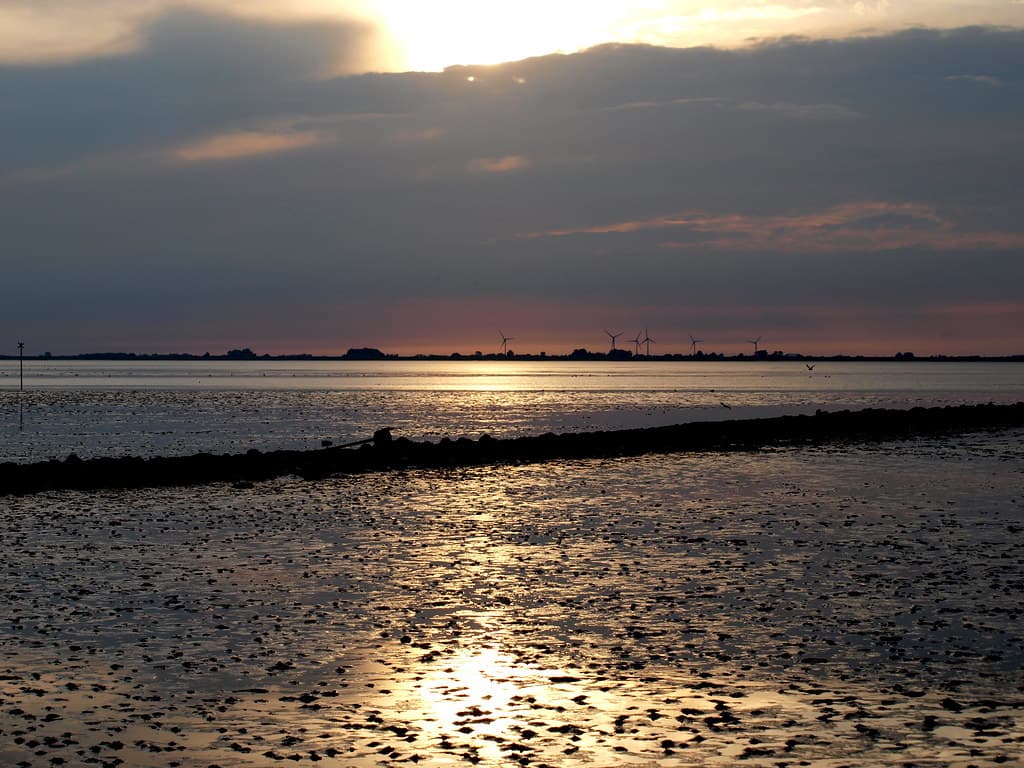
The approach to Oldenswort Beach feels deliberate, a narrow farm road threading past red-brick homesteads and grazing sheep. When the asphalt ends, the North Sea reveals itself not in crashing drama but in whispered increments—mud flats stretching toward the horizon, rivulets carving temporary highways through silt, the occasional fishing boat listing on its side until the tide returns. You'll walk the dike path alone most afternoons, the only interruption a cyclist nodding as they pass. Below, the exposed seabed glistens, punctuated by lugworm casts and the delicate tracks of dunlin. The air smells of brine and earth, a scent that clings to your jacket long after you've left. At low tide, you can walk a quarter-mile from shore, boots squelching, the firmament above mirrored in shallow pools. Sunset here is an exercise in subtlety. The sky bleeds amber and rose across the Wadden Sea, backlighting the silhouette of distant Halligen islands. Curlews probe the mud with curved bills. There's no promenade, no vendor selling Fischbrötchen—just you, the returning tide, and the unhurried rhythm of a coast that refuses to perform.
Places, rentals, tours and events within walking and driving distance of Oldenswort Beach.
Photos
Swimming at Oldenswort Beach is limited and requires understanding of local conditions. Located along the Eider region near where the river meets the North Sea, the beach experiences tidal influences and river currents that can be unpredictable. The area is more suited to wading and coastal exploration than traditional swimming. Water clarity and depth vary significantly with tides. The remote nature means lifeguard services are not available, making supervision of children essential. Strong currents can develop, particularly during tidal changes. Checking tide times and weather conditions before any water activities is crucial for safety.
Oldenswort Beach is best enjoyed from late spring through early autumn (May to September) when temperatures are comfortable for coastal walks and outdoor activities. The beach's hidden status means it remains peaceful even during peak summer months, making it ideal for visitors seeking tranquility. Sunset viewing is particularly rewarding throughout the year, with the calm designation reflecting its serene atmosphere. Early autumn offers clear skies and dramatic light for photography. Winter visits are possible for dedicated nature enthusiasts, though conditions can be cold and windy. Weekdays offer more solitude than weekends year-round.
Reaching Oldenswort Beach requires a car, as the village is located in a rural area of Schleswig-Holstein near the Eider River. From cities like Hamburg (approximately 130 km), take the A23 northbound, then follow regional roads toward the Eider region and Nordfriesland. Oldenswort itself is a small village with limited signage, so GPS navigation is essential. Public transportation is extremely limited, with only occasional regional bus connections to nearby towns. The area is cycle-friendly with flat terrain, making it suitable for bicycle touring if you're already in the region. Plan your route carefully as services are sparse.
Oldenswort is a small rural village with very limited tourist infrastructure. Accommodation options are scarce directly in the village, so visitors typically stay in nearby towns like Friedrichstadt, Tönning, or Husum, which offer hotels, guesthouses, and vacation rentals. Holiday apartments and farm stays in the surrounding countryside provide quieter alternatives. Dining options in Oldenswort itself are minimal, so bringing provisions is advisable for beach visits. Restaurants in neighboring towns serve traditional North German cuisine featuring regional ingredients like fresh fish and local produce. Advanced planning and booking are recommended for accommodation.
Oldenswort Beach remains rarely listed because it represents a truly hidden coastal stretch without tourism development or promotion. Unlike established beach resorts, this location offers an authentic, undiscovered slice of the Eider region coastline favored by locals who value its peace and natural character. The lack of facilities, difficult access, and minimal signage keep visitor numbers low. Its position along the transitional zone between river and sea creates unique landscapes that change dramatically with tides, appealing primarily to nature enthusiasts rather than traditional beachgoers. This obscurity preserves its calm, unspoiled atmosphere for those willing to seek it out.