

The beach sits in the lee of Orth's harbor mole, a location that trades wave action for tranquility. The water here is lagoon-calm, barely rippling even when northwest winds churn the outer Baltic. Families arrive mid-morning, staking claims on the narrow strip of sand where the bottom stays ankle-deep for twenty meters out and kindergarteners can splash without worry. By noon the Strandkörbe fill with multigenerational groups, thermoses open, rye sandwiches unwrapped, the conversation mixing Hochdeutsch and Plattdeutsch.
“The only Fehmarn beach set within an active fishing village, where harbor history and protected swimming water create an intimate, lived-in atmosphere.”
 Credit: Unsplash
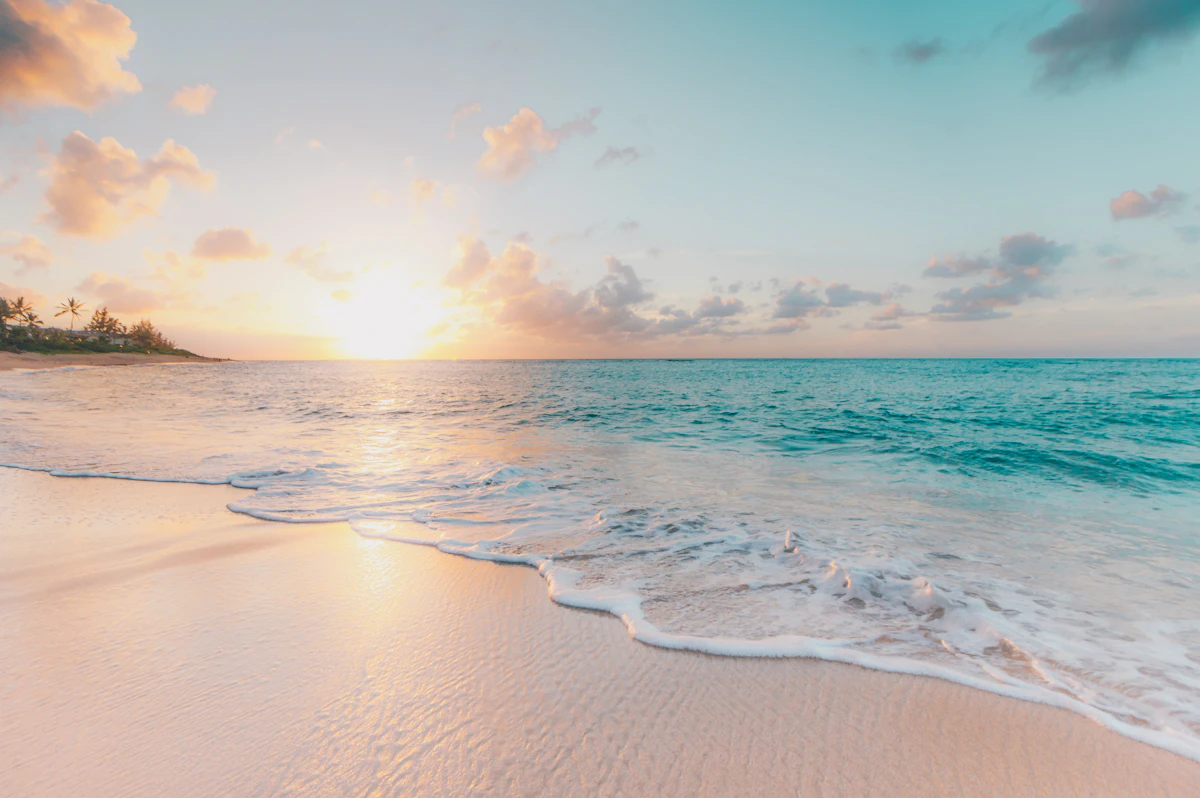
Aerial view of turquoise tropical bay
The village rises directly behind the beach—cobbled lanes climbing past half-timbered houses with climbing roses, garden gates painted in traditional blues and greens. The old fishing harbor remains working, though pleasure craft now outnumber commercial boats. You'll see weekend sailors hosing down their decks, crates of just-caught herring being loaded into refrigerated vans, gulls wheeling over the fish-cleaning station where scraps hit the water. The smell of salt and diesel and smoked fish drifts across to the beach on the prevailing breeze.
Evening transforms the waterfront. The harbor lights blink on, reflecting in the flat water. Couples walk the beach path as the sun drops behind Fehmarn's interior fields, turning the western sky the color of Sanddorn liqueur. The single beach café closes at six, but the harbor Gaststätte stays open, serving fried plaice and Flensburger Pilsener to sailors and locals who know each other by boat name and family history going back three generations.


