Counting the waves…
Counting the waves…

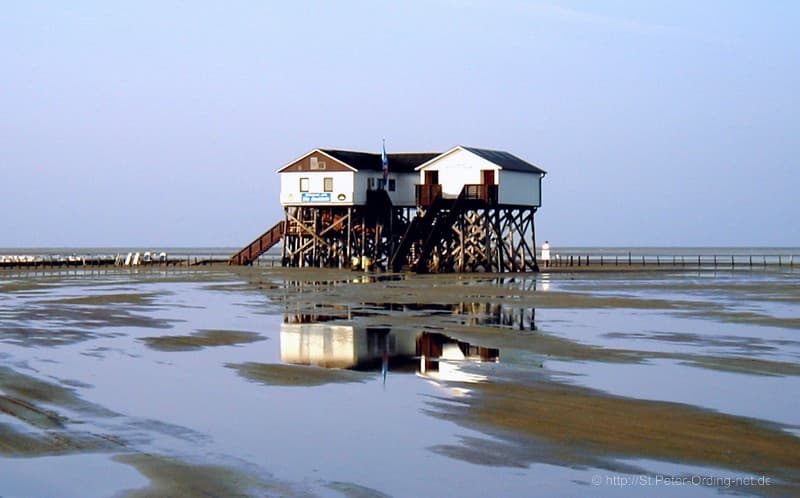
The drive into Wesselburenerkoog takes you through land that didn't exist two centuries ago—polder fields reclaimed from the Wadden Sea, now grazed by shaggy Heidschnucken sheep and bisected by drainage canals. The dike rises ahead, a grass-covered bulwark separating farmland from tidal zone. Climb the embankment and the North Sea spreads before you, though "sea" is generous at low tide—mostly it's exposed mudflat, ribbed and gleaming, stretching toward the shipping lanes. You'll share the dike with serious walkers and the occasional nature photographer crouched beside tidal pools. The wind here is constant, carrying the sharp mineral tang of seaweed and the distant percussion of waves breaking on outer sandbars. Wooden groynes jut into the mudflats, softened by algae and barnacles. At high tide, water laps against the dike base, and the narrow strip of shore becomes briefly recognizable as a beach—stones and broken shells, driftwood bleached silver. Sunset transforms the mudflats into a mirror, reflecting clouds in shades of lavender and burnt orange. Gulls settle on exposed sandbanks. The lighthouse at Büsum blinks in the distance. There's a small parking area and nothing else—no café, no lifeguard, no signage promising adventure. Just the engineered edge of Germany meeting the untamed Wadden Sea.
Places, rentals, tours and events within walking and driving distance of Wesselburenerkoog Beach.
Photos
Wesselburenerkoog Beach is a natural Wadden Sea coastline where swimming requires careful consideration. The area experiences dramatic tidal changes typical of the Wadden Sea, with water receding far offshore during low tide, exposing mudflats. There are no lifeguard services at this minimal-facility location. Currents can be unpredictable, and the seabed is muddy rather than sandy. Swimming is possible during high tide but not recommended without understanding local conditions. The beach is better suited for tidal exploration and nature walks. Always check tide times and never venture far onto mudflats alone.
The optimal time for visiting Wesselburenerkoog Beach is during late spring through early autumn (May to September), particularly during off-peak periods when crowds are minimal—which is almost always at this hidden location. The beach is especially recommended for those seeking solitude and scenic beauty rather than warm-weather swimming. Sunset visits are particularly rewarding given the open western horizon over the Wadden Sea. Visit during different tidal stages to experience the landscape's transformation. Birdwatching is excellent during migration seasons in spring and autumn. Weather can be changeable, so dress in layers.
Wesselburenerkoog is a small polder community in Dithmarschen, best accessed by car. From major cities, take the A23 toward Heide, then follow regional roads westward toward the coast. The 'koog' (reclaimed land) is reached via rural roads through agricultural landscape. Public transportation is very limited or non-existent to this remote location. Once you arrive in Wesselburenerkoog, look for coastal access points near the sea dike. Parking is informal and typically free. The remote nature means clear signage may be limited, so GPS navigation or detailed maps are helpful for finding this hidden coastal area.
Wesselburenerkoog is an extremely small, rural polder community with virtually no tourism infrastructure. Accommodation and dining facilities are essentially non-existent locally. Visitors should plan to stay in nearby towns such as Büsum (a larger coastal resort), Wesselburen, or Heide, which offer hotels, guesthouses, and restaurants. Bring all necessary supplies including food and drinks for your beach visit, as there are no shops or services at the beach itself. The nearest supermarkets and restaurants are in surrounding communities several kilometres away. This is very much a bring-your-own-provisions destination for true solitude seekers.
Wesselburenerkoog Beach is exceptional for its complete lack of development and authentic Wadden Sea wilderness character. This UNESCO World Heritage landscape offers one of the most unspoiled coastal experiences in Schleswig-Holstein, with minimal human impact and virtually no crowds. The natural Wadden Sea environment provides outstanding opportunities for observing tidal ecosystems, birdlife, and the dramatic interplay between land and sea. The scenic, remote setting is perfect for photography, particularly at sunset. Unlike resort beaches, there are no facilities, making it ideal for visitors seeking pure nature and solitude in one of Germany's most unique coastal environments.