Counting the waves…
Counting the waves…
A refined fusion of water purity, environmental stability, and communal vibrancy for Jamestown Beach.
View MethodologyAnalyzed via live sensors and environmental data.
Wave height, wind, and atmospheric stability.
Live footfall and crowd balance metrics.
Community reviews and curated sentiment.
“Jamestown Beach is not just a stretch of sand; it's a living, breathing tableau of Accra's maritime heritage. Beneath the iconic lighthouse and amidst the colorful fishing boats, you'll find a bustling community deeply…”
Higher weekend density may affect water purity and crowd scores temporarily.
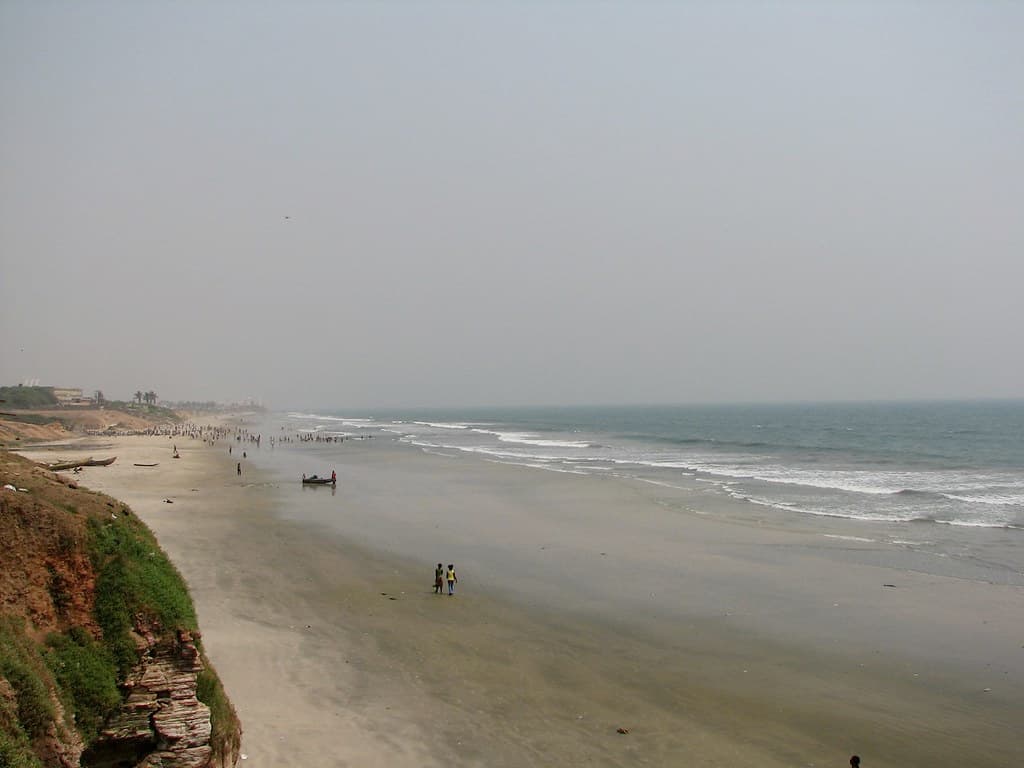
Step onto the sandy expanse of Jamestown Beach and prepare for a full sensory immersion into Accra's vibrant fishing culture. This is a working beach, alive with the daily rhythm of fishermen launching their brightly painted canoes into the Atlantic, and women expertly mending nets on the shore. The air hums with activity, a symphony of human effort and the constant roar of the ocean, all unfolding beneath the watchful gaze of the historic Jamestown Lighthouse.
The beach is a photographer's dream, offering endless opportunities to capture the raw energy and authentic spirit of Accra. From the intricate patterns of fishing nets drying in the sun to the bustling fish market where the day's catch is sold, every corner tells a story. Engage with the friendly locals, learn about their traditions, and perhaps even sample some freshly grilled fish, a true taste of the sea.
 Credit: Unsplash
Fishermen are pulling a net ashore on a beach
 Credit: Unsplash
a rocky beach covered in green algae covered rocks
Photograph vibrant scenes
Sample local seafood
Climb for city views
Prime Visitation
Anytime|Budget Travel
Where it is
Jamestown Beach
Accra, Greater Accra, Ghana
5.534500°, -0.215700°
Weather
Loading…
Swell
—
Temp
Warm · Restorative
UV Index
Moderate
Wind
—
Tidal State
Last known
Max Sunlight
—
Ideal Shade
—
Jan - Dec (Peak)
May - Nov (Off-season)
Anytime|Budget Travel
Select a category to load nearby places.
Unlock restaurants, luxury stays and curated maritime experiences within 2km
Jamestown Beach is a working urban beach where local fishermen operate, and swimming conditions can be unpredictable with strong currents and occasional debris. While locals do swim here, it's not primarily a recreational swimming beach. There are no lifeguards or formal safety measures. Visitors should exercise caution and observe conditions carefully before entering the water. The beach is more valued for its cultural atmosphere, fishing activity, and proximity to the historic lighthouse than for swimming opportunities.
Jamestown Beach buzzes with activity year-round, especially early mornings when fishermen return with catches. For photography and atmosphere, visit between 6-9 AM to see colorful pirogues (fishing boats) and market activity. Late afternoons offer beautiful light against the lighthouse. The dry season (November-March) provides more comfortable weather. Weekdays and weekends both offer vibrant scenes. Budget travelers will appreciate free access anytime. Visit during the annual Homowo festival (July-August) for exceptional cultural experiences.
Jamestown Beach is located in Accra's historic Jamestown neighborhood, west of the city center. From central Accra, take a taxi or ride-hailing service directly to Jamestown or the Jamestown Lighthouse; the journey is typically 10-20 minutes depending on traffic. Shared tro-tros heading toward Korle Bu or James Town can drop you nearby. The beach is walkable from the lighthouse and Boxing Arena. The neighborhood is compact, and locals are helpful with directions to the beach front.
Jamestown offers authentic street food and local chop bars serving fresh seafood, often caught that morning. Near the beach, vendors sell grilled fish, banku, kenkey, and other Ga dishes. The neighborhood has small eateries and drinking spots popular with locals. For more variety, nearby Usshertown and the broader Accra Central area offer additional restaurants. The atmosphere is decidedly local rather than touristy. Bringing cash is essential, as most vendors don't accept cards. Expect budget-friendly, flavorful traditional Ghanaian cuisine.
Jamestown Beach is Accra's most culturally authentic urban beach, functioning as a working fishing harbor beneath the iconic colonial-era lighthouse and surrounded by historic Ga community neighborhoods. Unlike resort beaches, this is where daily life unfolds—fishermen mend nets, women smoke fish, and children play among colorful boats. The setting combines Instagram-worthy backdrops (lighthouse, colonial architecture, vibrant pirogues) with genuine cultural immersion. It's ideal for travelers seeking real urban African coastal life rather than sanitized beach resorts, all at zero entry cost.
Photos