
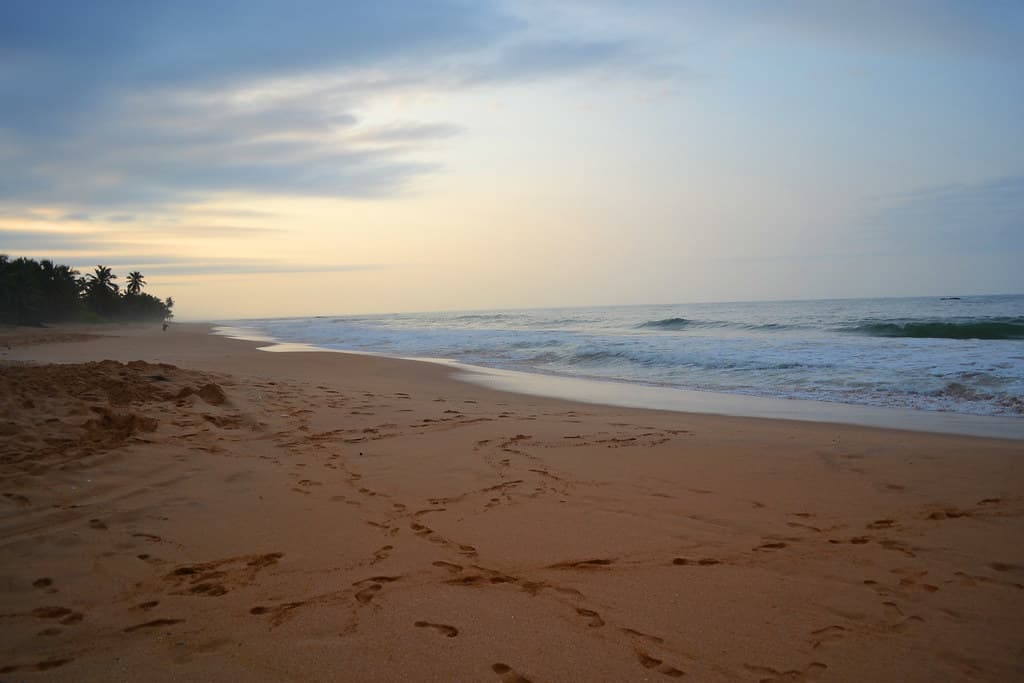
Counting the waves…
Counting the waves…

Dixcove Beach is more than just sand and sea; it's the beating heart of a bustling fishing community. Here, the rhythm of daily life is intrinsically linked to the ocean. Brightly painted canoes, laden with the morning's catch, line the shore, creating a vibrant tableau against the backdrop of the Atlantic. You'll witness fishermen expertly hauling in nets, their calls echoing across the water, while women sort the day's bounty. The beach sits proudly beneath the gaze of Fort Metal Cross, a 17th-century British fort that adds a layer of historical intrigue to the scenic beauty. Explore the fort's ramparts for panoramic views of the bay, then descend to the beach where the present day unfolds with captivating energy. The atmosphere is consistently lively, a testament to the town's enduring spirit and connection to the sea. Families will find Dixcove Beach particularly engaging, offering a dynamic environment where children can play in the shallows and observe the fascinating activities of the fishing community. It's an ideal spot for those who appreciate a beach with character, where local culture is not just observed but actively experienced. Its proximity to the popular Busua and Butre areas makes it an accessible and enriching addition to any Western Region itinerary.
Places, rentals, tours and events within walking and driving distance of Dixcove Beach.
Photos
Dixcove Beach is a working fishing beach with moderate surf that can vary daily. While families do visit, you should supervise children closely as there are no lifeguards and currents can be strong. The sandy beach is suitable for playing near the shore, but swimming requires caution. The village atmosphere is generally safe and welcoming, with local fishermen often present. The historic Fort Metal Cross overlooking the beach adds a secure, community feel. For the safest family experience, stick to shallow water, avoid swimming during rough conditions, and ask locals about current sea conditions.
Dixcove Beach can be visited year-round thanks to its fishing village character and budget-friendly appeal. The dry season (November-March) offers the most reliable weather with sunshine and calmer seas. However, the beach maintains its authentic atmosphere throughout the year, making it viable even during the rainy season (April-October) when you'll find lower prices and fewer tourists. Weekdays are generally quieter than weekends when Ghanaian visitors may arrive. Since it's part of the Busua-Butre cluster, accommodation and services remain available across all seasons.
Dixcove is conveniently located between Takoradi and the popular Busua beach area. From Takoradi (about 30km east), you can take a tro-tro or shared taxi westward along the coastal road, with the journey taking roughly 45 minutes to an hour. From Busua (approximately 10km west), it's a short 15-20 minute drive or taxi ride eastward. The roads are generally in reasonable condition. Some travelers walk between Dixcove and nearby beaches, though it's quite a distance. Chartered taxis are affordable and can wait or return to collect you.
Dixcove offers budget-friendly guesthouses and small hotels, mostly simple but clean accommodations suitable for travelers exploring the western coast without luxury expectations. The village has local chop bars and small restaurants serving Ghanaian staples like banku with fish, fufu, and grilled seafood fresh from the day's catch. Don't expect extensive menus or upscale dining—this is authentic fishing village fare. Some guesthouses can prepare meals with advance notice. For more dining variety, nearby Busua (20 minutes away) has additional restaurants and lodges. Bring cash as card facilities are limited.
Fort Metal Cross sits prominently on a rocky outcrop overlooking Dixcove Beach and was built by the English in 1691. While not as extensively developed for tourism as some Ghanaian forts, it remains a significant historical landmark worth exploring. The fort offers excellent views over the fishing harbor and coastline. Access and opening hours can be informal—inquire locally about visiting. The structure itself shows the colonial trading past of Ghana's coast. Combined with the working fishing beach below, it creates a uniquely atmospheric setting that blends history with contemporary coastal village life.