
The drive from Pacitan town winds through teak plantations and limestone hills before depositing you at a clifftop parking area. Below, the beach curves in a near-perfect arc, its black volcanic sand stark against the white foam of breaking waves. Local warungs perch above the shoreline, their bamboo frames rattling when the larger sets roll through.
“One of Java's most consistent left-hand point breaks remains guarded by a remote location that has kept crowds thin and the vibe unvarnished.”
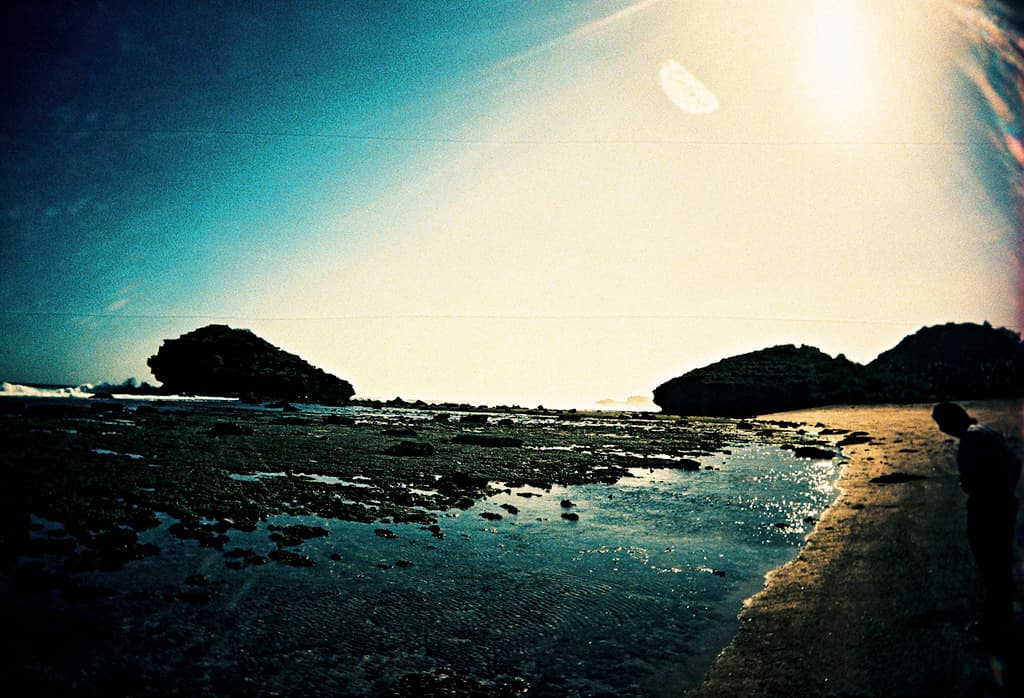 Credit: Flickr
Don't Just Stand Near The Shore
Watu Karung has earned its reputation among surfers for a reason: the left-hand point break here barrels with mechanical consistency, offering rides that can stretch beyond 200 meters when conditions align. But even if you never touch a board, the bay rewards patience. Watch long enough and you'll see the light shift across the cliffs, transforming the rock face from honey-gold to deep amber as afternoon wears on. Fishermen time their launches between sets, their wooden outriggers slicing through the shore break with practiced precision.
The beach remains refreshingly free of resort development—accommodation means simple guesthouses in the village above, meals come from family-run kitchens frying fresh snapper, and the loudest sound at dusk is still the ocean pounding the reef. This remoteness is precisely the point. You came to Java's south coast because it hasn't been packaged, because the surf still feels earned, because the sand under your feet carries the weight of volcanic fire and the pull of deep water.


