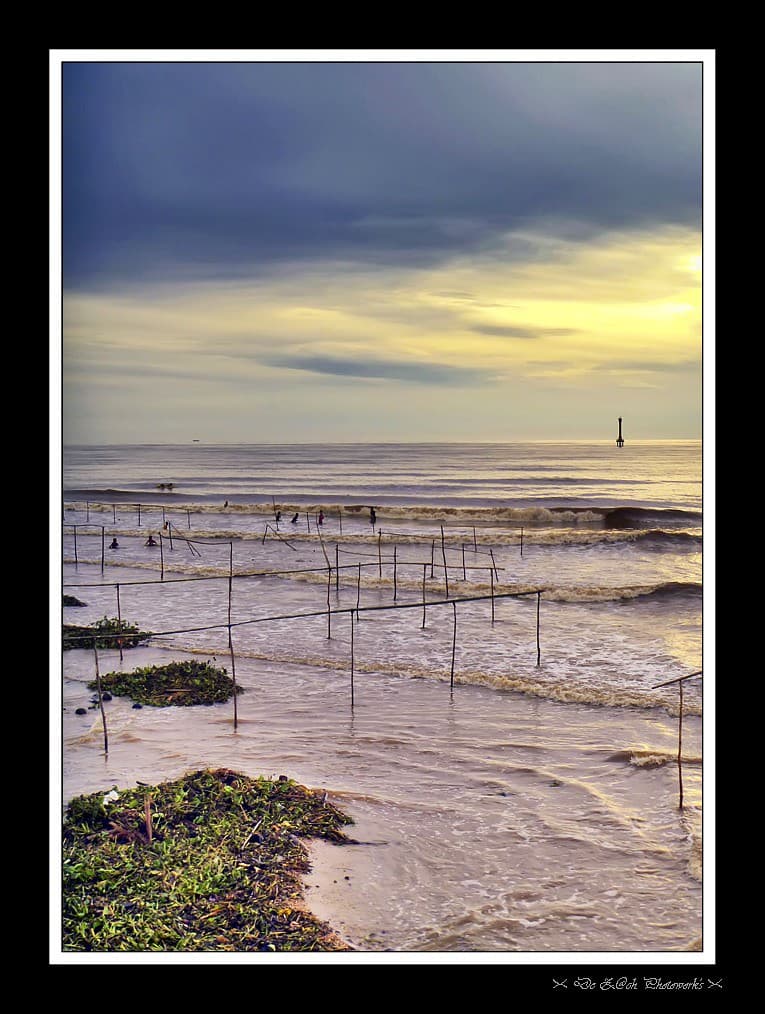
Counting the waves…
Counting the waves…

You reach Swarangan Beach by threading through oil palm plantations and kampung roads that narrow until asphalt yields to packed earth. The beach unfurls in a long crescent where the Tanah Laut coastline bends westward, backed by casuarina trees that hiss in the onshore breeze. The sand here carries the charcoal hue common to volcanic coastal zones, and at low tide the waterline retreats a hundred meters, exposing sandbars pocked with tiny crabs. Local fishing families launch their perahu from this shore before sunrise, returning mid-morning with snapper and squid destined for Pelaihari's morning markets. You'll see nets stretched between coconut palms for mending, and occasionally a vendor grilling fresh catch over coconut-husk coals. The water stays tepid year-round—this close to the equator, seasonal variation means the difference between warm and slightly warmer. Swarangan rewards the aimless afternoon: wading the shallows as herons work the tide line, watching storm cells build over the Java Sea, counting the fishing stakes that march into deeper water. There are no beach clubs, no jet skis, no touts. Just the rhythm of a working coastline where visitors are so infrequent that children still wave from the tree line.
Places, rentals, tours and events within walking and driving distance of Swarangan Beach.
Photos
Swarangan Beach conditions can vary depending on tides and weather. As with many beaches in South Kalimantan, swimmers should exercise caution and check local conditions before entering the water. The beach is relatively undeveloped, meaning there are typically no lifeguards on duty. It's advisable to swim during calmer morning hours, stay close to shore, and never swim alone. Always ask locals about current conditions, as they're familiar with seasonal patterns and can advise on the safest areas for swimming.
Swarangan Beach can be visited year-round, though South Kalimantan's dry season (May to October) generally offers more reliable weather for beach activities. The wet season (November to April) brings frequent rainfall, particularly in December and January, which may affect accessibility and beach enjoyment. Weekdays tend to be quieter than weekends when locals visit. Early mornings offer the most peaceful atmosphere and best light for photography. Since it's a hidden gem, the beach rarely feels crowded even during peak Indonesian holiday periods.
Swarangan Beach is located in Tanah Laut Regency, accessible from Banjarmasin, the capital of South Kalimantan. The journey typically requires private transportation such as a rental car or motorbike, as public transport options are limited. The drive takes approximately 2-3 hours depending on your starting point. Road conditions can vary, so check locally before departure. Being a relatively hidden beach, parking facilities are basic and informal. There's usually space to park near the beach access points, though formal parking lots may not be available.
As a hidden, less-developed beach, Swarangan has limited on-site amenities. You may find small local warungs (food stalls) selling simple Indonesian dishes and refreshments, though availability isn't guaranteed. It's wise to bring your own food, water, and supplies. Accommodation options directly at the beach are minimal. Visitors typically stay in nearby towns within Tanah Laut Regency or return to Banjarmasin for more comprehensive lodging choices. The area's remote nature is part of its charm but requires advance planning for meals and overnight stays.
Swarangan Beach stands out for its undeveloped, authentic character in a province better known for rainforests than coastal tourism. Unlike Bali or Java's beaches, Kalimantan's coastline remains largely unexplored by international visitors, making Swarangan a genuine hidden gem. The beach offers scenic views with minimal commercial development, providing an off-the-beaten-path experience. Its location in South Kalimantan means fewer crowds and a chance to experience local coastal culture authentically. The journey itself becomes part of the adventure, revealing rural Indonesia's natural beauty beyond typical tourist circuits.