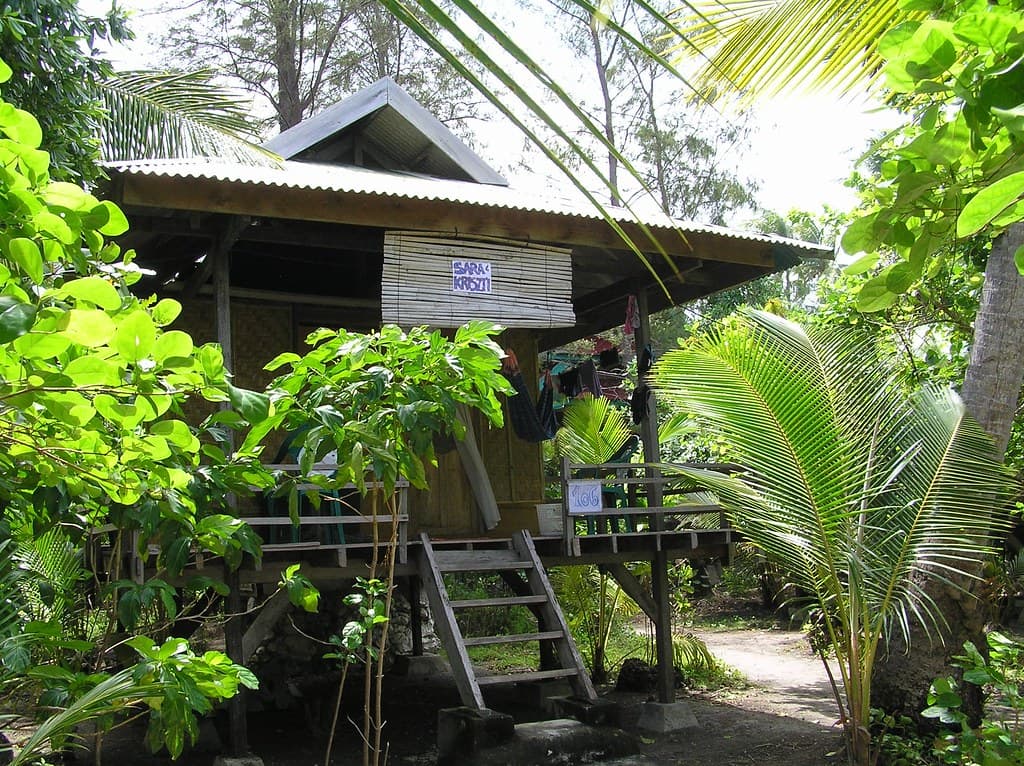
Counting the waves…
Counting the waves…

Wangi-Wangi is the gateway island most travelers rush through on their way to Wakatobi's remote dive resorts, but Patuno Beach rewards those who linger. The sand here is fine and pale, not quite powder but soft underfoot, bordered by shade trees where local families string hammocks on weekends. Morning light turns the shallows into bands of jade and turquoise, and you'll see wooden outriggers bobbing just offshore, their owners checking hand lines while you float on your back. The reef begins barely twenty meters from shore—close enough that you don't need a boat, just fins and a mask. Sergeant majors dart through table corals, and if you swim along the rocky eastern edge, sweetlips and parrotfish ignore your presence. Between swims, warungs under tin roofs serve fried snapper with sambal so fresh the chilies were probably picked that morning. Because Patuno sits within walking distance of Wangi-Wangi's main town, it occupies a rare middle ground: developed enough for basic facilities, overlooked enough to feel unhurried. Fishermen mend nets on the sand in late afternoon, and children practice backflips off a weathered pier. You'll share the beach with Indonesian families on holiday, not with tour groups, and that's exactly the point.
Places, rentals, tours and events within walking and driving distance of Patuno Beach.
Photos
Patuno Beach is generally safe for swimming and well-suited for families. The beach features calm, shallow waters protected by surrounding islands, making it ideal for children to wade and play. The gentle waves and clear visibility provide comfortable swimming conditions. However, always supervise children near the water and check local conditions upon arrival. The beach's family-friendly reputation stems from its tranquil atmosphere and manageable surf. Basic safety facilities may be limited, so bring your own first-aid supplies and practice standard water safety precautions.
Patuno Beach can be visited year-round due to Wangi-Wangi's tropical climate, with water temperatures remaining warm throughout the year. The dry season (April to November) typically offers the most reliable weather with calmer seas and abundant sunshine, making it ideal for beach activities and water sports. The wet season (December to March) brings occasional rainfall but rarely disrupts travel plans significantly. Since this beach is often missed by tourists, it remains relatively uncrowded regardless of season, offering a peaceful experience whenever you visit.
Reaching Patuno Beach requires flying to Matahora Airport on Wangi-Wangi Island, with connections typically through Makassar or Kendari. From the airport or Wangi-Wangi town, the beach is accessible by rental motorbike, car, or local taxi, usually within 30-45 minutes depending on your starting point. The roads are generally paved but may be narrow in sections. Parking facilities are basic but adequate, with informal parking areas near the beach. Given the beach's off-the-beaten-path nature, signage may be limited, so confirm directions locally.
Patuno Beach has limited on-site amenities, reflecting its quiet, less-developed character. Small warungs (local food stalls) occasionally operate nearby, serving simple Indonesian dishes and fresh seafood, though availability can vary. Basic facilities like restrooms may be minimal. For accommodation, most visitors stay in Wangi-Wangi town, where guesthouses and small hotels offer budget to mid-range options. The town also has more dining choices and services. It's advisable to bring water, snacks, and sun protection, especially for day trips to the beach.
Patuno Beach is often overlooked because most travelers to the Wakatobi region focus on world-renowned dive sites and resort islands, bypassing Wangi-Wangi's beaches. The area's reputation centers on underwater attractions rather than coastal relaxation spots. Additionally, limited tourism infrastructure and marketing mean fewer people know about Patuno Beach's existence. Its location on a less-visited island and lack of international promotion contribute to its hidden status. This works in favor of travelers seeking authentic, uncrowded beach experiences away from typical tourist circuits in Indonesia's marine tourism hotspots.