
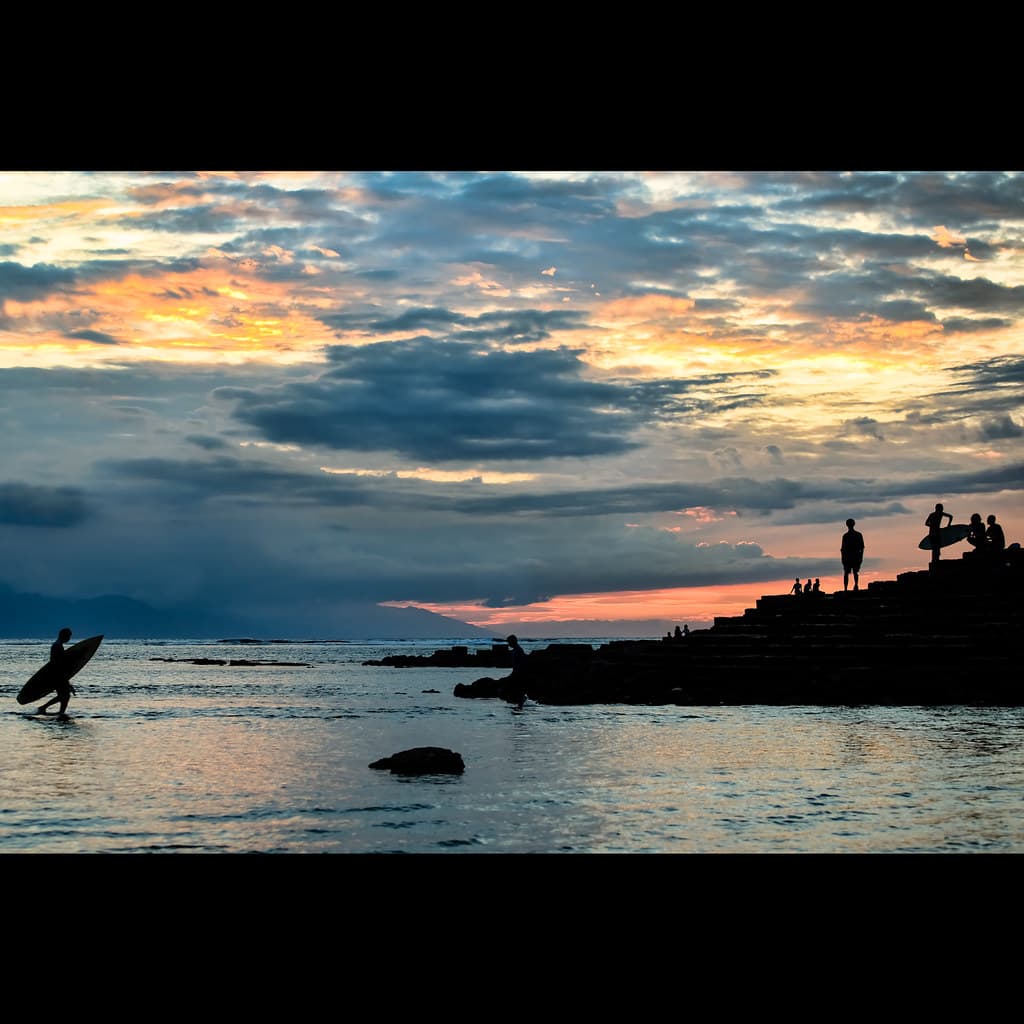
Senggigi's shore isn't the white powder fantasy you'll find on the Gilis—the sand here runs dark from volcanic minerals, warm underfoot even in late afternoon. You wade in over smooth stones before the seabed softens, the water temperate and gentle along this protected western coast. Fishing prahu bob just beyond the break, their painted hulls vivid against the pewter-blue strait. On clear mornings, Mount Agung rises across the water in Bali, a hazy triangle on the horizon.
“Lombok's original beach resort where tourism and traditional fishing village life coexist along the same volcanic-sand shore.”
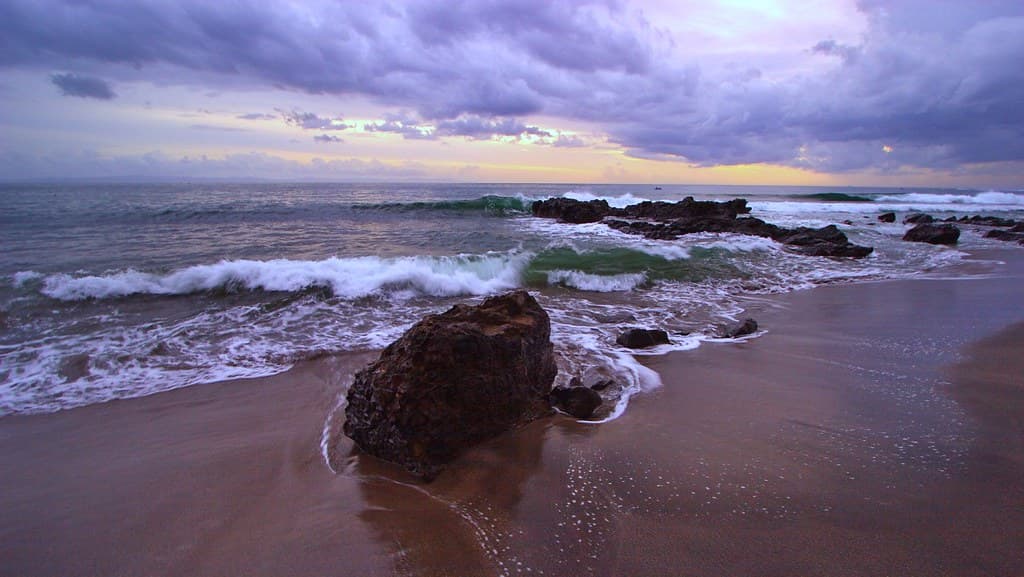 Credit: Flickr
Sad Sands, Senggigi Beach Lombok Indonesia
The beachfront road threads behind a loose chain of hotels, warungs, and dive shops, palms rustling overhead. Unlike the packed southern Bali strips, Senggigi retains pockets of quiet—empty stretches between resorts where only footprints and dried seaweed mark the tideline. Locals still spread nets to dry on wooden racks. By midday, vendors circulate with cold kelapa muda and sarongs; you'll negotiate prices under rented umbrellas, the scent of coconut oil and salt thick in the humid air.
Sunset is the daily ritual. Everyone—honeymooners, backpackers, Indonesian families—migrates toward the shoreline as the light softens. The sky streaks tangerine and violet, silhouetting the offshore islets. Beachside cafés fill with the clatter of dishes and Bintang bottles, grilled seafood sizzling on open flames. The scene feels both touristed and authentic, a beach town that adapted without erasing itself.


