Counting the waves…
Counting the waves…

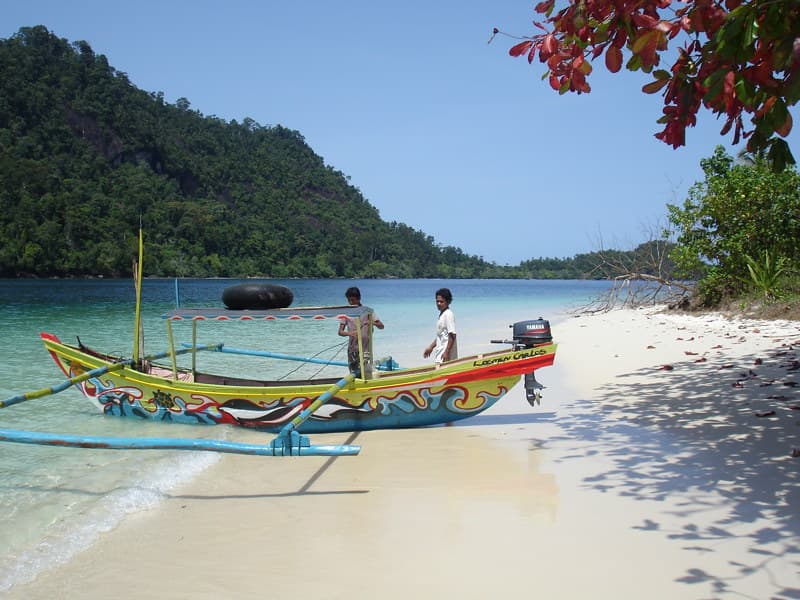
The beach unfolds in two moods. Mornings bring fishermen mending nets beside their bright wooden perahu, the air thick with salt and grilled ikan bakar from shoreline warungs. By afternoon, Padang families arrive in waves, children splashing in the shallows while vendors hawk es kelapa muda from carts with peeling paint. The sand here isn't postcard white—it's charcoal grey, volcanic grit that stays cool underfoot even as the equatorial sun climbs high. Climb the cliffside staircase to the south and you'll reach the famous stone formation, a jagged mass of coral and limestone that legend says was once a disobedient son and his ship, cursed by his mother's tears. Locals leave offerings of flowers at its base. From this vantage, Padang's port sprawls to the north, cargo cranes silhouetted against green hills, while the Indian Ocean stretches unbroken to the horizon. As the sun drops, the sky ignites—tangerine bleeding into plum—and the beach transforms into an impromptu night market. Grilled satay smoke mingles with frangipani, and the city's hum softens into the rhythm of lapping waves. You're not alone here, but that's the point: Air Manis belongs to Padang, worn smooth by a century of footsteps and stories.
Places, rentals, tours and events within walking and driving distance of Air Manis Beach.
Photos
Swimming conditions at Air Manis Beach can be challenging due to strong currents and waves, particularly during high tide. The beach is more popular for scenic walks, photography, and enjoying sunset views rather than swimming. If you do choose to swim, stay close to shore during calm conditions and avoid going deep. Local authorities don't always have lifeguards on duty, so exercise caution. The beach is better suited for wading and paddling in shallow water, especially for families with children.
Air Manis Beach can be visited year-round, though the dry season from May to September typically offers the best weather with less rainfall. The beach is particularly stunning during sunset hours, roughly between 5:30-6:30 PM, when the sky displays vibrant colors over the Indian Ocean. Weekday visits tend to be quieter than weekends when local families gather. Mornings offer cooler temperatures and fewer crowds, ideal for photography and exploring the legendary Malin Kundang stone. The beach atmosphere is pleasant throughout the year despite occasional rain.
Air Manis Beach is located about 10 kilometers south of downtown Padang, roughly a 20-30 minute drive depending on traffic. You can reach it by taxi, ride-hailing apps like Grab or Gojek, or rent a motorbike. Public minibuses (angkot) also run from the city center, though routes may require transfers. The beach has a parking area available for cars and motorcycles at affordable rates. The road leading to the beach is paved and generally well-maintained, making it accessible for most vehicles.
Air Manis Beach has several local warungs (food stalls) and small restaurants serving fresh seafood, traditional Padang cuisine, and refreshing coconut drinks. You'll find grilled fish, squid, and other Indonesian favorites at reasonable prices. Basic amenities include public restrooms and prayer facilities. While there aren't major hotels directly on the beach, budget guesthouses and homestays are available in the surrounding area. For more accommodation options, staying in central Padang provides better variety and is only a short drive away.
Air Manis Beach is famous for the Malin Kundang legend, a popular West Sumatran folktale about an ungrateful son who denied his mother after becoming wealthy. According to legend, he was cursed and turned to stone along with his ship. You can see the distinctive rock formations on the beach that locals believe are the petrified remains of Malin Kundang. This story is deeply embedded in Minangkabau culture and teaches lessons about respecting parents. The site attracts many visitors interested in local mythology and cultural heritage.