Counting the waves…
Counting the waves…
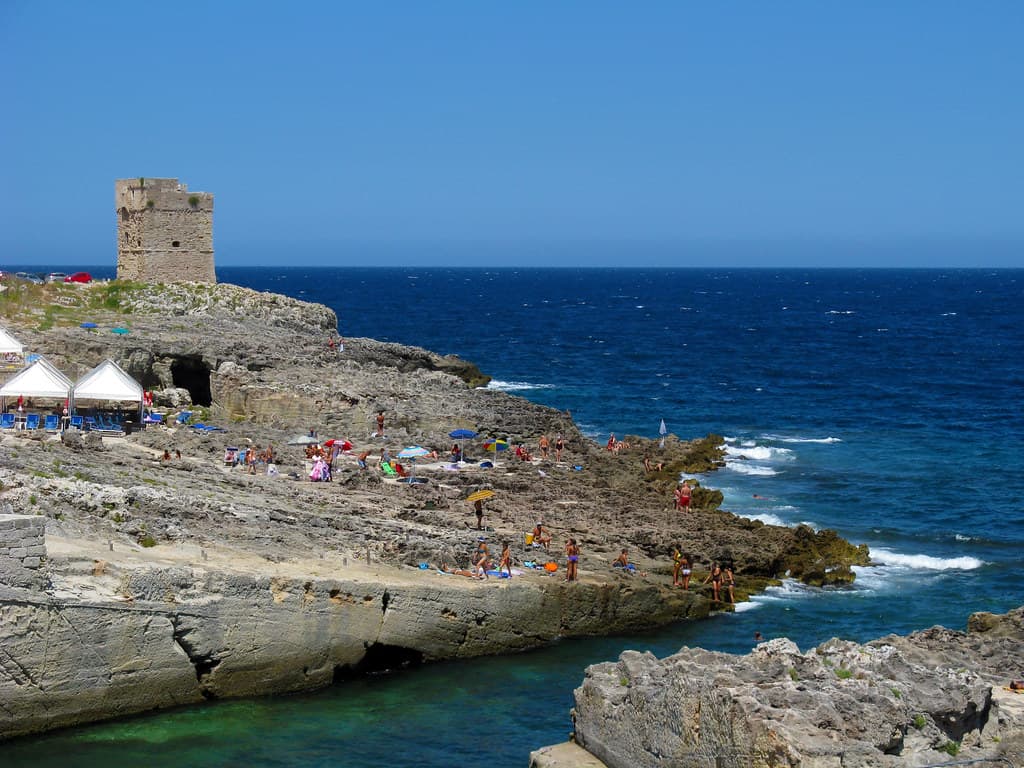
The path from the road barely qualifies as such: more a suggestion worn by feet that know where to step between thorn bushes and loose scree. Santa Cesarea's belle époque thermal buildings recede behind you as you descend, their yellow facades and Moorish details giving way to raw cliff face striped with sediment layers like pages in a stone book. At the bottom, wedged between vertical rock walls, Cala dell'Acquaviva reveals itself in stages—first the sound of water moving in enclosed spaces, then the impossible blue-green of the inlet, finally the cold shock of freshwater currents braiding through the warm Adriatic. You enter from the rocks because there is no beach, only stone shelves worn smooth by centuries of bathers and the patient work of waves. The water temperature shifts as you swim—zones of icy clarity where the springs well up from fissures in the limestone, pockets of bathwater warmth where the sun has been working all morning. Visibility extends thirty feet down to the white sand bottom where freshwater and salt water meet in shimmering haloclines that bend light into ribbons. Small fish hover in the mixing currents, and if you dive, the spring mouths exhale bubbles that tickle your skin like champagne. A handful of locals claim the best platforms, their towels anchored with beach stones, thermoses of espresso sweating in the shade. By noon the sun reaches directly into the cove, turning the water from jewel-toned to bleached almost white, the rocky walls radiating heat that makes the cold springs feel even colder against your salt-tightened skin.
Places, rentals, tours and events within walking and driving distance of Cala dell'Acquaviva.
Photos
Swimming is generally safe, though the cove is small and natural without lifeguard supervision. The water stays shallow near the shore, making it relatively safe for confident swimmers. The unique feature here is the freshwater spring mixing with seawater, creating temperature variations—the fresh water is noticeably cooler. Wear water shoes as the bottom has rocks and pebbles. Waves are typically minimal in this sheltered cove, but check conditions before entering. The vivid turquoise water offers excellent visibility for watching where you step.
Visit during May-June or September-October for ideal conditions with fewer crowds and pleasant weather. These shoulder months offer warm enough temperatures while avoiding the July-August peak season rush. Early morning visits provide the calmest water and best light to appreciate the vivid turquoise color created by the freshwater spring. The cove's small size means it can feel crowded even with modest visitor numbers, so weekdays are preferable. Avoid windy days, though the cove's sheltered position offers some protection from typical Adriatic breezes.
The cove is located along the coastal road between Santa Cesarea Terme and Castro, in the Marittima area. Driving is the most practical option; follow the coastal SP358 and look for small parking areas near the cove—space is limited. A path or steps lead down to the water, though access can be steep and rocky in places. Public transportation along this coastal stretch is limited. The cove is relatively small and can be easy to miss, so use GPS coordinates or ask locals for directions to this specific freshwater spring cove.
The cove itself has no facilities, bars, or services—bring everything you need including water, food, sun protection, and shade. The nearest towns are Santa Cesarea Terme and Castro, both within a few kilometers, offering restaurants specializing in Salento cuisine and fresh seafood, plus cafés and shops. Accommodation options in both towns include hotels, B&Bs, and vacation rentals, many with sea views. Marittima village nearby also has some dining options. Tricase and Castro provide additional services and are popular bases for exploring this coastline.
The defining characteristic is the underwater freshwater spring (acquaviva means 'living water') that feeds into the cove, creating the extraordinarily vivid turquoise color and unique swimming experience. The mixing of fresh and salt water produces distinctive temperature layers and remarkable water clarity, making it exceptional for snorkeling. This geological feature is relatively rare along the coast. The small, intimate size and dramatic rocky setting add to its charm. Located between the popular towns of Castro and Santa Cesarea Terme, it offers a hidden gem experience despite being accessible.