Counting the waves…
Counting the waves…
A refined fusion of water purity, environmental stability, and communal vibrancy for Cala Porto.
View MethodologyAnalyzed via live sensors and environmental data.
Wave height, wind, and atmospheric stability.
Live footfall and crowd balance metrics.
Community reviews and curated sentiment.
“Cala Porto fits in a single glance—a small semicircle of shoreline where weathered rock meets water so calm it mirrors the surrounding buildings. The medieval walls rise directly from the water, their limestone blocks…”
Higher weekend density may affect water purity and crowd scores temporarily.
You'll find Cala Porto by following the old town's perimeter, walking beneath arches and past balconies until the alley opens onto a small clearing where flat rocks descend into the Adriatic. The cove is intimate, almost claustrophobic, with space for perhaps two dozen people at most before it feels crowded. The water enters a sheltered basin protected by the harbor's configuration, so calm that you can see your own reflection before you step in, and clear enough to watch tiny fish investigating the algae-covered rocks three meters below.
The setting is deeply historical—you're swimming in a harbor that's served Giovinazzo since Byzantine times, the same walls that once watched for Saracen raiders now looking down on sunbathers and swimmers. The rock platforms show centuries of wear, smoothed by salt and wave action into shapes that accommodate human bodies surprisingly well. By late morning, locals arrive with minimal gear—a towel, perhaps a small cooler—claiming their usual spots with the ease of long practice.
 Credit: Unsplash
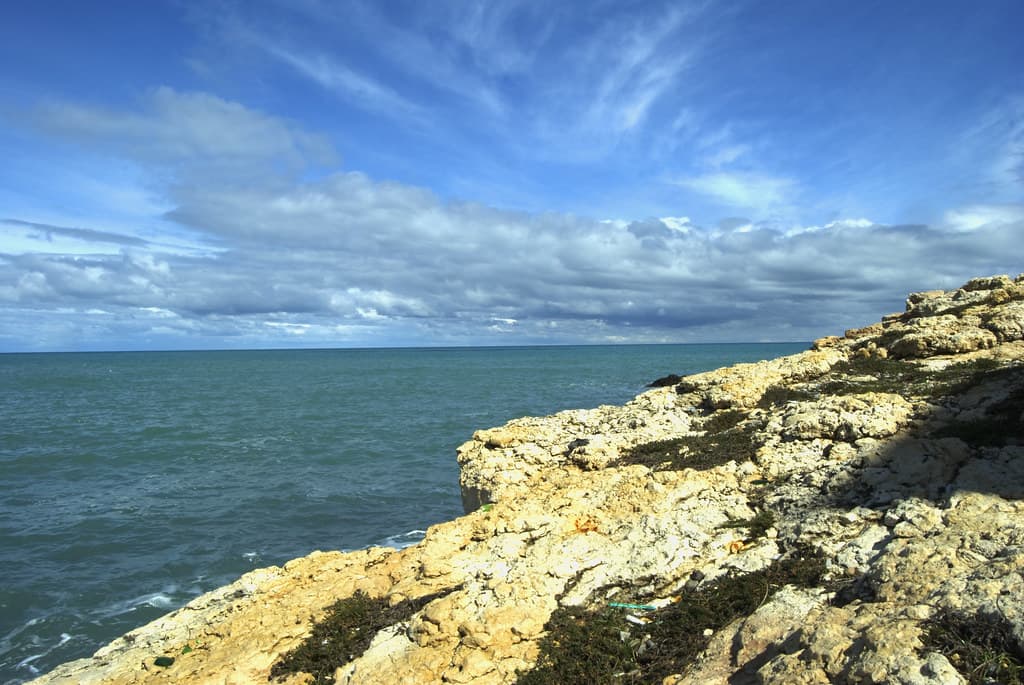
brown rock formation on blue sea during daytime
 Credit: Unsplash
a crowded beach with blue and white umbrellas
Protected Byzantine-era cove waters
Limestone fortifications from water
Small platforms beneath old town
Prime Visitation
Anytime
Where it is
Cala Porto
Giovinazzo, Apulia, Italy
41.188500°, 16.672600°
Weather
Loading…
Swell
—
Temp
Warm · Restorative
UV Index
Moderate
Wind
—
Tidal State
Last known
Max Sunlight
—
Ideal Shade
—
May - Sep (Peak)
Jan - Dec (Off-season)
Historical data suggests peak visibility and stable sea temperatures occur during the prime visitation window.
Select a category to load nearby places.
Unlock restaurants, luxury stays and curated maritime experiences within 2km
Cala Porto is generally safe for swimming, though conditions depend on weather and sea state. The rocky cove offers relatively calm waters, especially in summer months, making it suitable for most swimmers. However, rocky entry points require careful footing and water shoes are recommended. The urban location means it's typically monitored during peak season, but there may not be lifeguards year-round. Check local conditions before swimming and be mindful of boat traffic in the small harbour area adjacent to the cove.
Cala Porto can be visited year-round thanks to its sheltered position and scenic old-town setting. Summer months (June-September) offer the warmest weather for swimming, though the cove attracts locals and visitors throughout the year. Shoulder seasons (May and October) provide pleasant temperatures with fewer crowds. Even in cooler months, the cove remains a beautiful spot for walks and photography. For couples seeking a romantic atmosphere, sunset visits are particularly recommended when the historic buildings glow in golden light.
Giovinazzo is easily accessible from Bari, located approximately 25 kilometers north along the Adriatic coast. Regional trains run regularly between Bari Centrale and Giovinazzo station, with journey times around 20-30 minutes. From the station, Cala Porto is a short walk into the old town. By car, take the SS16 coastal road from Bari. Parking can be limited in the historic centre, so look for designated parking areas on the town's outskirts. Local buses also connect Giovinazzo with neighbouring towns along the coast.
Giovinazzo's old town surrounding Cala Porto offers numerous dining options, from traditional trattorias to seafood restaurants serving fresh Adriatic catch. The area is known for excellent local cuisine, including Apulian specialities. Accommodation ranges from charming bed and breakfasts in historic buildings to small hotels within the old town. Many properties offer sea views. For more extensive hotel options, nearby Bari provides additional choices. The compact old town means most restaurants and lodging are within easy walking distance of the cove.
Cala Porto's defining feature is its intimate integration with Giovinazzo's historic old town, creating a strong sense of local identity. Unlike larger resort beaches, this small cove feels authentically tied to daily life in the medieval quarter. The rocky setting is framed by traditional whitewashed buildings and the town's cathedral, offering a distinctly urban-coastal blend. It's a place where locals swim and socialize, providing visitors an authentic glimpse into Apulian coastal culture rather than a typical tourist beach experience.
Photos