Counting the waves…
Counting the waves…
A refined fusion of water purity, environmental stability, and communal vibrancy for Cala della Sanguinara.
View MethodologyAnalyzed via live sensors and environmental data.
Wave height, wind, and atmospheric stability.
Live footfall and crowd balance metrics.
Community reviews and curated sentiment.
“You'll hear the hull scrape pebbles before you see the cove—a slit in Vieste's chalk ramparts where swallows nest in fissures and the sea shifts from jade to indigo in a single stroke.”
Limited recent visitor reports — live OBI telemetry is your best guide for current conditions.
The approach by sea is a procession past limestone bastions streaked white and ochre, each fold in the rock holding a pocket of shadow. When the skipper cuts the engine, the silence is almost physical—just the slap of wavelets against the bow and the rustle of Aleppo pines clinging to the cliff face. You wade ashore onto smooth stones the size of hen's eggs, still cool underfoot despite the July heat.
The beach itself is a slender curve, no more than thirty meters across, walled by cliffs that lean inward like conspirators. In the shallows, sea grass sways over white sand, and you can watch damselfish dart between the blades. By midafternoon, the sun strikes the western cliff and the whole cove glows amber, the water turning the color of old Murano glass.
 Credit: Unsplash
brown rock formation on blue sea during daytime
 Credit: Unsplash
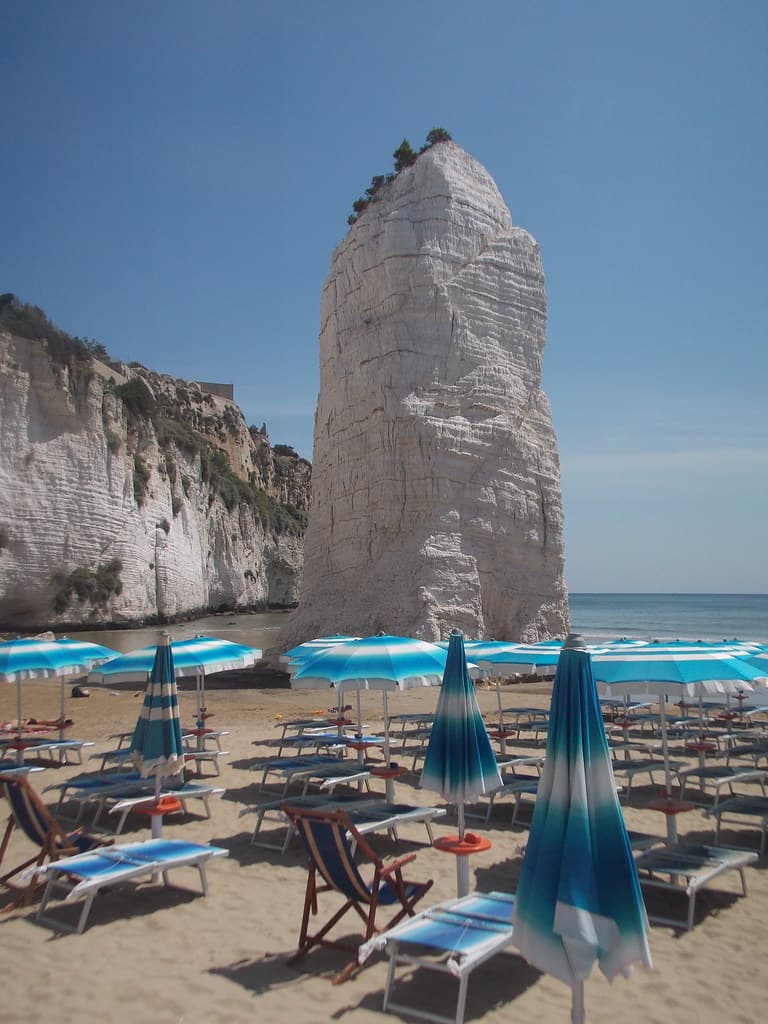
a crowded beach with blue and white umbrellas
Damselfish among the blades
Late light on limestone
Switchback trail through pines
Prime Visitation
Best Weather|Less Crowds
Where it is
Cala della Sanguinara
Vieste, Apulia, Italy
41.785700°, 16.168400°
Weather
Loading…
Swell
—
Temp
Warm · Restorative
UV Index
Moderate
Wind
—
Tidal State
Last known
Max Sunlight
—
Ideal Shade
—
May - Sep (Peak)
Jan - Dec (Off-season)
Best Weather|Less Crowds
Select a category to load nearby places.
Unlock restaurants, luxury stays and curated maritime experiences within 2km
Swimming at Cala della Sanguinara is generally safe during calm conditions, with clear turquoise waters typical of the Gargano coast. However, the cove's secluded nature means there are no lifeguards present, so swimmers should be confident and aware of their abilities. The rocky seabed can be uneven, and water shoes are helpful. Check weather conditions before visiting, as the cove can experience stronger currents during windy periods. The sheltered nature of the cove often provides calmer waters than exposed beaches, making it suitable for careful swimmers.
The ideal time to visit is from late May through September when weather is warmest and sea conditions are typically calm for swimming. June and September offer fewer crowds while maintaining pleasant temperatures. July and August provide the best weather but attract more boat traffic and visitors. Early morning arrivals offer the most peaceful experience and better chances of having the cove to yourself. Visiting during weekdays rather than weekends also helps avoid crowds. Spring and early autumn can be beautiful for hiking to the cove, though water may be cooler.
Cala della Sanguinara is accessible either by boat or via a hiking trail. Many visitors take boat tours or water taxis from Vieste harbor, which is the easier option. These boat services run regularly during summer months. Alternatively, there's a coastal hiking trail from the Vieste area, though it requires moderate fitness and proper footwear due to rocky, uneven terrain. The trail offers stunning coastal views but can be challenging in hot weather, so bring water. GPS coordinates or local directions are helpful as signage may be limited.
Cala della Sanguinara is a secluded natural cove with no facilities, restaurants, or services directly on site. Visitors should bring everything needed for the day, including water, food, sun protection, and towels. The nearest amenities are in Vieste, approximately 10-15 minutes by boat or longer by trail, where you'll find hotels, restaurants, shops, and all tourist services. Many visitors pack a picnic lunch to enjoy at the cove. Remember to take all trash with you to preserve the pristine environment.
Cala della Sanguinara embodies the wild, untouched beauty characteristic of the Gargano coast. Its seclusion and boat-or-trail access keep crowds minimal, offering an intimate beach experience. The dramatic rocky cliffs, crystal-clear turquoise waters, and scenic natural setting create a paradise-like atmosphere that feels remote despite being near Vieste. Unlike developed beaches with facilities and crowds, this cove rewards adventurous visitors willing to make the journey with pristine swimming conditions and stunning natural scenery. It's ideal for those seeking authentic coastal exploration and tranquil swimming spots.
Photos