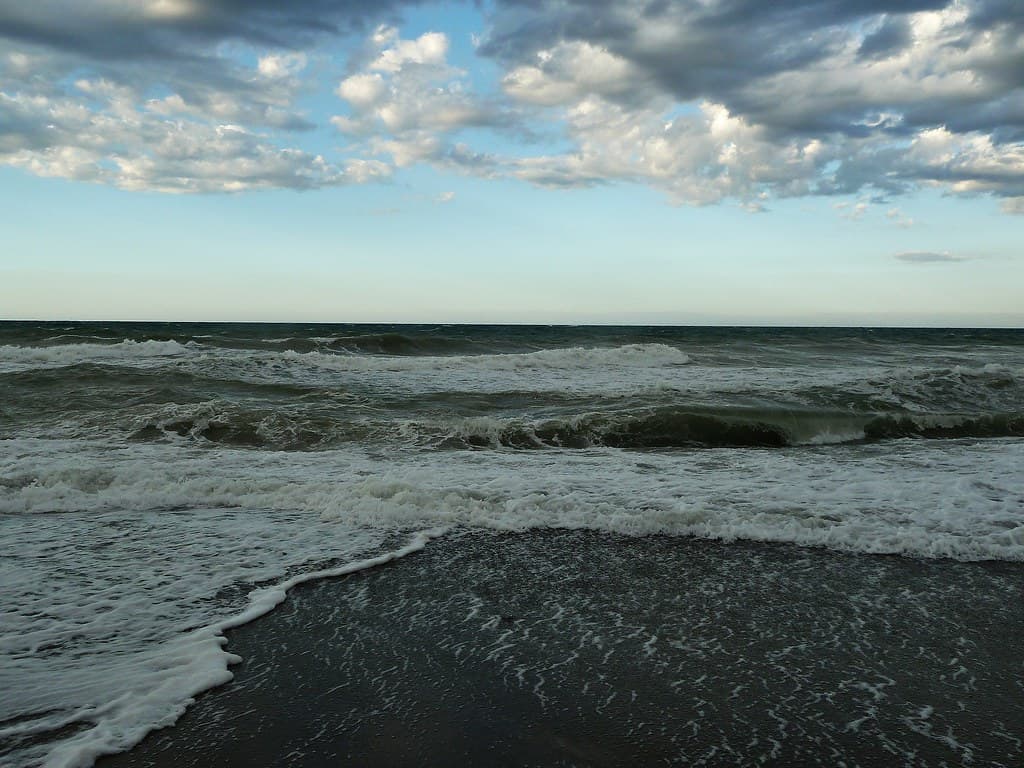
Counting the waves…
Counting the waves…
A refined fusion of water purity, environmental stability, and communal vibrancy for Rossano Beach.
View MethodologyAnalyzed via live sensors and environmental data.
Wave height, wind, and atmospheric stability.
Live footfall and crowd balance metrics.
Community reviews and curated sentiment.
“You'll find Rossano's locals exactly where they want to be: stretched on honey-toned sand beneath striped umbrellas, the Ionian lapping at their toes. This is urban beachgoing at its most unpretentious—cabanas, cafés,…”
Higher weekend density may affect water purity and crowd scores temporarily.
The sand beneath your beach towel is fine and pale, warmed by mid-morning sun that turns the Ionian a deeper cobalt. Rossano Beach unfolds in a wide arc backed by low-rise buildings and the occasional palm, where the scent of espresso drifts from the lungomare cafés and mixes with salt air. Families claim their spots early, planting umbrellas in neat rows, while teenagers sprawl near the waterline, their laughter punctuating the low rumble of summer conversation.
You wade in and the seabed slopes gently, the water temperature hovering in that perfect range where you can stay submerged for hours without thinking about it. By noon the beach is alive—vendors hawking coconut slices, children building moats around sandcastles, someone's nonna reading a novella under a faded umbrella. The scene is decidedly local, refreshingly free of tourist choreography.
 Credit: Unsplash
people near on seashore
 Credit: Unsplash
people on beach during daytime
Gentle slope for long swims
Rent a spot all day
Fresh catch steps from sand
Prime Visitation
Anytime
Where it is
Rossano Beach
Corigliano-Rossano, Calabria, Italy
39.588400°, 16.637000°
Weather
Loading…
Swell
—
Temp
Warm · Restorative
UV Index
Moderate
Wind
—
Tidal State
Last known
Max Sunlight
—
Ideal Shade
—
May - Sep (Peak)
Jan - Dec (Off-season)
Historical data suggests peak visibility and stable sea temperatures occur during the prime visitation window.
Select a category to load nearby places.
Unlock restaurants, luxury stays and curated maritime experiences within 2km
Rossano Beach is generally safe for swimming as a well-established urban beach with monitoring during the summer season. Lifeguard services typically operate at designated areas from June through September. The sandy bottom and gradual entry make it accessible for most swimmers. As an urban beach serving the Rossano area, it has good infrastructure and nearby emergency services. Always observe local flag warnings and avoid swimming in rough conditions. Water quality is regularly monitored by local authorities, though conditions can vary, so check current reports during your visit.
Rossano Beach is accessible year-round, with the prime swimming season from June through September when water temperatures are warmest. July and August see peak crowds as Italian families vacation. For a balance of good weather and fewer crowds, visit in June or September. The mild Calabrian climate allows pleasant beach visits in May and October for sunbathing, though water may be cooler. Off-season visits offer peaceful walks and opportunities to explore historic Rossano town without tourist congestion, though many beach facilities close.
Rossano Beach sits several kilometers from the historic hilltop town of Rossano in the merged municipality of Corigliano-Rossano. Local buses connect the upper town to the beach area, particularly during summer months. Taxis are available for direct transport. If driving, follow signs toward the coast via connecting roads; parking is available near the beach. The Corigliano-Rossano train station is on the Ionian coast railway line, relatively close to the beach area. Having a car provides flexibility for exploring both the coastal and historic inland areas.
The Rossano Beach area offers various accommodation options including beachfront hotels, holiday rentals, and bed and breakfasts, with additional options in historic Rossano town inland. Beach lidos typically have bars and restaurants serving light meals, fresh seafood, and traditional Calabrian dishes. The coastal area has pizzerias, trattorias, and cafes. For wider choices, the upper town of Rossano offers restaurants in a historic setting. Supermarkets are available for self-catering. Prices are generally moderate, reflecting the local rather than heavily touristy nature of the area.
Rossano Beach's uniqueness lies in its connection to the historic Byzantine town of Rossano, one of Calabria's most culturally significant centers. Visitors can combine beach relaxation with exploring the UNESCO-recognized Codex Purpureus and Byzantine churches in the hilltop town. As the major urban beach serving Rossano, it offers practical facilities while maintaining an authentic local character. The combination of sandy coastline with proximity to exceptional cultural heritage creates opportunities for diverse experiences. It serves locals and travelers seeking both seaside leisure and historical exploration in southern Italy.
Photos