Counting the waves…
Counting the waves…
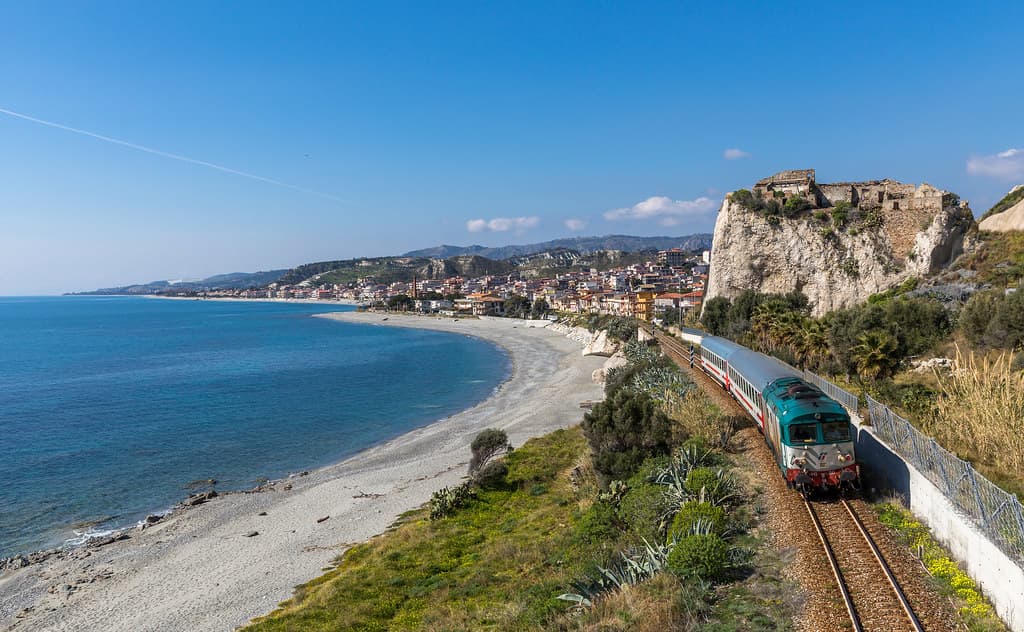
The beach slopes steeply, its stones ranging from marble-white to charcoal, worn smooth by centuries of wave action. You'll want water shoes—the pebbles shift and clack underfoot with each retreating wave, and the entry is immediate, no gradual sandy slope to ease you in. By midmorning, local families stake out spots with striped windbreaks, and older men swim precise laps parallel to shore, their strokes practiced and efficient. The town presses close to the waterline, apartment balconies hung with laundry overlooking the beach, grandmothers calling to children from third-floor windows. A concrete lungomare runs the length of the strand, lined with palms that rattle in the scirocco wind. Gelaterias and bars open directly onto the promenade, serving granita di limone so tart it makes your teeth ache and espresso drunk standing at zinc counters. Look south and the Sicilian mountains materialize across the strait on clear days, close enough to seem almost touchable. The Aspromonte foothills behind town hold their heat, sending warm drafts down to the shore at dusk. This is working-coast Calabria, unpolished and unapologetic, where the beach serves as the town's front yard and nobody pretends otherwise.
Places, rentals, tours and events within walking and driving distance of Melito di Porto Salvo Beach.
Photos
Melito di Porto Salvo Beach generally offers safe swimming conditions, though the pebble shore can be less comfortable underfoot than sand. The beach sits near where the Ionian Sea approaches the Strait of Messina, so currents can occasionally be stronger than at more sheltered beaches. Water shoes are recommended due to the pebble composition. The urban setting means help is nearby, and during summer, beach facilities operate with staff present. Check local conditions before swimming, particularly regarding currents. The gradual depth makes it manageable for families, though the pebbles require some adaptation.
Melito di Porto Salvo Beach can be visited year-round, with peak season from June through September when weather is warmest and all services are available. Summer months offer the best swimming conditions but also the most crowds. Late spring (May-June) and early autumn (September-October) provide pleasant temperatures with fewer visitors. The southern location means relatively mild winters, suitable for walks and enjoying the dramatic Aspromonte mountain backdrop. Off-season visits offer tranquility and the chance to experience local life without tourist crowds, though some beach facilities may be closed outside summer months.
Melito di Porto Salvo is located in Italy's far south, accessible via the SS106 coastal road from Reggio Calabria (about 50 kilometers south). The town has a train station on the Reggio Calabria-Taranto regional line, making it reachable by public transport. From Reggio Calabria airport, you can drive or take a combination of train and local transport. Buses connect the town to Reggio Calabria. A car provides the most flexibility for exploring this less-touristed area and the nearby Aspromonte National Park. The beach is within easy reach of the town center.
Melito di Porto Salvo offers modest accommodation options including small hotels, B&Bs, and rental apartments, primarily catering to Italian visitors and business travelers. The town has several restaurants and pizzerias serving traditional Calabrian dishes and fresh seafood at affordable prices. Beach bars operate during summer for lunch and refreshments. Being less touristy means fewer international-style hotels but more authentic local dining experiences. Nearby Reggio Calabria offers more extensive accommodation choices if preferred. Local markets provide fresh produce for self-catering, and the town's genuine character appeals to travelers seeking authentic southern Italian coastal life.
Melito di Porto Salvo's distinctive feature is its location at the southernmost tip of Calabria's Ionian coast, where the sea transitions toward the Strait of Messina. The dramatic backdrop of the Aspromonte mountains rising directly behind the town creates striking scenery. This is one of mainland Italy's southernmost beaches, offering a sense of being at the edge of the peninsula. The area remains authentically Calabrian with less tourist development than northern coastal towns. The proximity to both mountain and sea provides unique opportunities for visitors to combine beach time with exploring the wild Aspromonte foothills within minutes.