Counting the waves…
Counting the waves…
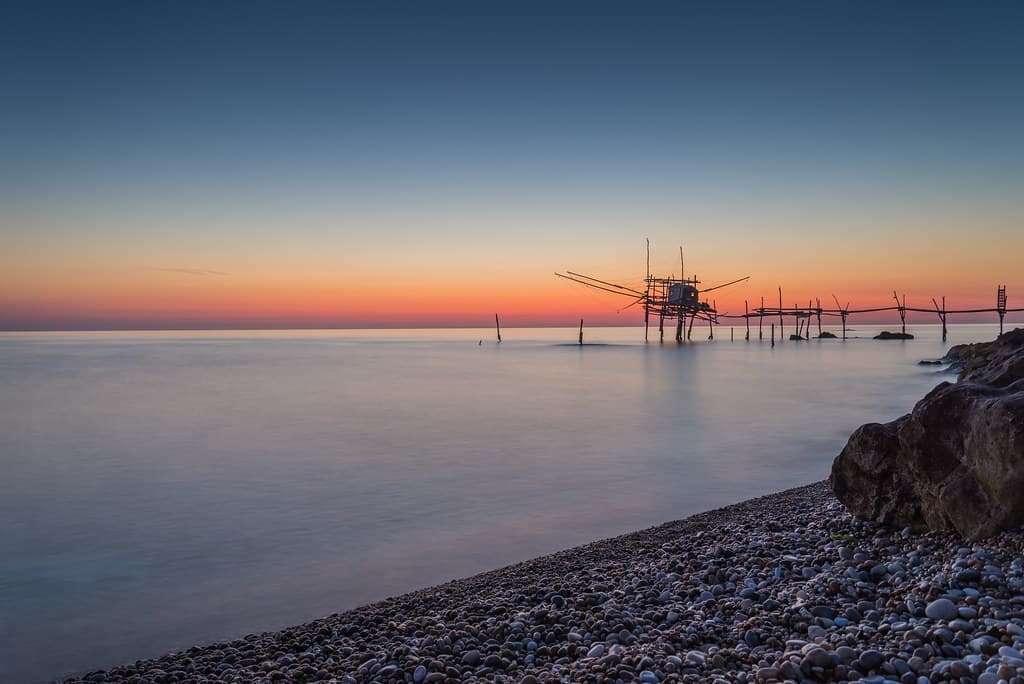
Pebbles clatter and hiss as waves pull back toward the Adriatic, a constant percussion that becomes white noise once you've spread your towel and oriented your chair toward the sun. The beach extends in both directions farther than the neighboring coves, offering enough space that even August crowds dissipate into clusters rather than sardine-packed rows. Behind the shore, stabilimenti rent umbrellas in orderly lines while open stretches of free beach let you plant your own setup on the stones. The abbey watches from its promontory, its Romanesque bulk visible from nearly every point along the water. That visual anchor gives the beach its character—you're not just swimming in the Adriatic but in the shadow of a thousand years of Benedictine presence. Wade into the shallows and the pebbles give way to sandy patches between rock formations. The seabed slopes gently enough for children to splash in waist-deep water while adults swim out to where trabocchi rise from the waves on either side of the main beach. By noon the stabilimenti have filled with multi-generational Italian families who've claimed the same umbrella spot for decades. The free beach draws a younger mix: students from Chieti, travelers working their way down the coast, locals who prefer their own chairs to rental fees. Either way, you're part of a ritual—the daily migration to this particular convergence of stones, mountains, medieval architecture, and salt water.
Places, rentals, tours and events within walking and driving distance of Fossacesia Marina Beach.
Photos
Swimming at Fossacesia Marina is generally safe, with the beach earning Blue Flag status in recent years for water quality and safety standards. The pebble beach has a relatively gentle slope into the Adriatic Sea. Lifeguards are typically present during summer months at organized beach sections. Water clarity is usually good, though conditions vary with weather. The pebble底 means no sand clouds, offering better visibility. Always observe posted flags and warnings, as currents can occasionally strengthen, particularly after storms or during windy conditions.
Visit between June and September for optimal weather and full services, with July and August offering the warmest seas but largest crowds. Early September is ideal for those seeking pleasant weather with fewer tourists and lower accommodation prices. Spring (May-early June) offers mild temperatures perfect for walking along the coast, though water may be cool for swimming. The view of San Giovanni in Venere abbey is spectacular year-round. Sunset visits are particularly scenic. Avoid mid-August (Ferragosto) when Italian beaches are extremely crowded.
Fossacesia Marina is accessible via the Fossacesia-San Vito train station on the Adriatic railway line, approximately 1.5 kilometers from the beach. Regular trains connect to major cities like Pescara and Termoli. From the station, walk downhill toward the coast or take a local bus or taxi. By car, exit the A14 autostrada at Lanciano or Vasto Nord, then follow SS16 coastal road signs to Fossacesia Marina. Parking is available near the beach, including free and paid options, though spaces fill quickly in high season.
Fossacesia Marina offers numerous beachfront restaurants and trattorias specializing in fresh Adriatic seafood and regional Abruzzese dishes. Beach stabilimenti provide casual dining and bars. The area has hotels, B&Bs, vacation apartments, and campgrounds catering to various budgets. Many accommodations offer sea views and are within walking distance of the beach. The historic hilltop town of Fossacesia, a short drive inland, has additional dining options. Local specialties include brodetto (fish stew) and ventricina salami. Book accommodation well ahead for July-August visits.
Fossacesia Marina is one of the major beaches along the Costa dei Trabocchi, named for traditional wooden fishing platforms (trabocchi) dotting the coast. The beach sits dramatically below the stunning San Giovanni in Venere abbey, perched on a hill overlooking the Adriatic—creating one of Abruzzo's most iconic coastal views. This combination of pebble beach, clear waters, trabocchi structures, and the abbey backdrop makes it particularly scenic. The location represents the Costa dei Trabocchi's character perfectly: natural beauty, fishing heritage, and historical architecture converging along the coastline.