Counting the waves…
Counting the waves…

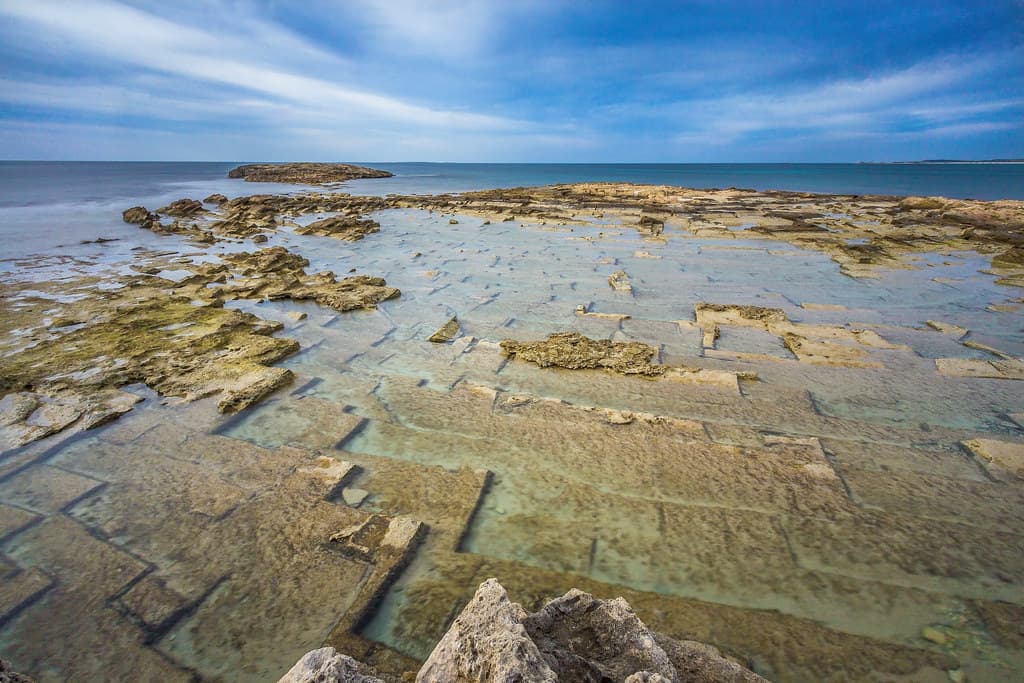
The dirt road from Bosa deteriorates with each kilometer, ruts and stones testing your rental car's suspension until you park in a clearing of trampled grass and volcanic gravel. The path to the shore drops through macchia that smells of myrtle and salt, opening onto a coastline of fractured basalt and schist where the sea has carved elaborate architecture—arches, pools, channels that fill and drain with each swell. You navigate the rocks in water shoes, essential here, peering into pools where the water magnifies everything: sea urchins clustered in crevices, tiny wrasse flashing between stones, the occasional octopus retreating into its chosen hole. The deeper pools hold enough water to swim in even at low tide, protected from the open sea but refreshed with each larger set. Snorkelers drift above the submerged rocks just offshore, where the volcanic reef drops into sandy channels and the fish population thickens—saraghi, orata, schools of salema moving in coordinated clouds. There's a small crescent of coarse sand tucked between rock formations at the southern end, enough to spread a towel if you need a break from the stone. But the real appeal is the geology, the way the coast has been carved and shaped, creating a landscape more suited to exploration than passive sunbathing. You stay until the tide shifts, revealing new pools, hiding others, the coastline's character changing hour by hour.
Places, rentals, tours and events within walking and driving distance of Cane Malu Beach.
Photos
Cane Malu is primarily a rocky beach better suited for snorkeling and exploring natural pools rather than traditional swimming. The rocky terrain and uneven seabed make it less ideal for children or those preferring sandy entries. However, the clear waters and rock formations create excellent snorkeling opportunities for observing marine life. Wear water shoes for protection and easier navigation over rocks. Calm days offer the best conditions; avoid during rough seas when waves crash against rocks.
Visit May through June or September for pleasant weather, warm water, and fewer visitors. These months offer excellent visibility for snorkeling in calm conditions. Peak summer (July-August) brings more people but also warmest water temperatures. Early morning visits provide the best light for photography and the quietest atmosphere. Avoid windy days when sea conditions make exploring rock pools difficult and potentially dangerous. Weekdays are consistently quieter than weekends year-round.
Cane Malu is located a few kilometers south of Bosa along the coastal road toward Alghero. Drive south on SP49, the scenic coastal route, watching for signs or small access points to the beach. Parking is limited and informal along the roadside. The beach requires a short walk down from the road, manageable but with uneven terrain. A car is necessary as public transport doesn't serve this area. The journey from Bosa town center takes approximately 10 minutes.
Cane Malu has no facilities, making it essential to bring water, snacks, sun protection, and snorkeling equipment. No beach bars, restaurants, or restrooms exist at this wild, undeveloped location. For amenities and dining, return to Bosa, a charming riverside town with excellent seafood restaurants, cafés, and shops. Pack out all trash to preserve the beach's natural state. The lack of commercialization maintains Cane Malu's pristine character for visitors seeking unspoiled nature.
Cane Malu's natural rock pools form through coastal erosion, creating sheltered tidal pools that trap seawater among volcanic rock formations. These pools host diverse marine life including small fish, sea urchins, and colorful algae, offering natural aquarium-like settings perfect for snorkeling and observation. The pools vary in depth and size, with some suitable for children to explore safely. The unique geology creates Instagram-worthy scenery with turquoise water contrasting against dark rocks and the rugged Sardinian coastline backdrop.