Counting the wavesβ¦
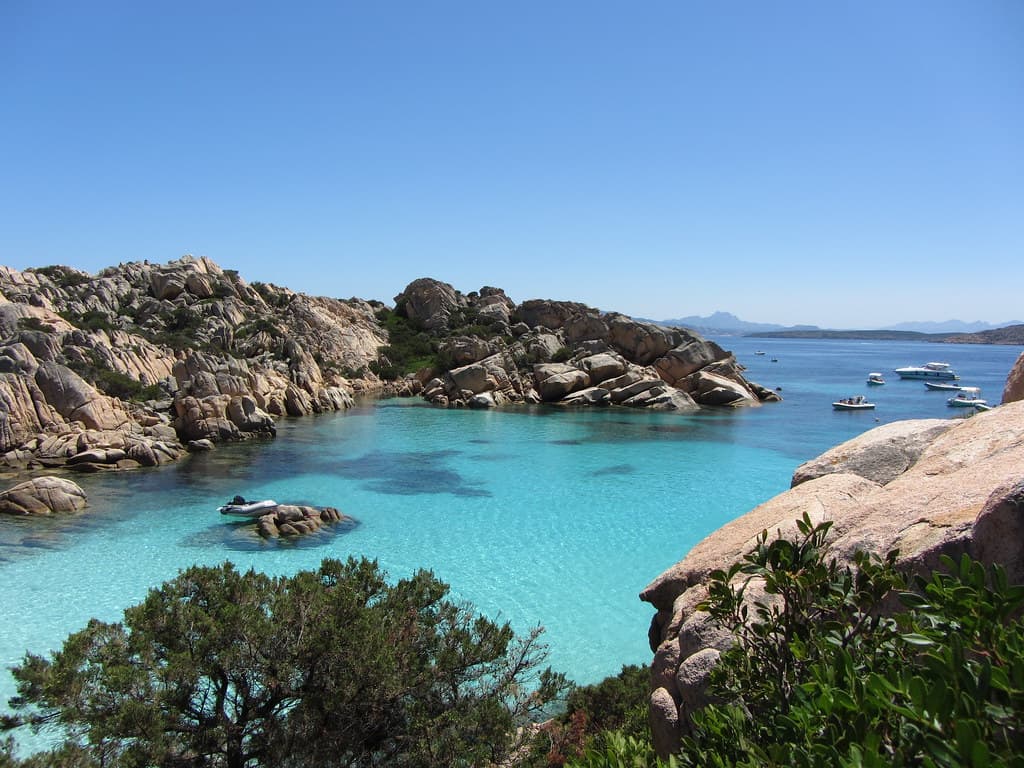
Cala Coticcio occupies a cleft in Caprera's northern coastline, accessible only by boat or a forty-minute hike followed by a technical scramble down house-sized boulders. The cove divides into two chambers separated by a natural granite wallβa larger outer basin and a smaller inner sanctum, both rimmed by smooth rock platforms that plunge into water. The sand component is minimal; most visitors spread towels on sun-warmed stone or slip directly into the sea from perches above the waterline. The water's extraordinary clarity comes from the cove's exposure to open-sea currents that flush the basin daily, combined with minimal human impact due to difficult access. You'll see your legs clearly in five-meter depths, watching damselfish and wrasse navigate the submerged boulder field. The inner chamber stays calmer than the outer, protected from boat wakes and afternoon winds that funnel through the Straits of Bonifacio. Snorkelers follow the rocky walls where they drop into deeper blue, finding octopuses wedged in crevices and schools of salema grazing algae. The Tahiti nickname dates to Italian Navy sailors stationed at La Maddalena in the 1960s, who'd anchor offshore for swimming breaks. That reputation has spread through social media, turning a once-quiet cove into a pilgrimage site for photographers chasing that specific shade of aquamarine. Summer weekends see thirty boats moored offshore and every rock platform claimed by noon. Early morning or late afternoon offer solitude and better light.
Places, rentals, tours and events within walking and driving distance of Cala Coticcio.
Photos
Swimming at Cala Coticcio is generally safe, with crystal-clear turquoise waters ideal for snorkeling. The cove's protected position shields it from strong currents, though rocky areas require caution when entering the water. Wear water shoes as the seabed can be uneven with rocks and sea urchins. No lifeguards are present, so swim at your own risk. The exceptional clarity makes it perfect for snorkeling to observe marine life. Check weather forecasts, as rougher seas can make boat access and swimming more challenging.
Cala Coticcio is extremely popular and can get crowded in peak summer (July-August). For fewer crowds, visit in June or September when weather remains excellent but tourist numbers drop. Arriving early morning or late afternoon, even in summer, helps avoid peak congestion. Weekdays are quieter than weekends. Since access requires a boat or significant hike, the effort naturally limits crowds compared to roadside beaches. Weather is best May through September, though shoulder months offer the best balance of conditions and solitude.
Reaching Cala Coticcio requires effort as it's only accessible by boat or hiking. The most common method is taking a private boat, renting one, or joining organized boat tours from La Maddalena or Palau that include Cala Coticcio as a stop. Alternatively, you can hike approximately 30-40 minutes from accessible points on Caprera island, following trails through Mediterranean scrubland. The hike is moderately challenging with uneven terrain. There's no road access or parking directly at the cove, preserving its pristine character.
Cala Coticcio has absolutely no facilities, restaurants, or services. It's a completely wild, undeveloped cove with no beach bars, restrooms, showers, or freshwater. You must bring everything you need: food, water, snacks, sun protection, and any supplies for the day. Pack out all trash to preserve this pristine environment. The nearest facilities are back in La Maddalena town or on boat tour vessels. Plan accordingly and bring sufficient water, especially in summer heat, as there's no shade.
Cala Coticcio earned the nickname 'Tahiti' because its stunning turquoise waters and dramatic rock formations resemble a tropical paradise. The exceptional water clarity and vibrant blue-green colors create an almost surreal beauty that seems more Pacific than Mediterranean. Smooth granite boulders frame the small cove, creating perfect photo opportunities that make it extremely Instagrammable. Its remote location on Caprera island and difficult access have preserved its wild beauty, making it one of Sardinia's most sought-after hidden gems despite its fame.