Counting the wavesβ¦
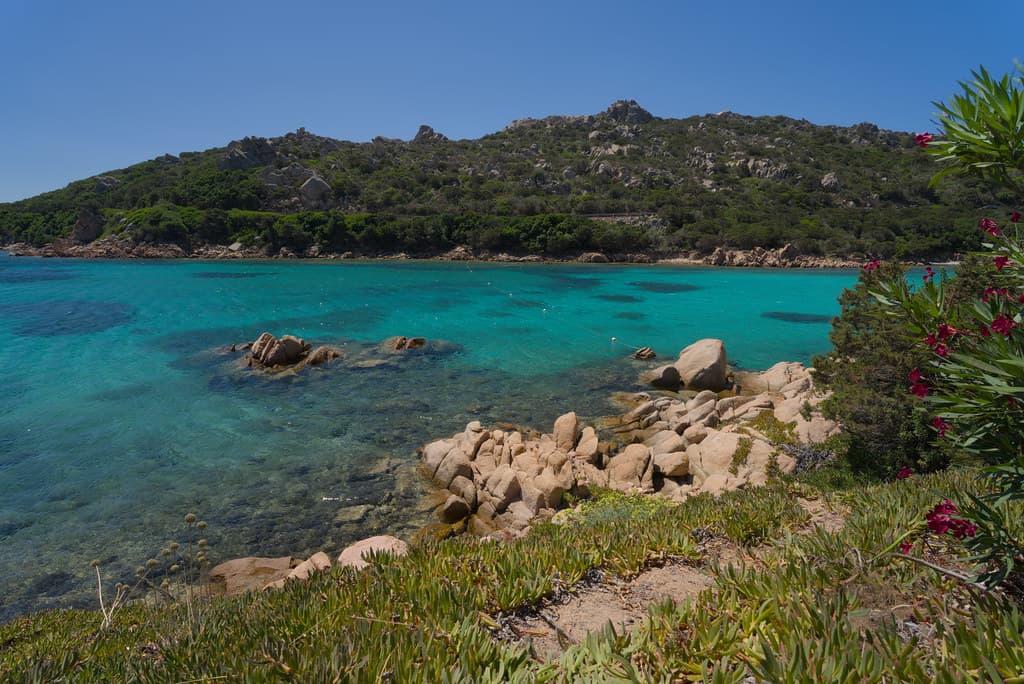
Spiaggia Rosa curves along Budelli's southeastern shore, a crescent of sand that photographs reveal in shades ranging from pale coral to deeper mauve depending on moisture and light angle. The color comes from fragments of Miniacina miniacea, a microorganism with a pink shell that grows on Posidonia sea grass before washing ashore and mixing with white quartz sand and crushed shell. For decades, visitors pocketed handfuls as souvenirs, packed bottles full, even swept entire bags of sand onto departing boats. By the 1990s, the beach had visibly faded, prompting authorities to prohibit landing. Today you'll view Spiaggia Rosa from tour boats that idle seventy-five meters offshore, guides explaining the restoration efforts while passengers photograph the cove from deck. The beach measures roughly one hundred meters long, backed by juniper scrub and granite outcrops typical of the archipelago. Without human traffic, the sand has regained some intensity, though it will never match the vivid rose of pre-tourism photographs. The swimming ban extends to the surrounding waters, protecting the Posidonia meadows that feed the microorganism responsible for the color. The beach's value now is symbolicβa reminder that natural features can be loved to death, that access isn't an inherent right, that some places survive best when admired from a distance. Your boat will continue to other Maddalena islands where you can actually swim, but this glimpse of protected pink sand against turquoise water makes the circuit worthwhile. The view alone justifies Budelli's fame.
Places, rentals, tours and events within walking and driving distance of Spiaggia Rosa.
Photos
No, you cannot land on, walk on, or swim at Spiaggia Rosa. The beach has been strictly protected since 1994 and is completely off-limits to visitors. Landing on Budelli island near the pink beach is prohibited, with significant fines for violations. However, you can view the beach from boats that maintain the required distance offshore. Many boat tours from La Maddalena and Palau include viewing stops where you can photograph the pink sand from the water while respecting the protected status of this fragile ecosystem.
The best time for boat tours is May through September when weather is reliable and seas are calmer. June and September offer excellent conditions with fewer tourists than July-August peak season. Tours operate most frequently in summer months. For optimal photography, morning light often works best, though this depends on tour schedules. Calmer seas in shoulder seasons (May-June, September) can provide better viewing conditions and clearer water colors. Book tours in advance during peak season as popular excursions fill quickly.
The only way to see Spiaggia Rosa is by joining boat tours that cruise past Budelli island while maintaining the legally required distance from shore. Tours depart from La Maddalena, Palau, and Santa Teresa Gallura, often visiting multiple islands in the archipelago. Boats pause offshore allowing passengers to view and photograph the distinctive pink sand from the water. Some tours include swimming stops at other permitted beaches nearby. Private boat rentals are also possible, but you must respect the no-landing regulations and distance requirements.
There are no facilities, restaurants, or accommodation on or near Spiaggia Rosa or Budelli island, which is uninhabited and protected. Visitors must base themselves in La Maddalena town, Palau, or other locations on the main islands, where hotels, guesthouses, restaurants, and services are available. Boat tours typically include the beach viewing as part of day trips, with some offering lunch aboard or stops at other islands with facilities. Plan to bring water and sun protection for boat excursions, as time on the water can be lengthy.
The sand's distinctive pink color comes from microscopic fragments of shells, coral, and marine microorganisms (particularly Miniacina miniacea) that naturally accumulate on the beach. This delicate ecosystem became threatened when tourists removed sand as souvenirs and excessive foot traffic damaged the shoreline. Strict protection was implemented in 1994 to preserve this unique natural phenomenon. The pink color is still visible from boats, though some reports suggest it has faded slightly from its historical intensity. The beach remains an iconic Sardinian landmark despite access restrictions.