Counting the waves…
Counting the waves…
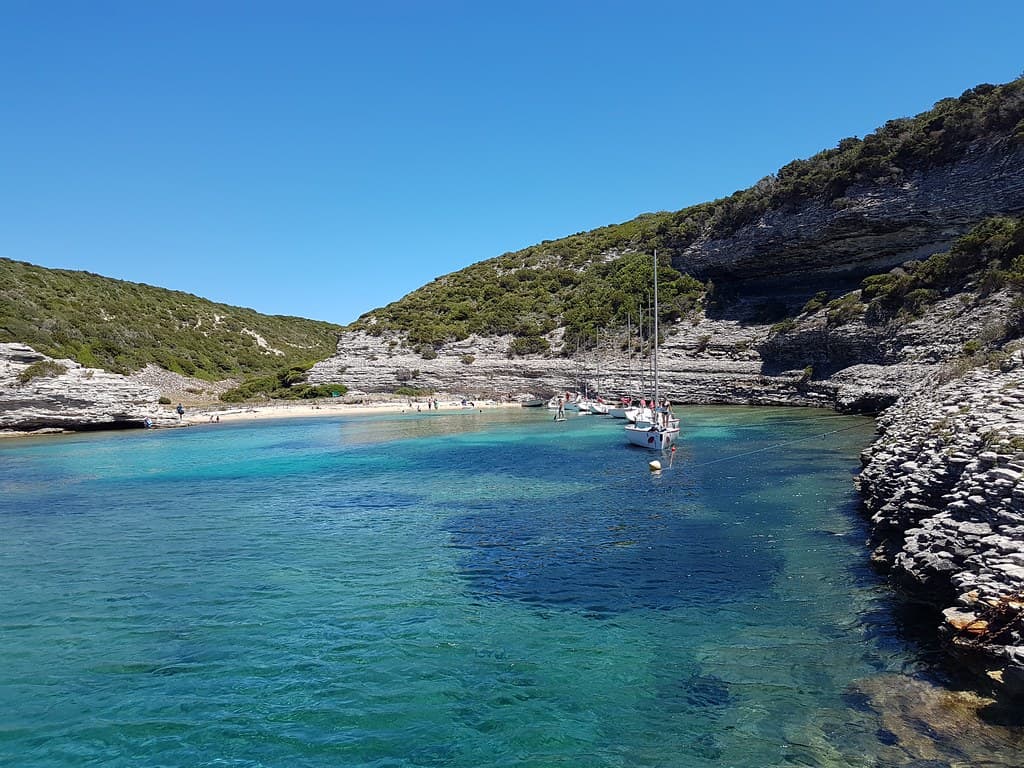
Cala Spinosa sits in the shadow of Capo Testa's lighthouse, accessible only by a vertiginous trail that zigzags down the headland's northern face. You grip rock handholds polished smooth by thousands of previous climbers, each switchback revealing more of the cove's architecture: sea stacks rising from the water like modernist sculptures, arches carved through solid granite, caves exhaling cool air that smells of kelp and barnacles. The beach itself is more pebbles than sand, a narrow strip at the base of cliffs that glow white in direct sun. You wade in from the rocks—there's no gradual entry—and the cold is immediate, the water fed by currents circulating around the cape. Visibility underwater is extraordinary: you see damselfish hovering near urchin colonies, octopus arms probing crevices, the granite continuing below in the same chaotic formations. Waves refract around the sea stacks and collide in standing patterns, the acoustics of the enclosed space amplifying each surge into a deep resonance. Above water you're surrounded by geology textbook examples of weathering: tafoni patterns that pit the rock faces, exfoliation creating onion-skin layers, quartz veins crosscutting the granite in white stripes. The few other visitors are photographers or serious snorkelers, the difficulty of access keeping numbers low. When you climb back up, legs burning, you pause at the switchbacks to photograph the cove from above, the water color shifting from emerald to ultramarine depending on depth and light angle.
Places, rentals, tours and events within walking and driving distance of Cala Spinosa.
Photos
Cala Spinosa offers good swimming conditions in a small, dramatic cove setting, though the rocky terrain requires caution. The clear waters make it excellent for snorkeling, with opportunities to observe marine life around the granite formations. There are no lifeguards, so swim at your own risk and assess conditions carefully. The cove can experience currents and waves depending on weather, so check forecasts before visiting. The rocky entry points mean proper water shoes are recommended. Experienced swimmers and snorkelers will enjoy exploring, but less confident swimmers should stay close to shore in calm conditions only.
Cala Spinosa is best visited during late spring (May-June) or early autumn (September-October) for ideal weather with fewer crowds. These shoulder seasons offer warm temperatures, clear water perfect for snorkeling, and better availability for photography without throngs of people. July and August bring peak crowds to this Instagram-worthy location, though the dramatic scenery remains stunning. Early morning visits any time of year provide the best light for photography and maximum solitude. The beach is generally accessible year-round, but swimming is most comfortable from May through October when water temperatures are warmest.
Cala Spinosa is located near Capo Testa, approximately 5 kilometers from Santa Teresa Gallura town center. Drive toward Capo Testa following signs, then look for parking areas near the cape. From parking, a walking path leads to the cove—the trail involves some rocky terrain and takes roughly 10-15 minutes. Wear appropriate footwear as the path can be uneven. The somewhat hidden nature means signage may be limited; local maps or GPS are helpful. Due to its small size and popularity, arriving early helps secure parking and beach space, especially during summer months.
Cala Spinosa itself is a natural cove without facilities, so bring all necessary supplies including water, food, and sun protection. The nearby Capo Testa area has limited seasonal beach services. For restaurants and accommodations, head to Santa Teresa Gallura, just 5 kilometers away, which offers diverse dining from casual cafés to upscale seafood restaurants. Santa Teresa provides numerous accommodation options including hotels, resorts, B&Bs, and vacation rentals for all budgets. The town has supermarkets for stocking up on beach picnic supplies before heading to the more remote coves like Cala Spinosa.
Cala Spinosa is renowned for its dramatic granite rock formations that create a spectacular natural amphitheater around the small cove. These ancient weathered rocks, characteristic of the Capo Testa area, form striking sculptural shapes in shades of grey, pink, and white, contrasting beautifully with the turquoise sea. The geological formations provide exceptional photo opportunities and have made this spot highly Instagrammable. The rocks also create natural diving platforms and interesting underwater landscapes for snorkeling. This unique granite scenery, combined with the intimate cove setting, distinguishes Cala Spinosa from typical sandy beaches and showcases Sardinia's remarkable coastal geology.