Counting the waves…
Counting the waves…
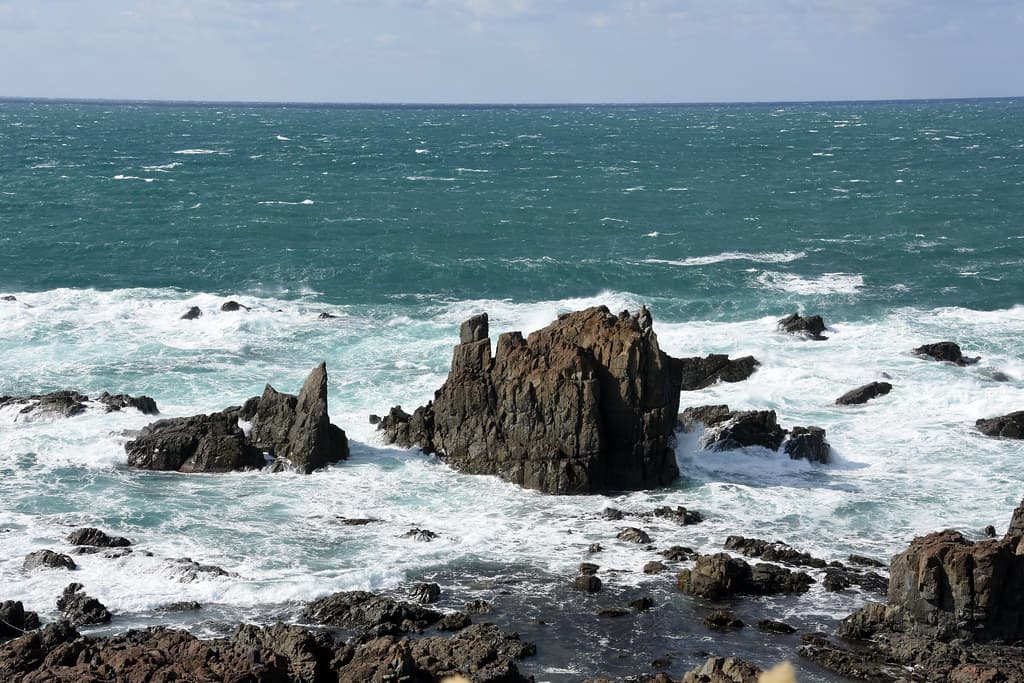
The drive from Oga city unspools along Route 55, past rice paddies and weathered wooden houses, until the road narrows and the Sea of Japan announces itself in salt spray and wind. Nyudozaki Cove Beach sits at the peninsula's western edge, where hexagonal basalt columns—the remnants of ancient lava flows—form a natural breakwater. The stones beneath your feet range from smooth gray ovals to rough volcanic chunks, worn by centuries of wave action. This isn't a beach for spreading towels and dozing. The water stays brisk even in summer, and the shore drops off quickly, making swimming a proposition for the hardy. Instead, you'll want your camera and sturdy shoes. The rock formations shift character with the light: charcoal at dawn, bronze at sunset, silver under winter's low clouds. Local lore ties the cove to namahage—the demon-masked figures of Akita folklore—and on stormy days, you can almost believe they're out there beyond the breakers. A small parking area serves the handful of visitors who make the trip, mostly Japanese photographers and geology enthusiasts. The adjacent coastline stretches wild and empty, punctuated by fishing villages where drying racks hold rows of squid. In autumn, the surrounding hills ignite in rust and amber, and the wind carries the mineral smell of seaweed and stone.
Places, rentals, tours and events within walking and driving distance of Nyudozaki Cove Beach.
Photos
Nyudozaki Cove Beach is primarily known for its scenic beauty rather than swimming. The cove features rocky shores and can have unpredictable currents typical of Japan Sea coastal areas. Swimming conditions vary seasonally, with calmer waters generally in summer months. However, there are no designated swimming areas or lifeguards on duty. Most visitors come for photography, coastal walks, and sightseeing rather than swimming. If you plan to enter the water, exercise caution, check local conditions, and never swim alone or during rough weather.
Nyudozaki Cove Beach can be visited year-round, with each season offering distinct experiences. Summer (June-August) provides the warmest weather and calmest seas, ideal for coastal exploration. Autumn brings clear skies and dramatic light perfect for photography. Winter offers stark, moody seascapes though weather can be harsh with strong winds from the Japan Sea. Spring features milder temperatures as the region awakens. Sunset visits are particularly rewarding any time of year, as the cove's western orientation provides stunning evening views over the water.
Nyudozaki Cove Beach is located on the Oga Peninsula, about 40 kilometers west of Akita city. The most practical way to reach it is by car, as public transportation options are limited in this rural coastal area. From Akita city, drive west via Route 101 toward the Oga Peninsula, then follow local roads to the cove. Free parking is typically available near the beach area. Without a car, you can take a train to Oga Station, but you'll need a taxi or rental car for the final leg of the journey.
Nyudozaki Cove Beach is in a relatively remote coastal area with limited immediate facilities. You'll find more dining and lodging options in nearby towns on the Oga Peninsula, such as the Oga city center or around popular spots like Oga Onsen. The peninsula is known for seafood restaurants serving fresh catches from the Japan Sea. Traditional ryokan inns and minshuku guesthouses offer accommodation with local cuisine. For convenience, consider staying in Akita city, which has broader amenities, and making Nyudozaki a day trip destination.
Nyudozaki Cove Beach stands out for its dramatic rocky coastline and intimate cove setting along the rugged Oga Peninsula. The beach offers striking views of the Japan Sea framed by volcanic rock formations and cliffs characteristic of this geologically active region. The cove's protected configuration creates compelling compositions for photographers, especially during golden hour. The relative isolation means fewer crowds compared to more accessible beaches, preserving a sense of untouched natural beauty. The surrounding Oga Peninsula is also famous for its Namahage folklore, adding cultural context to your coastal visit.