Counting the waves…
Counting the waves…
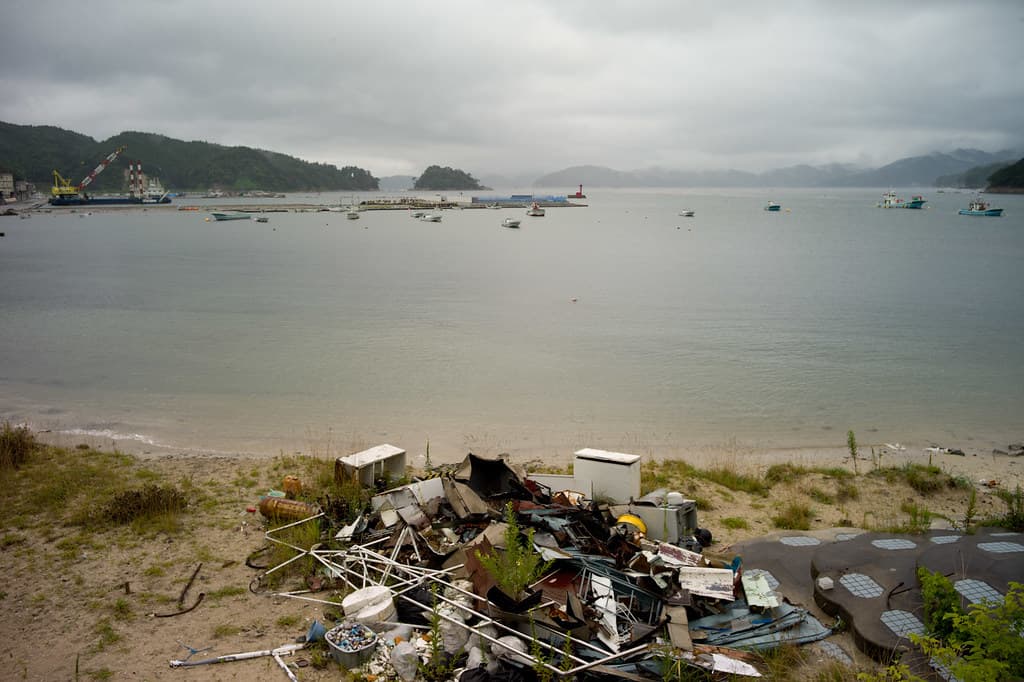
The first thing you notice is the color: not the blonde or white of postcards, but a deep grey-black inherited from the volcanic stone that frames both ends of this compact strand. Tsubaki South Beach runs no more than a few hundred meters, squeezed between low cliffs where wind-bent pines hang at improbable angles. Fishing floats in faded orange and blue bob in the shallows, and you'll often share the sand with local anglers who cast lines from the rocks at dawn. The water here is cooler than the Pacific side, brushed by currents from the north, and the waves arrive in steady, unhurried sets. In summer, families from Oga City spread picnic blankets and wade in knee-deep; in autumn, the beach empties except for the occasional beachcomber hunting for sea glass. There are no umbrellas for rent, no loudspeakers, no jetskis—just the rhythmic crash of surf and the cry of black-tailed gulls overhead. What makes Tsubaki matter is its ordinariness. This is a beach that serves the people who live here, not the ones passing through. The single vending machine near the access road sells cold cans of Boss coffee and barley tea. A hand-painted sign points toward a public restroom. You come here not to be dazzled, but to understand what the Akita coast feels like when no one's performing for you.
Places, rentals, tours and events within walking and driving distance of Tsubaki South Beach.
Photos
Tsubaki South Beach is a small, local beach on the Oga Peninsula with generally calm waters suitable for swimming during summer months. However, it lacks lifeguards and extensive safety infrastructure common at larger beaches. Check local weather conditions before entering the water, as the Sea of Japan can experience sudden changes. The beach's secluded nature means fewer people around in emergencies. Strong currents may occur during rough weather, so exercise caution and avoid swimming alone or in poor conditions.
While technically accessible year-round, the ideal visiting period is June through September when temperatures are warmest and swimming is comfortable. July and August offer peak beach weather with temperatures around 25-30°C. Spring and autumn provide quieter experiences for beachcombing and coastal walks, though water temperatures are too cold for swimming. Winter visits are possible for dramatic coastal scenery, but expect strong winds and rough seas. Weekdays throughout summer offer the most peaceful experience at this hidden local spot.
Tsubaki South Beach is best reached by car, located along the coastal roads of the Oga Peninsula in Akita Prefecture. From Oga city center, it's approximately a 20-30 minute drive. Public transportation options are limited in this area, making rental cars the most practical choice. Limited parking is typically available near the beach access points, though facilities may be basic given the beach's local, undeveloped character. GPS coordinates or a Japanese navigation system are recommended as English signage may be minimal.
As a small, local beach, Tsubaki South Beach has minimal on-site amenities. Beach houses, restaurants, and convenience stores are not typically found directly at the beach. Visitors should bring their own food, drinks, and beach supplies. The nearest services and dining options are in Oga city or nearby coastal towns, roughly 15-30 minutes away by car. Accommodations range from traditional ryokans to small hotels in Oga, where you'll also find restaurants serving local seafood and Akita specialties.
Tsubaki South Beach offers an authentic, uncommercialized coastal experience rarely found at Japan's popular beaches. Unlike the more famous Oga Aquarium area beaches, this small stretch remains largely undiscovered by tourists, attracting mainly local residents. The intimate setting provides a genuine glimpse into how Japanese locals enjoy their coastline, without crowds or development. Its location on the Oga Peninsula also means you're near dramatic coastal cliffs and the region known for Namahage folklore, combining beach relaxation with cultural exploration.