Counting the waves…
Counting the waves…
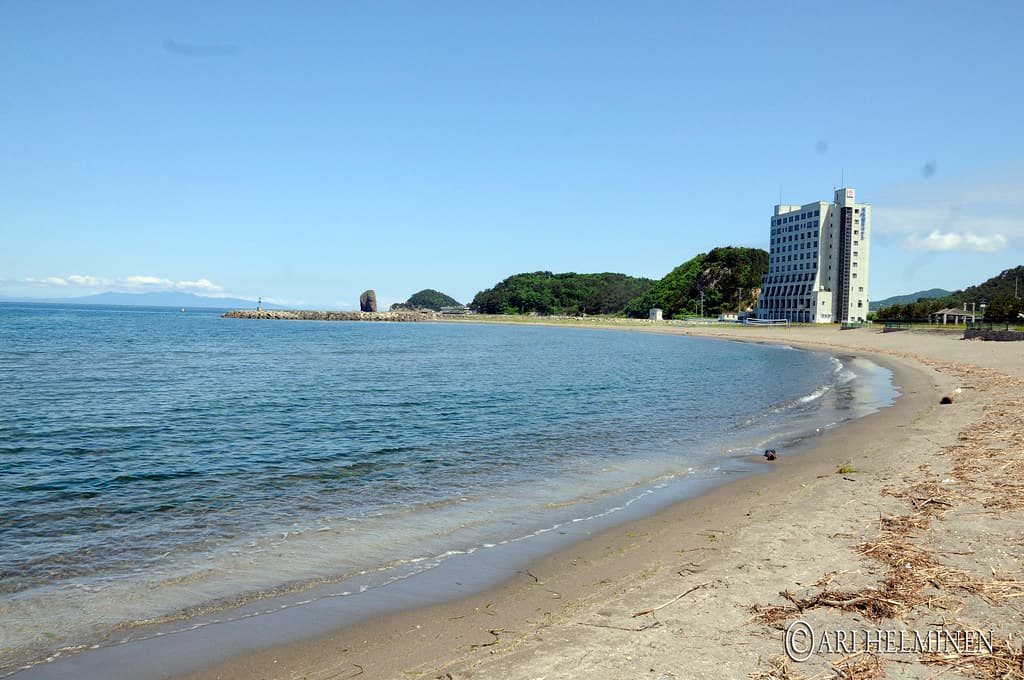
You'll find Yomogita Beach tucked along the western shore of Mutsu Bay, a half-moon of dark sand where the pace slows to match the gentle rhythm of inland sea swells. The beach sits in the shadow of coastal pines, their branches twisted by winter winds off the Tsugaru Strait, and the volcanic grains underfoot hold warmth long after the sun dips behind the Hakkōda Mountains. On weekdays, you might share the sand with a handful of locals fishing from the rocks or children wading in shallows so calm they mirror the sky. The water here lacks the drama of Japan's Pacific coast—no crashing surf, no riptides—making it a haven for cautious swimmers and parents watching toddlers chase wavelets. The bay's protection means you can wade out thirty meters and still touch bottom, the temperature surprisingly mild even in shoulder seasons. Along the tree line, weathered benches face the water, and the only commerce comes from a small yatai cart selling grilled squid on summer weekends. What keeps Yomogita off the tourist trail is precisely what makes it valuable: the absence of infrastructure, the unmanicured shoreline, the sense that you've stumbled onto a place locals never thought to advertise. You won't find beach bars or jet-ski rentals. Instead, there's space to spread out, to listen to pines creak in the breeze, to watch fishing boats trace lazy arcs across water the color of slate.
Places, rentals, tours and events within walking and driving distance of Yomogita Beach.
Photos
Yomogita Beach is generally calm and suitable for swimming during summer months, making it family-friendly. However, it's a relatively undeveloped beach with limited lifeguard services, so swimmers should exercise caution and stay close to shore. The waters of Mutsu Bay tend to be gentler than open ocean beaches, but always check local conditions before entering the water. During colder months, swimming is not recommended due to low water temperatures. Supervise children closely and be aware that facilities and emergency services may be limited at this quiet coastal location.
While accessible year-round, Yomogita Beach is most enjoyable from late June through August when temperatures are warmest for swimming and beach activities. Spring and autumn offer scenic coastal views with fewer crowds, ideal for peaceful walks and photography. Winter visits showcase dramatic seascapes and are popular with locals, though temperatures drop significantly. Aomori's coastal weather can be unpredictable, so bring layers regardless of season. Summer weekends attract more families, while weekdays remain relatively quiet. The beach's scenic beauty changes with each season, offering different experiences throughout the year.
Yomogita Beach is located in Hiranai town, Aomori Prefecture, and is most easily accessed by car. From Aomori city, drive approximately 30-40 minutes northeast along coastal roads. Free parking is typically available near the beach area, though specific lot sizes may be limited. Public transportation options are sparse; the nearest train station is Hiranai Station on the Aoimori Railway line, but from there you'll need a taxi or local bus. Renting a car is highly recommended for visiting this and other beaches along Aomori's coast, providing flexibility to explore the quieter stretches of coastline.
Yomogita Beach is a quiet, relatively undeveloped area with limited on-site facilities. Basic amenities like restrooms may be available seasonally, but don't expect beach shops or rentals. For restaurants and convenience stores, head to nearby Hiranai town center, a short drive away, where you'll find local eateries serving Aomori seafood and regional specialties. Accommodation options are limited immediately at the beach; most visitors stay in Hiranai town or Aomori city. It's advisable to bring your own food, drinks, and beach supplies when visiting, especially for a full day trip to this peaceful coastal stretch.
Yomogita Beach stands out for its peaceful, uncommercialized atmosphere compared to busier Aomori beaches. Its location on Mutsu Bay offers calmer waters and scenic views across the bay, rather than facing the open sea. The beach remains largely undiscovered by mass tourism, providing an authentic local experience where you might have long stretches of coastline to yourself. It's particularly appealing for visitors seeking tranquility and natural beauty without crowds or development. The surrounding area reflects traditional coastal life in northern Japan, offering a glimpse into quieter seaside communities that contrast with more tourist-oriented beach destinations.