Counting the waves…
Counting the waves…
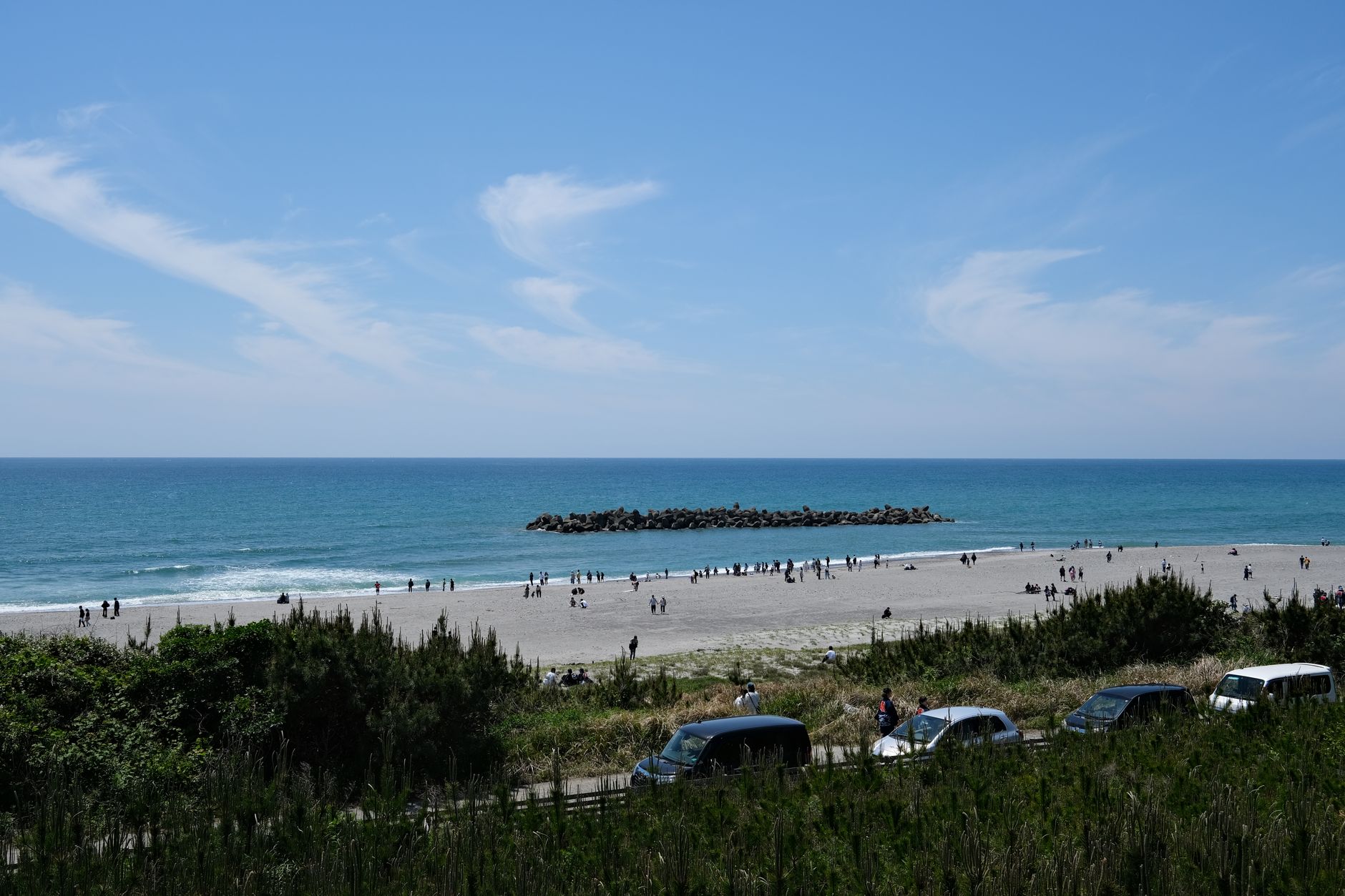
The road hugs the coastline north of Omu, a fishing settlement where fewer than a thousand people live, and Kitami Beach appears as a band of smooth stones lapped by the Okhotsk's slate-gray water. This isn't a postcard beach—no lifeguards, no umbrellas for rent—just a working shoreline where fishing boats rest between runs and the smell of seaweed mingles with diesel from the harbour. Gulls wheel overhead, their cries sharp against the wind that sweeps down from the Sea of Okhotsk without warning. In winter, drift ice from the Russian coast sometimes presses against the shore, transforming the beach into a white expanse that locals navigate with practiced ease. Summer brings marginally warmer temperatures, though the water rarely invites more than a quick wade. You'll share the beach with fishermen repairing nets, families gathering kelp, and the occasional cyclist pedaling the coastal route that connects tiny settlements along this northern edge of Japan. The mountains rise directly behind the beach, their forested slopes descending almost to the waterline. Between May and September, wildflowers dot the grassy verges where the road meets the shore. There's a small parking area, a weathered bench facing the sea, and nothing else—just the honest simplicity of a beach that belongs to the people who fish these waters and the visitors curious enough to explore Hokkaido's less-traveled coast.
Places, rentals, tours and events within walking and driving distance of Kitami Beach.
Photos
Kitami Beach is a local shoreline on Hokkaido's rugged coast where swimming conditions can be challenging. The Sea of Okhotsk waters here are generally cold year-round, and currents can be unpredictable. There are typically no lifeguards on duty at this hidden beach. Swimming is best attempted during calm summer days (July-August) when water temperatures are slightly warmer, though still cold compared to southern Japan. Always check local conditions before entering the water and exercise caution, as facilities and safety services are minimal at this remote location.
While Kitami Beach is accessible year-round, each season offers distinct experiences. Summer (June-August) provides the mildest weather for beachcombing and coastal walks, with temperatures reaching 15-20°C. Winter transforms the area with dramatic drift ice formations from the Sea of Okhotsk, typically visible January through March, creating unique photographic opportunities. Spring and autumn offer quieter visits with fewer tourists. For traditional beach activities, late June through August is optimal, though Hokkaido's coastal weather can be unpredictable regardless of season, so bring layers.
Kitami Beach in Omu is most accessible by car, located along Hokkaido's northeastern coast. From Kitami city, drive east toward the coastal town of Omu; the beach is accessible via local coastal roads. Public transportation to this remote area is limited, making a rental car practically essential. Being a local, less-developed beach, parking facilities are typically informal—small gravel areas or roadside spots near beach access points. GPS coordinates or a detailed map are recommended as signage may be minimal in this rural area.
Kitami Beach is in a rural coastal area with limited immediate amenities. The small community of Omu may have basic services, but visitors should plan ahead. For dining and shopping, the nearest substantial options are in Kitami city, approximately 30-40 minutes away by car. Accommodations are sparse locally; consider staying in Kitami or nearby towns like Abashiri. Bring food, water, and supplies for your beach visit, as there are unlikely to be vendors or facilities directly at this hidden, local shoreline. Plan for self-sufficiency.
Kitami Beach's location on the Sea of Okhotsk coast means it's within the drift ice zone that makes this region famous in winter. From late January through March, massive ice floes drift south from the Arctic, sometimes reaching this shoreline. Viewing is weather-dependent and varies yearly, but this area offers opportunities to witness this spectacular natural phenomenon without the crowds found at more famous spots like Abashiri. The experience is dramatic and photogenic, though access during winter requires appropriate cold-weather preparation and caution on potentially icy roads.