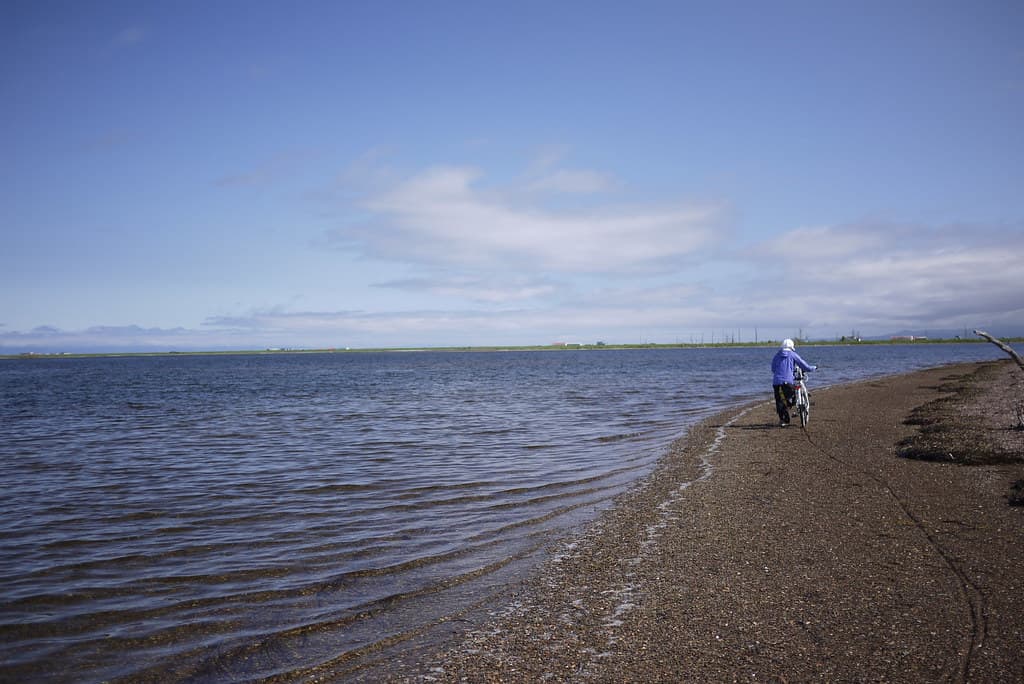
Counting the waves…
Counting the waves…
Iwaobetsu Beach curves along the southern edge of Shiretoko Peninsula, a stretch of volcanic cobbles and boulders that the Okhotsk Sea has been shaping for millennia. The stones clatter and shift with each retreating wave, a percussion that echoes off the forested cliffs rising directly behind the shore. In winter, drift ice from Russia's Amur River locks the coastline in white; come summer, the same water remains cold enough to numb your ankles in seconds. The beach sits within Shiretoko National Park, where the infrastructure is deliberately minimal—no umbrellas, no concessions, no lifeguards. A single parking area and basic facilities serve visitors who come to photograph the saw-toothed peaks reflected in tidal pools or to watch seals bob offshore. The water is too frigid for swimming most of the year, but that's not why you've driven the winding coastal road to get here. What draws you instead is the unadorned wildness: kelp tangled around driftwood, white-tailed eagles overhead, the knowledge that the forest just behind you is prime bear habitat. Morning fog often shrouds the beach until midday, and by late afternoon, the slanting light turns the wet stones into a mosaic of grays, browns, and charcoal blacks. You'll likely share this coastline with only a handful of others, even in peak season.
Places, rentals, tours and events within walking and driving distance of Iwaobetsu Beach.
Photos
Swimming at Iwaobetsu Beach is generally not recommended for most visitors. Located along Hokkaido's rugged Shiretoko Peninsula coastline, the water temperatures remain quite cold year-round, even in summer. The beach also experiences strong currents and waves, particularly during autumn and winter storms. There are no lifeguards on duty, and facilities are minimal. Most visitors come for scenic walks, wildlife viewing, and photography rather than swimming. If you do enter the water, exercise extreme caution and stay close to shore.
Iwaobetsu Beach offers different experiences throughout the year. Summer (June-August) provides the most comfortable weather for walking along the shore, with temperatures around 15-20°C and calmer seas. Autumn (September-October) brings dramatic coastal scenery with changing foliage in nearby forests. Winter visits reveal stunning ice formations and drift ice (late January-March), though temperatures drop well below freezing. Spring sees the return of migratory birds. The beach is accessible year-round, but winter requires proper cold-weather gear and caution on potentially icy paths.
Iwaobetsu Beach is located within Shiretoko National Park, accessible via Route 334 along the Shiretoko Peninsula's eastern coast. From Shari town, drive approximately 50 minutes northward. The nearest landmark is the Iwaobetsu Onsen area. Parking is available at designated areas near the beach access points, though facilities are basic. Public transportation is extremely limited in this remote area, so renting a car from Shari or Utoro is strongly recommended. The road may be closed or difficult to navigate during heavy winter snowfall.
Iwaobetsu Beach is in a remote area with very limited amenities directly on-site. The nearest accommodations and hot spring facilities are at Iwaobetsu Onsen, a short distance away, offering traditional Japanese lodging with meals included. More extensive options are available in Utoro (about 30 minutes north) or Shari town (50 minutes south), including hotels, guesthouses, restaurants, and convenience stores. Visitors should bring their own food and water when visiting the beach, as there are no shops or restaurants at the beach itself. Plan accordingly for this isolated location.
Iwaobetsu Beach offers excellent wildlife viewing opportunities, particularly for marine and coastal species. The Shiretoko Peninsula is a UNESCO World Heritage site known for its biodiversity. Visitors may spot seals lounging on rocks near shore, especially during quieter times of day. Seabirds are abundant, with various species visible depending on season. During winter, the drift ice brings unique marine ecosystems close to shore. Brown bears inhabit the nearby forests and occasionally visit coastal areas, so maintain appropriate caution and make noise while walking to avoid unexpected encounters.