Counting the waves…
Counting the waves…
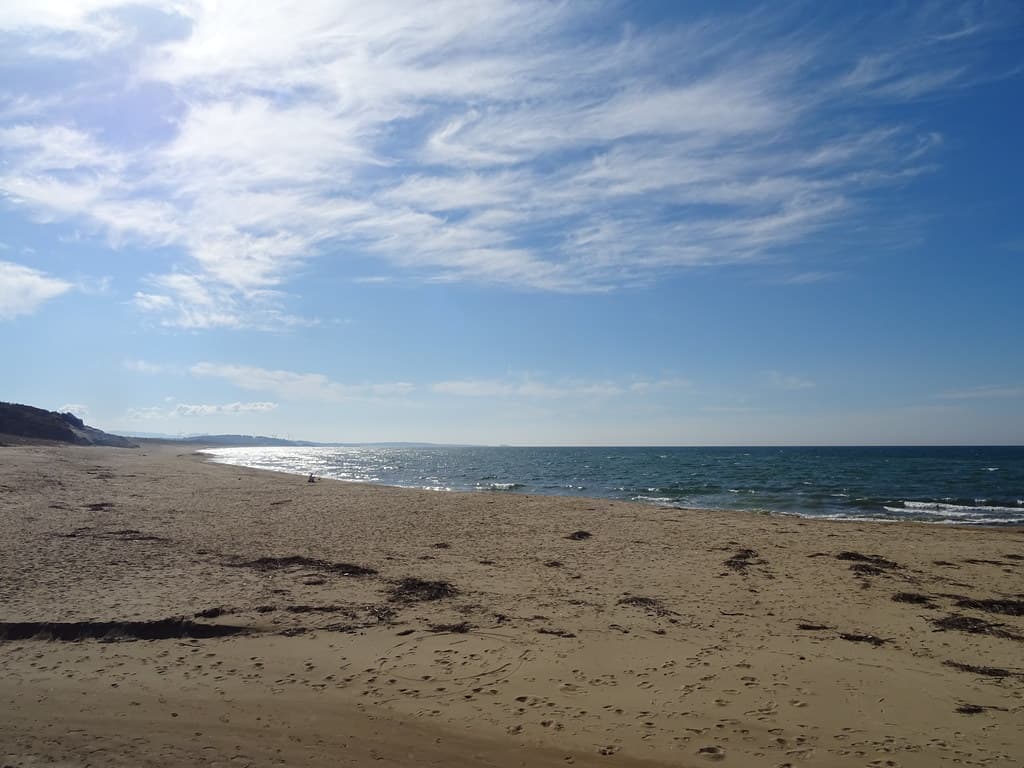
Stand at the river mouth during outgoing tide and you'll watch freshwater slice through sand like a blade, creating miniature deltas that reconfigure hourly. The current carries silt from the Kaga Plain, depositing sediment in fan-shaped patterns that catch sunlight differently than the surrounding beach. Driftwood accumulates where river meets sea—entire trees sometimes, stripped of bark and bleached white, wedged into sand at improbable angles. Birds understand this intersection better than most visitors. You'll see cormorants diving where the mixing waters concentrate baitfish, and egrets stalking the shallows where currents expose crustaceans. The vegetation changes abruptly here, salt-tolerant grasses giving way to riverside willows within meters. In spring, cherry blossoms from upstream trees float past on the current before surrendering to tide. The beach itself extends north and south from the river mouth, but most visitors gravitate to the transition zone where two hydrological systems collide. Children build dams in the shallow river channel, trying to redirect the current while parents photograph the interplay of water, sand, and light. The smell here combines river mud and ocean salt, a unique olfactory signature that changes with the tide schedule.
Places, rentals, tours and events within walking and driving distance of Daishoji River Mouth Beach.
Photos
Swimming at river mouth beaches requires extra caution due to potentially complex currents where fresh and salt water meet. Conditions at Daishoji River Mouth Beach can vary significantly depending on river flow, tides, and weather. During calm conditions in summer, swimming may be possible, but currents can be unpredictable. Formal lifeguard services are unlikely at this natural site. If you choose to swim, stay close to shore, never swim alone, and avoid areas where currents appear strong. The beach is often better suited for wading, nature observation, and scenic appreciation rather than serious swimming.
Visit during spring (April-May) or autumn (September-October) for comfortable weather and optimal light for appreciating the unique river-meets-sea scenery. Early mornings and late afternoons offer beautiful natural lighting, especially for photography. Summer provides warmest conditions but higher humidity. The beach's scenic qualities shine year-round, with different seasons offering varied landscapes—lush in summer, dramatic in winter. Weekdays guarantee fewer visitors. Time visits around low to mid-tide when the river mouth's features are most visible. Weather permitting, the unique geography creates interesting visual effects throughout the year.
Daishoji River Mouth Beach is located in Kaga city, near Daishoji Station on the JR Hokuriku Line. From major cities, take trains to Kaga area stations: from Tokyo via Hokuriku Shinkansen to Kanazawa then local trains (3.5-4 hours), or from Osaka/Kyoto via JR Thunderbird (2.5-3 hours). From Daishoji Station, the beach is within a short taxi ride or potentially walkable depending on exact location. Rental cars offer greatest flexibility for accessing this and other Kaga Coast beaches. Check local maps as precise access points to the river mouth may vary.
The Kaga area offers excellent accommodation options, particularly in the famous Kaga Onsen hot spring resort area which includes Yamashiro, Yamanaka, and Katayamazu Onsen towns. Traditional ryokan and modern hotels provide meals featuring local Kaga cuisine and fresh seafood. Daishoji town and Kaga city center have restaurants, cafes, and convenience stores. The beach itself, being a natural site, has minimal facilities, so bring provisions if planning extended visits. Staying in Kaga Onsen allows combining beach visits with hot spring experiences, offering a complete Ishikawa travel experience.
Daishoji River Mouth Beach offers distinctive scenery where freshwater river currents meet the Sea of Japan, creating dynamic natural patterns, varying water colors, and unique ecological conditions. This convergence produces constantly changing visual effects as tides, river flow, and weather interact. The landscape includes both river and ocean elements, with potentially interesting geology and birdlife attracted to the nutrient-rich mixing zone. Unlike uniform sandy beaches, the river mouth creates varied topography and natural features. Photographers and nature enthusiasts appreciate the diverse compositions possible, from wide coastal vistas to detailed river-sea interactions rarely found at standard beaches.