Counting the waves…
Counting the waves…
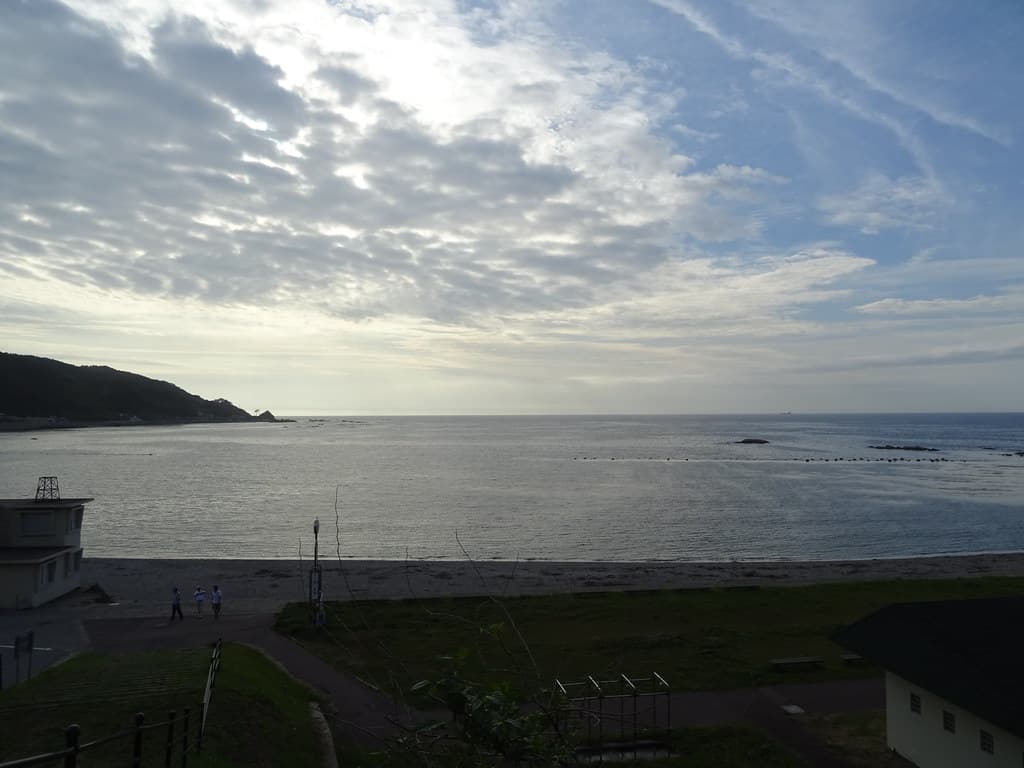
This is the beach that appears in Wajima's tourism brochures for good reason: it delivers consistency. The sand runs pale gold and fine, packed firm enough for walking but soft where the high-tide line marks yesterday's waterline. Behind you, the town maintains a proper infrastructure—changing rooms that smell of chlorine and sunscreen, outdoor showers with functional knobs, a parking lot that actually accommodates the August crowds. Families return annually, staking the same territory they claimed last summer, setting up rented umbrellas in familiar configurations. The water stays swimmable most of the season, the seafloor descending predictably without sudden drop-offs or unexpected currents. Lifeguards occupy their tower from mid-June through early September, scanning the water with the bored efficiency of professionals who rarely encounter emergencies. You'll see swimming lessons near the shore break, teenagers throwing a football in waist-deep water, and the occasional ambitious swimmer stroking toward the floating boundary markers. Beach volleyball nets appear on weekends, and vendors push carts across the sand selling kakigōri—shaved ice drenched in melon syrup that drips sticky-sweet down your wrist. But everyone times their visit around the exit. An hour before sunset, the beach population shifts, migrating toward the waterline, cameras raised. The western horizon offers an unobstructed view across the Sea of Japan, and on clear evenings the sun descends into the water like a coin dropping into a slot, turning the wet sand copper and silhouetting the distant fishing boats in black. It's theatrical, almost too perfect, yet somehow genuine—a daily performance that never quite feels routine.
Places, rentals, tours and events within walking and driving distance of Sodegahama Beach.
Photos
Sodegahama Beach is considered family-friendly, being Wajima's main beach with wide sandy areas suitable for children. During peak summer season, the beach typically has better supervision and more visitors, adding to safety. The gentle sandy slope makes it easier for children to play near the water's edge. However, always supervise children closely as wave conditions can change. Facilities are more developed here compared to remote Noto beaches, though always check daily weather and sea conditions before swimming.
Sodegahama Beach is renowned for spectacular sunsets over the Sea of Japan, best enjoyed during clear evenings from late spring through autumn. Summer months (June to September) provide longer daylight and warmer temperatures for comfortable sunset viewing. The beach faces west, offering unobstructed views as the sun descends into the ocean. Arrive at least 30 minutes before sunset to secure a good viewing spot and enjoy the changing light. Check sunset times locally, as they vary significantly between seasons.
Sodegahama Beach is located in Wajima town, making it more accessible than remote Noto beaches. From Wajima Station (or town centre), the beach is approximately 2-3 kilometres away. Local buses may serve the area, though schedules can be infrequent. Taxis are available for direct transport and are reasonably priced for this short distance. Renting a bicycle offers a pleasant way to reach the beach while exploring Wajima. Walking is possible but takes 30-40 minutes depending on your starting point.
Being Wajima's main beach, Sodegahama has better nearby amenities than remote coastal areas. Wajima town offers numerous restaurants specializing in fresh seafood, including the region's famous fish and crab dishes. Traditional ryokan, minshuku, and modern hotels provide various accommodation options to suit different budgets. The famous Wajima Morning Market is worth visiting for local food and crafts. Some beachside facilities may operate seasonally during summer, offering light refreshments and snacks for beachgoers.
Sodegahama Beach distinguishes itself as Wajima's primary beach destination, combining accessibility with natural beauty. Its wide sandy expanse is relatively rare along the rocky Noto coastline, making it popular for traditional beach activities. The beach is particularly famous for stunning sunset views over the Sea of Japan, attracting photographers and romantic visitors. Its proximity to Wajima's cultural attractions, including lacquerware workshops and morning markets, allows visitors to combine beach relaxation with cultural exploration. The good vibes and family-friendly atmosphere make it welcoming for diverse travellers.