Counting the waves…
Counting the waves…
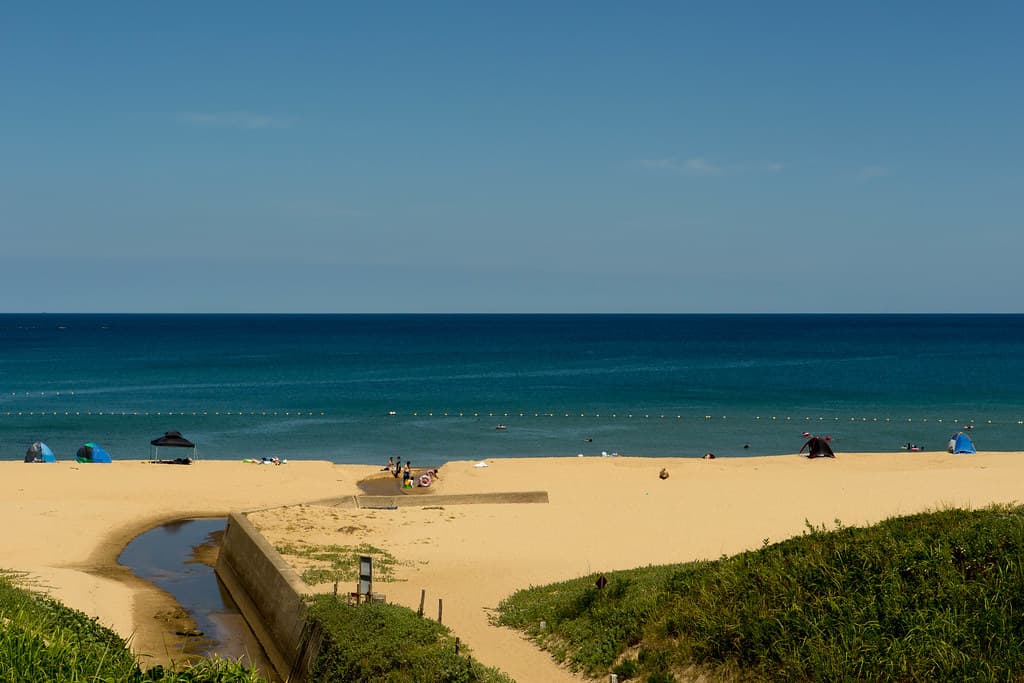
You understand Yuhigaura's purpose the moment you see its orientation: a smooth crescent of sand facing directly into the setting sun, with no offshore islands or coastal protrusions to interrupt the sightline. Geography conspires to create a natural amphitheater for evening light, and the beach has built its identity around this singular advantage. During the day, Yuhigaura functions as a standard swimming beach—pleasant enough, moderately busy, nothing exceptional. Then afternoon tilts toward evening and the atmosphere shifts. People emerge from nearby hotels and guesthouses, many carrying cameras, tripods, blankets. Couples claim spots along the waterline. The light begins its transformation around six-thirty in summer, earlier in autumn: honey-colored at first, then deepening to amber, finally igniting into those saturated oranges and reds that make phone screens glow in raised hands. The sunset itself lasts perhaps twenty minutes, but the ritual extends beyond that—the gradual gathering beforehand, the collective pause during the main event, the slow dispersal afterward as the sky fades through purple into dusk. Yuhigaura has monetized this rhythm with beachfront cafes and restaurants positioned for optimal viewing, their terraces filling as the sun drops lower. You can participate from the sand or from a table with a glass of local sake, but either way, you're part of a daily ceremony that acknowledges what the beach does best: frame the sun's exit in the most flattering possible terms.
Places, rentals, tours and events within walking and driving distance of Yuhigaura Beach.
Photos
Yuhigaura Beach is generally safe for swimming during the supervised summer season, typically from mid-July through mid-August when lifeguards are on duty. The beach features sandy, gradually deepening waters suitable for swimmers of various skill levels. However, the Sea of Japan can experience changing conditions, including occasional currents and waves, so always check local advisories before swimming. Outside the official season, swim at your own risk. The beach is well-maintained and monitored during peak periods, making it a reliable choice for family swimming.
Yuhigaura Beach is renowned for spectacular sunsets year-round, though timing varies by season. Summer months (June-August) offer later sunsets around 7:00-7:30 PM with warm weather, making them popular for sunset viewing. Spring and autumn provide beautiful sunset colors with comfortable temperatures and often clearer skies. Winter sunsets occur earlier (around 5:00 PM) but can be equally dramatic with unique atmospheric conditions. Check local sunset times before visiting. The beach's westward orientation ensures consistent sunset views, making it one of Japan's most romantic sunset destinations regardless of season.
From Kyoto Station, take the JR San-in Line to Yuhigaura-Kitsu Onsen Station (approximately 2.5-3 hours). The beach is about 5-10 minutes by taxi or local bus from the station. From Osaka, travel to Kyoto first, then follow the same route. Driving from Kyoto takes about 2.5 hours via Route 27 and local roads. The beach area is relatively well-connected compared to other Tango Peninsula locations due to its popularity. Rental cars provide flexibility for exploring nearby attractions and arriving in time for sunset viewing.
Yuhigaura Beach is located near Yuhigaura Onsen (hot spring resort area), offering numerous accommodation options including onsen ryokan, hotels, and guesthouses. Many feature ocean views perfect for sunset watching from your room. Restaurants in the area serve fresh local seafood, with kaiseki (multi-course) meals commonly available at ryokan. Beachside cafes and casual eateries operate during summer season. The combination of beach and onsen makes this a popular destination, so book accommodations well in advance, especially for sunset-view rooms during peak season and weekends.
Yuhigaura Beach has earned iconic status as one of Japan's premier sunset viewing locations due to its westward-facing position on the Sea of Japan coast. The unobstructed ocean horizon allows the sun to descend directly into the water, creating stunning reflections and dramatic color displays. The beach's name references this feature, with 'yuhi' meaning sunset. The romantic atmosphere attracts couples and photographers seeking memorable sunset experiences. The combination of sandy beach, ocean views, and reliable sunset visibility has made it a celebrated destination, often featured in travel publications highlighting Japan's most beautiful coastal sunsets.