Counting the waves…
Counting the waves…
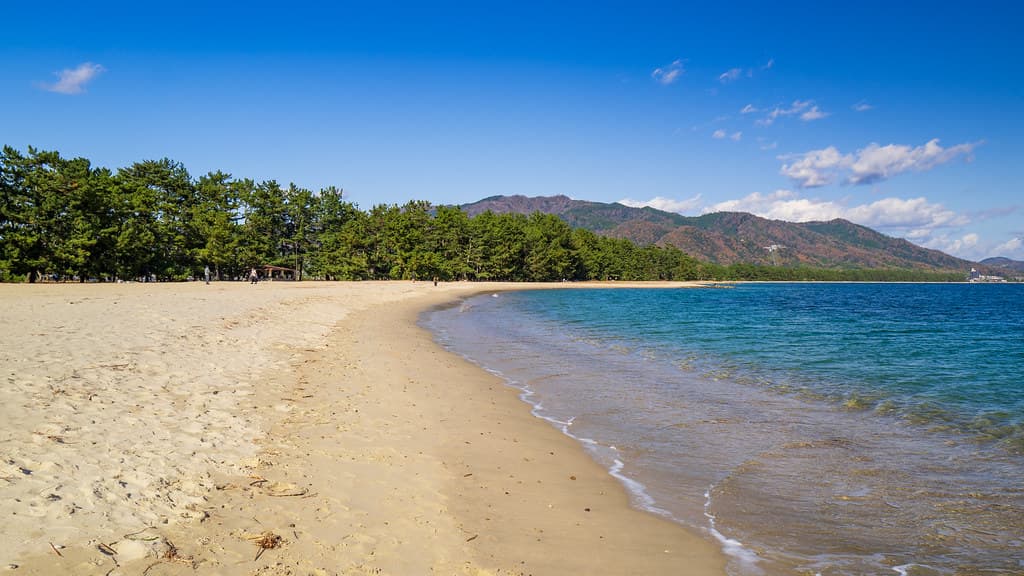
The beach reveals itself gradually: first a glimpse of pale sand through pine trunks, then the full curve of shore where Miyazu Bay bends eastward away from the celebrated sandbar. You step from needle-cushioned trail onto sand fine as pastry flour, still cool in the shade of pines whose roots grip exposed rock at the beach's edge. The water here is the same mineral blue-grey as the famous view across the bay, but without the crowds, you notice details—how small waves reorganize sand grains into miniature ridges, how pine pollen floats in golden rafts near shore. A weathered rowboat rests above the tide line, its paint faded to the color of driftwood. You spread a towel between the boat and a wind-sculpted pine, claiming this slice of shore as temporarily yours. The bay is shallow for dozens of meters, warm enough for a leisurely wade, the sandy bottom occasionally interrupted by smooth stones. Across the water, you can see Amanohashidate's famous pine-covered sandbelt—from here, just another landform, stripped of its symbolic weight. Afternoon brings a breeze that sets the pines murmuring and pushes small wavelets onto the beach in rhythmic succession. You walk the shoreline collecting mica-flecked stones and intact shells—moon snails, purple-edged scallops—that elsewhere would have been pocketed by children hours ago. A local cyclist pauses where the trail meets sand, nods acknowledgment of your shared discovery, then continues on. By the time you leave, your footprints are the only ones marring the smooth canvas the morning tide left behind.
Places, rentals, tours and events within walking and driving distance of Fuchu Hidden Beach.
Photos
As a hidden extension beach without official facilities or lifeguard services, swimming requires personal judgment and caution. The sandy bottom is generally more swimmer-friendly than rocky areas, but conditions vary with weather and tides. Without regular monitoring or safety equipment, you're responsible for assessing water conditions yourself. Check for currents, wave patterns, and water clarity before entering. Swim only if you're confident in your abilities and never alone. The beach's hidden status means fewer people around to assist in emergencies. Shallow water exploration is safer for families with children.
Plan visits during weekdays in shoulder seasons (May-June or September-October) when weather is pleasant but tourist numbers minimal. Summer provides warmest water temperatures but may attract more local visitors. Early morning hours offer the most peaceful atmosphere and softer lighting for beach enjoyment. Low tide exposes more sandy area for exploration and beach activities. Avoid Japan's rainy season (June-July) when conditions are less favorable. The beach's hidden nature means it's rarely crowded even during peak seasons, but weekdays guarantee maximum tranquility for relaxation and contemplation.
Fuchu Hidden Beach is located in the Miyazu area, most easily accessed by car or bicycle. From central Miyazu, navigate toward the Fuchu district following local roads along the coast. Public transportation options are limited for this specific hidden location, making private transport preferable. Parking may be informal or require walking from the nearest available spot. The beach's designation as a hidden extension suggests it may not be prominently signposted, so GPS coordinates or local directions are helpful. Consider exploring the area on foot or by bicycle to discover access points that cars might miss.
Like most hidden beaches, on-site facilities are minimal to nonexistent. Miyazu town provides the nearest concentration of hotels, guesthouses, and restaurants within a reasonable distance. The Fuchu area may have small local eateries, but options are limited compared to tourist centers. Bringing your own refreshments ensures comfort during your beach visit. Convenience stores and supermarkets in Miyazu allow you to stock up before heading out. For accommodation, consider staying in central Miyazu or near Amanohashidate, using the beach as a peaceful day-trip destination away from busier tourist areas.
As a hidden extension beach, Fuchu offers a more secluded alternative to mainstream coastal destinations in the region. Its sandy nature provides comfortable beach experiences while maintaining an undeveloped, authentic character. The location extends known beach areas into quieter territory, appealing to travelers seeking escape from typical tourist paths. Without commercial development, the beach preserves natural coastal environments and peaceful atmospheres. Local knowledge or exploration leads to discovery rather than prominent signage, creating a sense of personal finding. This beach rewards curious travelers who venture beyond standard guidebook recommendations.