Counting the wavesβ¦
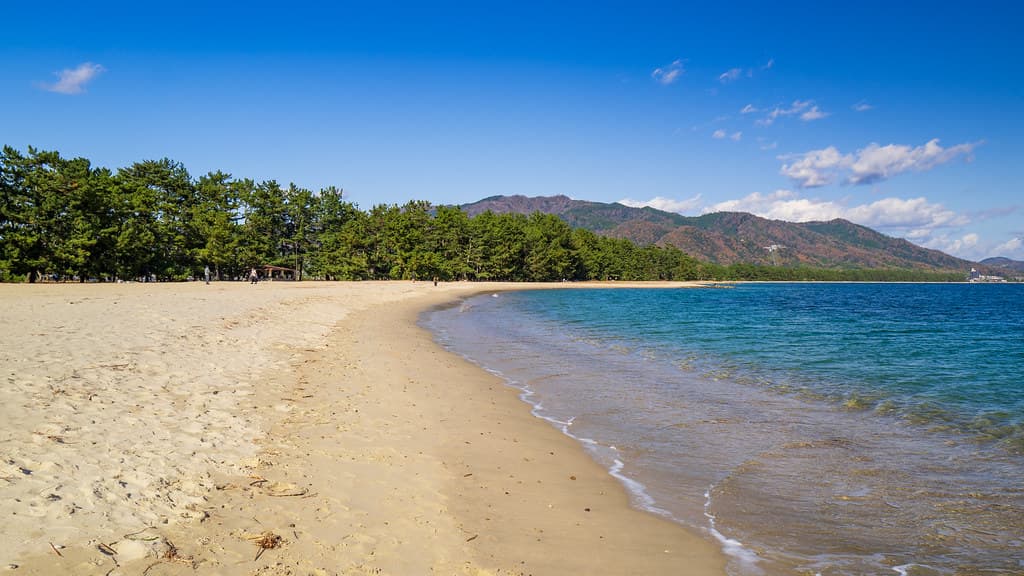
The approach descends through terraced plots of daikon and sweet potato before the pine canopy breaks, revealing a hundred-meter sweep of sand the color of buckwheat honey. No umbrellas dot this shore, no loudspeakers announce lost childrenβjust the occasional heron stalking the shallows where fresh water seeps from the hillside. Miyazu Bay curves around you in a wide embrace, its surface dimpled by breeze rather than boat wake. Across the water, the sandbar spine of Amanohashidate stretches north, its black pines rendered miniature by distance. You wade in; the bottom stays sandy for twenty paces, the temperature a few degrees warmer than the open Sea of Japan beyond the bay's protective arms. By late afternoon, apricot light climbs the slopes behind you while fishing boats chug toward Miyazu harbor, their engines the only mechanical sound. A wooden bench under the pines holds thermoses left by morning swimmers. The sand still carries warmth when you shake out your towel, and the bus back to Miyazu Station won't leave for another hour.
Places, rentals, tours and events within walking and driving distance of Iwataki Beach.
Photos
Iwataki Beach is generally calm due to its protected location within Miyazu Bay, making it relatively safe for swimming during summer months. However, as a less-crowded, hidden beach, it typically does not have lifeguard services or extensive safety facilities. Swimmers should exercise caution, check local weather conditions, and avoid swimming alone. The bay waters are usually gentler than open ocean, but always be mindful of currents and changing tides.
The best time to visit Iwataki Beach is during late spring through early autumn (May to September) when weather is warmest for beach activities. However, since it's known for fewer crowds, visiting during weekdays or shoulder seasons (May-June, September) offers the most peaceful experience. Summer (July-August) provides the warmest water temperatures. Avoid typhoon season (late August-September) when weather can be unpredictable along the Japanese coast.
From Kyoto or Osaka, take the JR San'in Line to Miyazu Station (approximately 2-3 hours). From Miyazu Station, you'll need local transportation such as a taxi, rental car, or local bus to reach Iwataki Beach, as it's a more secluded location. Driving offers the most flexibility for accessing hidden beaches in the area. The Kyoto Tango Railway also connects to the region, providing scenic coastal views during your journey.
Being a hidden, quieter beach, Iwataki Beach has limited facilities directly on-site. Accommodation and dining options are more readily available in central Miyazu town, a short distance away, where you'll find traditional ryokans, guesthouses, and local restaurants serving fresh seafood from the Sea of Japan. Some visitors stay near the famous Amanohashidate area, which offers more extensive lodging choices. It's advisable to bring snacks and drinks for your beach visit.
Iwataki Beach stands out for its scenic calm atmosphere and relative seclusion, offering visitors a peaceful alternative to busier tourist beaches. The protected bay setting provides tranquil waters ideal for relaxation, while the surrounding natural scenery showcases the beauty of the Kyoto coast without the crowds. It's perfect for travelers seeking an authentic, quiet coastal experience away from mainstream tourist spots, allowing for peaceful contemplation and nature appreciation in the Miyazu Bay area.