Counting the waves…
Counting the waves…
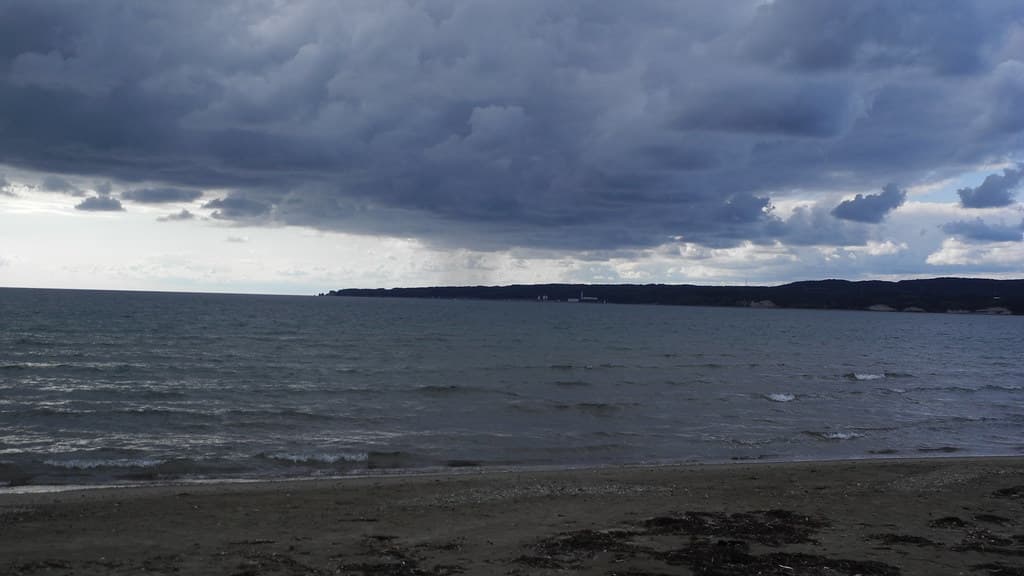
Three wooden taraibune—round washing-tub boats once used for harvesting abalone—lie overturned near the high-tide line. Their lacquer has weathered to the color of driftwood, and barnacles crust the bottom planks. Someone still uses them occasionally; fresh scuff marks in the sand suggest a recent launch. The cove itself barely qualifies as swimmable, maybe forty meters across at its widest point, hemmed in by tumbled granite boulders. The bamboo that frames the access path creates an acoustic dampening effect. Voices from the main road, barely two hundred meters uphill, don't penetrate. What you hear instead is the percussion of small waves hitting rocks at irregular intervals, and the dry rustle of bamboo leaves overhead. The sand is coarse, mixed with fragments of shell that crunch underfoot. A concrete tetrapod breakwater, installed decades ago and now overtaken by rust and lichen, juts from the southern point. Local teenagers have spray-painted their names on it in fading colors. At low tide, tide pools form in the granite depressions, holding populations of hermit crabs and the occasional stranded goby. The water remains shallow for fifteen meters out, never exceeding waist depth, making this more suitable for wading than swimming.
Places, rentals, tours and events within walking and driving distance of Sawata Hidden Cove.
Photos
Swimming at this hidden cove requires attention to weather and ocean conditions. The Sea of Japan can have variable currents and wave activity, particularly outside summer months. Lifeguards are not stationed at remote coves, so swimmers should be confident and cautious. Summer typically provides the calmest, safest conditions. Rocky terrain is common at Sado coves, requiring careful navigation. Always check forecasts before visiting and avoid swimming during rough weather or high winds. Inform others of your location when visiting isolated coastal spots.
The optimal visiting period is May through September, when temperatures are pleasant and seas generally calmer. July and August offer peak beach weather but may attract slightly more visitors. For true quietude, visit during weekday mornings or shoulder months (May-June, September). These times align with the cove's quiet character while ensuring comfortable conditions. Autumn and winter bring colder temperatures, rough seas, and challenging access. Early summer provides blooming coastal vegetation and comfortable temperatures ideal for exploring this hidden gem.
Access Sado Island via ferry from Niigata Port, approximately 2.5 hours journey time. Once on the island, rent a car as public transport to hidden coves is extremely limited. Sawata town is centrally located on Sado, serving as a good base for exploring nearby coastal areas. The specific hidden cove may require local knowledge or GPS coordinates to locate. Some coves involve short walks from parking areas along coastal paths. Consider asking at your accommodation or local tourist information for precise directions to this quiet spot.
Sawata town, one of Sado's larger settlements, offers better facilities than many island areas. Restaurants serving Japanese cuisine, seafood, and local specialties are available, along with convenience stores for supplies. Accommodation options include business hotels, guesthouses, and traditional Japanese inns. The town serves as a practical base for exploring southern Sado beaches. However, the hidden cove itself has no on-site facilities, so bring necessary provisions. Booking accommodation in advance during peak summer months is advisable to ensure availability.
This cove's proximity to Sawata town offers a balance between accessibility and quietude rarely found elsewhere. While hidden and peaceful, it's more reachable than extremely remote spots, making it ideal for those wanting tranquility without extensive adventure. The southern Sado coastline features distinctive rock formations and clear waters characteristic of the Sea of Japan. The cove provides an escape from busier beaches while remaining within reach of town amenities. This combination appeals to travelers seeking peaceful nature experiences with convenient access to services and accommodations.