Counting the wavesβ¦
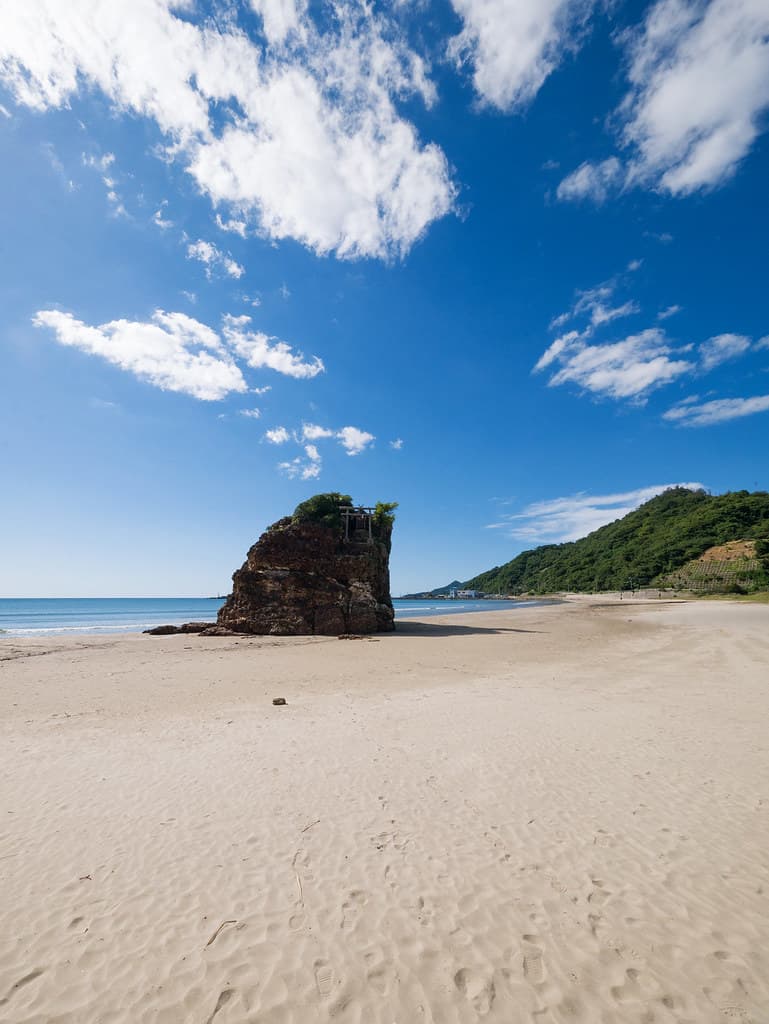
You arrive at the edge where land fractures into the Sea of Japan, columnar basalt formations creating geometric patterns that seem too precise for nature. The rocks here are dark, almost black when wet, arranged in platforms and pillars that waves have shaped over millennia. This isn't a beach for spreading towelsβit's a coastline for exploration, for watching how water behaves when it meets immovable stone. The lighthouse rises forty-three meters above the headland, its red horizontal stripes visible for nautical miles. Built in 1903, it remains active, though now it shares duty with GPS satellites. From the rocky shore, you can climb the 163 steps to the top for views that extend to the Oki Islands on clear days. But the real drama is down at sea level, where the coast reveals its violent geology. Sunset here is less about soft romance and more about raw powerβlight striking cliff faces, waves hitting rocks with percussive force, spray catching the last rays in momentary rainbows. The tide pools that form in the basalt depressions hold entire ecosystems: anemones that retract at shadows, small fish trapped until the next high tide, algae in shades of rust and olive. You'll leave with damp shoes and a renewed respect for coastlines that refuse to be gentle.
Places, rentals, tours and events within walking and driving distance of Hinomisaki Beach.
Photos
Hinomisaki Beach is primarily known for scenic beauty rather than swimming. The rocky coastline and strong currents make it challenging and potentially dangerous for swimming. There are no lifeguards or designated swimming areas. The beach's appeal lies in tide pool exploration, coastal walks, and photography rather than water activities. If you're seeking swimming, nearby sandy beaches offer safer conditions. Focus on enjoying the dramatic cliffs, rock formations, and the famous Hinomisaki Lighthouse during your visit to this spectacular location.
Visit Hinomisaki Beach during fair weather months (April-October) when clear skies showcase the dramatic coastal scenery. Summer offers the best weather but brings more visitors. Spring and autumn provide comfortable temperatures with fewer crowds, ideal for photography and exploration. Sunset visits are particularly rewarding, with golden light illuminating the cliffs and lighthouse. Winter can be harsh with strong winds, though dramatic wave action creates impressive scenes for experienced photographers. Check weather forecasts as conditions can change quickly along this exposed coastline.
Hinomisaki Beach is located at the western tip of the Shimane Peninsula, about 40 minutes by car from Izumo city center. Buses run from Izumo Taisha shrine and Izumo Station, taking approximately one hour. The lighthouse area has parking facilities. Public transportation is less frequent, so check schedules in advance or consider renting a car for flexibility. The beach and lighthouse are within walking distance of the bus stop and parking area, making the final approach easy.
The Hinomisaki area has several small restaurants and cafes serving fresh seafood, particularly near the lighthouse. Local specialties include fish caught from surrounding waters. Options are limited compared to urban areas, and some establishments close early or on certain weekdays. For accommodations, a few minshuku and small inns operate in the area. Most visitors stay in Izumo city or near Izumo Taisha shrine, both offering wider selections of hotels and restaurants within 30-40 minutes' drive.
Hinomisaki Beach stands out for its dramatic rocky coastline and proximity to Hinomisaki Lighthouse, one of Japan's tallest lighthouses offering panoramic ocean views. The rugged cliffs and geological formations create spectacular scenery unlike typical sandy beaches. Sunset views here rank among Shimane's finest, with the sun sinking into the Sea of Japan beyond jagged rocks. The combination of coastal wilderness, historical lighthouse, and nearby Hinomisaki Shrine creates a uniquely atmospheric destination focused on natural beauty rather than beach recreation.