Counting the waves…
Counting the waves…

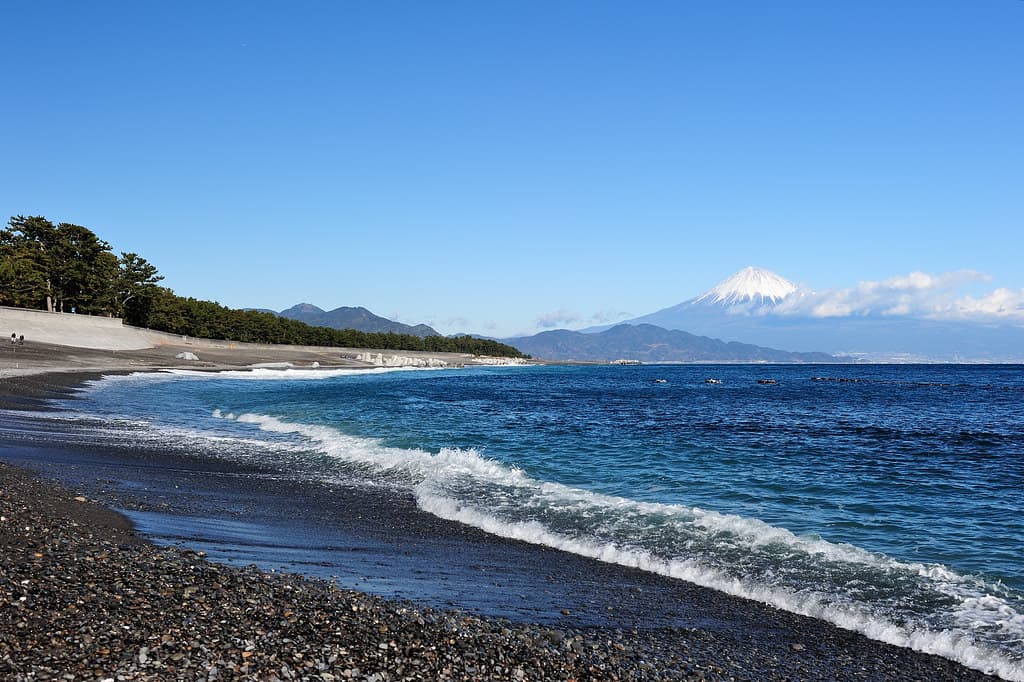
Miho no Matsubara Beach is more than just a strip of sand; it's a cultural touchstone, a landscape immortalized in countless ukiyo-e prints and ancient poems. The iconic pine grove, with its twisted branches and resilient needles, whispers tales of the Hagoromo legend, where a celestial maiden's feathered robe was said to have been hung. Walking beneath these ancient trees, the air is thick with the scent of pine and salt, a sensory prelude to the breathtaking vista that awaits. Emerging from the shade of the pines, the expansive pebble beach unfolds, leading your gaze across the Suruga Bay. And there, dominating the horizon, is the peerless silhouette of Mount Fuji. On a clear day, its snow-capped summit rises in stark, serene contrast against the blue sky or the fiery hues of sunset, a view that has captivated artists and pilgrims for centuries. The black volcanic pebbles underfoot add a dramatic texture to the scene, absorbing the sun's warmth and reflecting the light. This is a place for contemplation, for photography, and for simply absorbing one of Japan's most celebrated views. Whether you're capturing the perfect Instagram shot, sketching the timeless landscape, or simply sitting in quiet awe, Miho no Matsubara offers a profound connection to Japan's natural and spiritual heart. It's a pilgrimage for the eyes, a moment of pure, unadulterated beauty that resonates long after you've left its shores.
Places, rentals, tours and events within walking and driving distance of Miho no Matsubara Beach.
Photos
Miho no Matsubara Beach is primarily known as a scenic and cultural landmark rather than a dedicated swimming beach. The sandy shore along Suruga Bay allows for wading and water play, but swimming conditions vary and facilities may be limited. The area is more visited for its famous pine groves and Mount Fuji views than beach recreation. If swimming, exercise caution as currents and conditions can change. The beach's main appeal is its natural beauty and photography opportunities rather than water activities.
The best time to visit Miho no Matsubara Beach is during clear weather, particularly autumn through spring (October to April) when Mount Fuji is most visible. Winter mornings often provide the clearest Fuji views, though weather is cold. Spring offers pleasant temperatures and potential cherry blossoms. Summer can be hazy, obscuring mountain views, but provides warm weather for beach walks. Early morning visits increase chances of seeing Mount Fuji before clouds form. Sunset views are also spectacular. Plan visits around clear forecast days for optimal photography and scenery.
Miho no Matsubara Beach is located on the Miho Peninsula, about 30-40 minutes from Shizuoka Station. By bus, take the Shizutetsu Justline bus bound for Miho-Sanpo from Shizuoka Station; the journey takes approximately 40-50 minutes. By car, follow Route 150 south toward the Miho area; parking is available near the pine grove. The site is well-signposted as a major tourist attraction. Alternatively, visitors can combine the trip with stops at nearby Shimizu Port area, making it part of a broader Shizuoka coastal tour.
The immediate Miho no Matsubara area has limited dining options, though you'll find some cafes and shops near the main tourist facilities serving light meals and refreshments. Fresh seafood is available in the broader Shimizu area nearby. For accommodation, most visitors stay in central Shizuoka city or the Shimizu area, both offering hotels, business hotels, and guesthouses within 20-40 minutes. The proximity to Shizuoka city provides access to diverse dining and lodging while allowing easy day trips to the beach and pine grove.
Miho no Matsubara Beach is famous for its iconic pine grove stretching along the coastline with stunning views of Mount Fuji across Suruga Bay. The site is a designated UNESCO World Heritage component as part of the Fujisan cultural landscape and has inspired Japanese art and poetry for centuries. The combination of 30,000+ pine trees, sandy beach, and Fuji views creates extraordinarily photogenic scenery, making it highly Instagrammable. The scenic walking path through the pines and along the shore offers a unique blend of natural beauty and cultural significance found nowhere else.