Counting the waves…
Counting the waves…
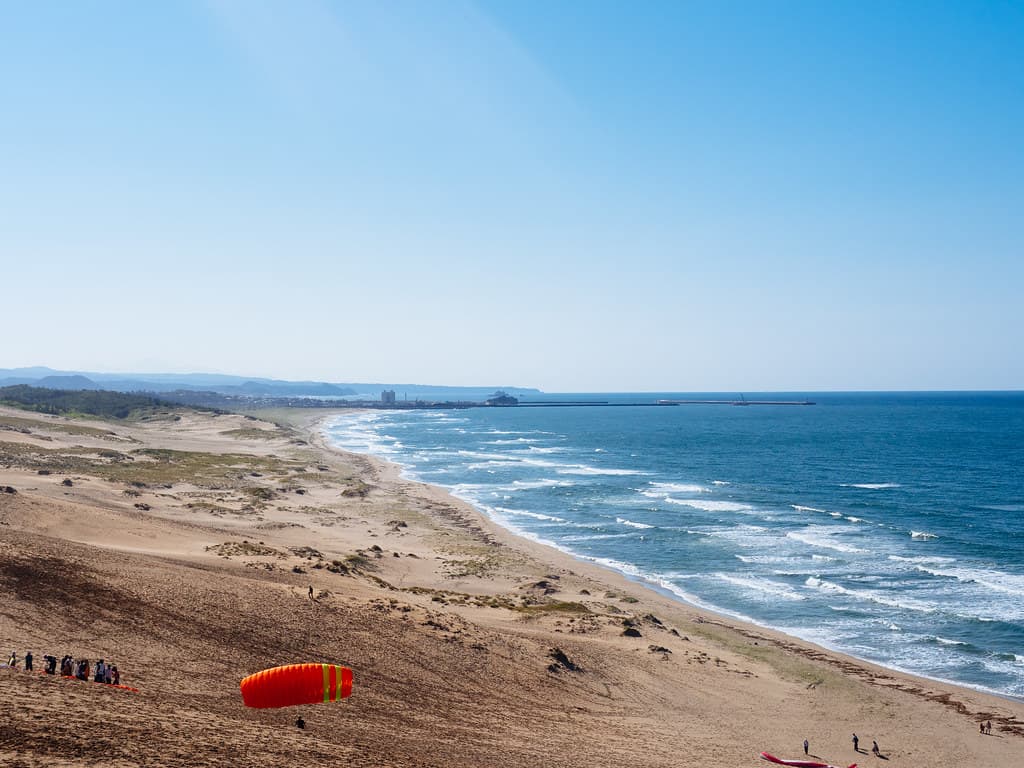
The torii gate stands on the beach itself, its pillars half-buried in sand that shifts with each storm. Beyond it, the gentle curve of coastline stretches north toward the dunes of Tottori proper. You're standing where the mythical White Rabbit of Inaba supposedly washed ashore after deceiving wani—sea monsters or crocodiles, depending on the translation—into forming a bridge across the strait. The shrine above the beach houses rabbit statues worn smooth by centuries of pilgrims' hands. The sand here is pale gray, a mixture of granite and volcanic minerals ground fine by wave action. It squeaks faintly when dry, compresses to dark dampness near the waterline. Families spread their territories while teenagers practice beach volleyball on permanent nets. The water entry is gentle enough for toddlers, though a sandbar twenty meters out creates a shallow trough where older children congregate. Lifeguards patrol in summer, their flags and whistles creating a rhythm of safety and supervision. West of the main beach, a walking path follows the coast toward the cape. You pass between the road and shoreline, watching the light change as afternoon progresses. The sunset here has made Hakuto famous among local photographers—the sun drops directly into the sea during equinox weeks, turning the water molten orange. Even on ordinary evenings, the light is generous, washing the shrine torii in amber. You understand why ancient storytellers set their tales here: the landscape itself feels mythological.
Places, rentals, tours and events within walking and driving distance of Hakuto Beach.
Photos
Hakuto Beach is generally safe for swimming during summer months when lifeguards are on duty. The beach has a gentle slope and calm waters typical of the Sea of Japan coast. However, conditions can change with weather and currents, so always check local flags and warnings. Swimming outside the designated season (typically late June to August) is at your own risk with no lifeguard supervision. Jellyfish may appear in late summer, so exercise caution during that period.
Hakuto Beach can be visited year-round and offers different experiences each season. Summer (July-August) is ideal for swimming with warm weather and full facilities. Spring and autumn provide pleasant temperatures for beach walks and sunset viewing without crowds. Winter visits offer dramatic coastal scenery and the chance to see the beach in a quieter, more contemplative state. The beach is particularly beautiful at sunset throughout the year, making golden hour an excellent time for photography regardless of season.
From Tottori Station, take the Loop Kirinshishi bus bound for Hakuto Beach; the journey takes approximately 20-25 minutes. Buses run regularly during tourist season but less frequently in winter, so check schedules in advance. By car, it's about a 15-minute drive north along Route 9. There's parking available near the beach, though it can fill up during peak summer weekends. Taxis are also available from the station, offering the most convenient but pricier option at around 3,000-4,000 yen.
Several dining options exist near Hakuto Beach, including casual beachside cafes and seafood restaurants serving fresh local catches. The White Rabbit Shrine area nearby has a few eateries. For accommodations, you'll find traditional ryokan inns and small hotels within a short distance, some offering ocean views. The larger selection of restaurants and hotels is in Tottori city, just 20 minutes away. During peak season, beachside facilities and temporary food stalls operate, but availability is limited in off-season months.
Hakuto Beach is famous in Japanese mythology as the setting for the "White Rabbit of Inaba" legend from the ancient Kojiki chronicles. According to the tale, a rabbit tricked crocodiles to cross from Oki Island, was punished by having its fur stripped, then healed by the deity Okuninushi. The nearby Hakuto Shrine commemorates this legend, and you'll find rabbit statues and imagery throughout the area. This mythological connection makes the beach culturally significant beyond its natural beauty, attracting visitors interested in Japanese folklore and history.