Counting the wavesβ¦
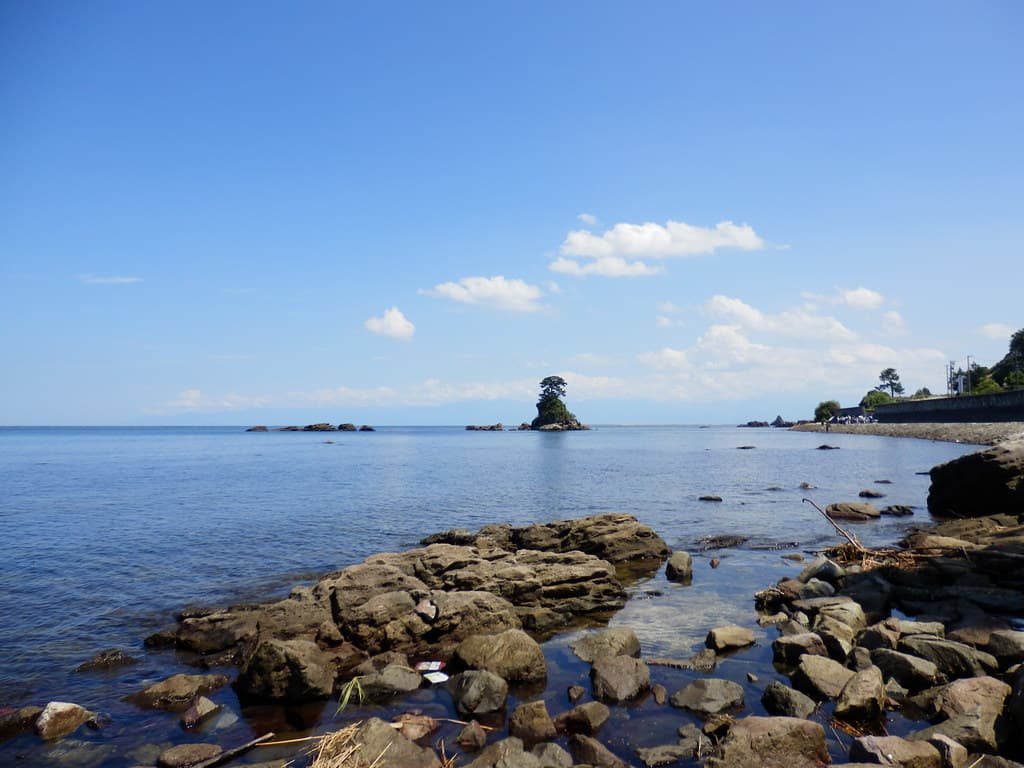
The beach sits low-profile between the coastal road and the waterline, unmarked except by the cars that pull onto the gravel shoulder around dusk. Pebbles run in shades of slate and rust, worn smooth by the Sea of Japan's winters, crunching and shifting as you find your footing. The shore faces west across water that stretches unbroken to the horizon, the bay opening to deeper ocean beyond the visible edge. You'll see fishermen checking lines in the shallows, their movements unhurried, and the occasional dog walker letting their animal investigate tide pools between the rocks. The Noto Peninsula rises to the north, its forested hills descending to meet the sea in dark green slopes. Behind the beach Himi's neighborhoods climb gentle rises, houses and shops arranged in the comfortable disorder of a working port town rather than a resort. Evening is when this beach earns its keep. The sun tracks toward the waterline, light flattening and warming until the whole western sky ignites in tangerine and magenta. Locals arrive with the regularity of ritual, spreading towels over pebbles or sitting directly on the stones, talking quietly or not talking at all. The colors deepen, the water turns molten, and then it's overβthe show complete, the pebbles cooling rapidly in the dusk.
Places, rentals, tours and events within walking and driving distance of Wakakusa Edge Beach.
Photos
Swimming at Wakakusa Edge Beach is possible, though conditions vary with weather and season. The pebble beach typically has no lifeguard services due to its low-profile nature, so swimmers must be self-reliant and cautious. Check local weather and sea conditions before entering the water. The beach is particularly popular for evening relaxation rather than active swimming. Calmer conditions generally occur during summer months, but currents in Toyama Bay can be unpredictable. Always inform someone of your plans and avoid swimming alone at remote locations.
Wakakusa Edge Beach is especially ideal for evening visits, as it's known for sunset viewing. Late afternoon to early evening offers the best lighting and atmosphere for relaxation. The beach is suitable for visits anytime throughout the day or year, given its 'Anytime' designation, but sunset hours provide the most memorable experience. Summer evenings are particularly pleasant with warm temperatures and extended daylight. Weekday evenings tend to be quieter than weekends, though this beach generally maintains a peaceful, uncrowded character regardless of when you visit.
Wakakusa Edge Beach is located in the Himi coastal area of Toyama Prefecture. Driving is the most convenient access method, as this low-profile beach isn't served by direct public transportation. From Himi City center, navigate toward the Wakakusa area along the coast. Parking may be informal or limited given the beach's hidden nature. If traveling by train, take the JR Himi Line to Himi Station, then arrange taxi service or rent a car to reach this specific coastal section, which is situated away from main tourist routes.
Wakakusa Edge Beach itself lacks immediate facilities, so visitors should base themselves in Himi City for dining and lodging. Himi offers a range of accommodations from traditional ryokans to modern hotels, plus numerous restaurants specializing in fresh local seafood, especially the area's famous Himi udon and yellowtail. For your beach visit, consider bringing a picnic or refreshments, as there are unlikely to be food vendors at this quiet location. The nearest convenience stores and facilities are typically found in more central parts of Himi.
Wakakusa Edge Beach stands out for its low-profile character and reputation as an ideal evening relaxation spot. Unlike busier beaches, it offers a tranquil atmosphere perfect for unwinding and watching sunsets over Toyama Bay. The beach's pebble surface and lack of commercial development create an authentic, unspoiled coastal environment. Its positioning along the Himi coast provides excellent westward views for sunset photography and contemplation. The 'edge' location suggests a sense of discovery, appealing to travelers seeking peaceful alternatives to mainstream tourist destinations.