Counting the waves…
Counting the waves…
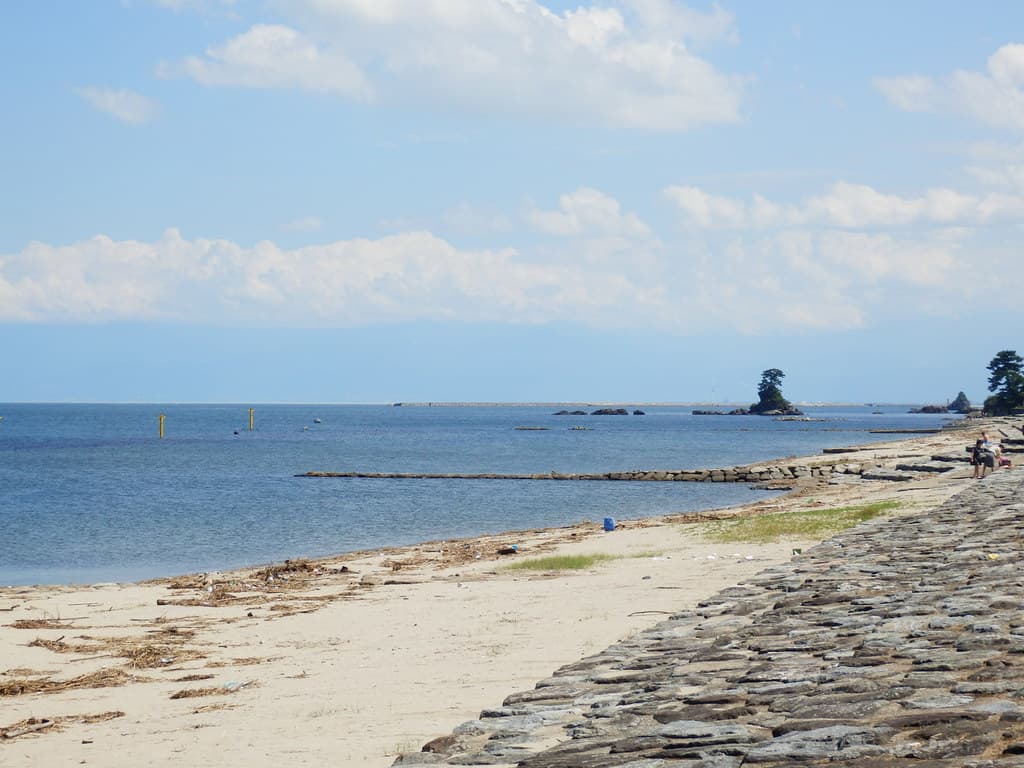
The sand here is coarse and gray, mixed with shell fragments and the occasional rope end that's escaped from the docks. You walk parallel to the harbor jetty where freight ships sit low in the water, their rust-streaked hulls bearing port stamps from Busan, Vladivostok, Shanghai. The industrial infrastructure—cranes, warehouses, container stacks—dominates the view to the north, while the beach itself curves south toward open bay. The contrast feels deliberate, as if the beach exists to remind port workers that nature persists despite the machinery. You watch the harbor's choreography from your position on the sand: trucks backing up to warehouse doors, cranes lifting containers with surprising grace, workers in hard hats moving with the efficiency of long practice. The beach serves as spectator seating for this industrial ballet, offering perspective on the infrastructure that connects Toyama to global shipping routes. Sunset transforms the scene, backlighting the cranes into skeletal sculptures and turning the container stacks into geometric shadow blocks. A few locals use the beach for evening exercise, jogging the firm sand near the waterline. Others sit on the seawall, thermoses open, watching the ships. The atmosphere is contemplative rather than recreational, everyone here understanding that this beach serves as a public threshold to observe the city's working waterfront rather than escape it. The harbor lights begin clicking on as dusk deepens, reflected in the still water between you and the anchored vessels.
Places, rentals, tours and events within walking and driving distance of Imizu Port Beach.
Photos
Imizu Port Beach is primarily an urban waterfront area rather than a designated swimming beach. Its harbor-edge location means boat traffic, industrial activity, and water quality considerations make swimming generally inadvisable. This beach is better suited for strolling, photography, and enjoying coastal atmosphere rather than water activities. If you're seeking swimming opportunities, consider other beaches along the Imizu coastline. Always observe posted signs and local regulations. The beach's appeal lies in its unique industrial-coastal scenery rather than recreational swimming.
Imizu Port Beach experiences fewer crowds year-round compared to traditional resort beaches, given its urban and industrial character. For the quietest experience, visit on weekday mornings or late afternoons. The beach offers good sunset viewing opportunities, which may attract some photographers during golden hour. Winter months see minimal visitors, ideal for solitary coastal walks, though temperatures will be cold. The 'Less Crowds' designation reflects its overall uncrowded nature, making it accessible for peaceful visits most times throughout the year.
Imizu Port Beach is accessible from Shin-Minato Station on the Ainokaze Toyama Railway line, which connects to Toyama Station in approximately 20-25 minutes. From Shin-Minato Station, the port area is reachable by local bus, taxi, or a 15-20 minute walk depending on the specific location. The port area is spread out, so confirm your exact destination. A rental car offers greater flexibility for exploring the harbor district. Check current bus schedules as frequency may vary, particularly on weekends and holidays.
The port area around Imizu Port Beach has local eateries serving seafood and Japanese cuisine, often frequented by port workers and residents. Shin-Minato is known for fresh seafood markets and casual dining options. Accommodation directly at the port is limited; most visitors stay in nearby Imizu city or Toyama City, which offer broader hotel selections from business hotels to traditional ryokan. The port area itself has convenience stores for basic supplies. For extensive dining and lodging choices, Toyama City is recommended.
Imizu Port Beach uniquely blends industrial harbor scenery with coastal views, creating an urban waterfront atmosphere distinct from traditional beach resorts. The juxtaposition of working port infrastructure, fishing vessels, and Toyama Bay vistas appeals to photographers and travelers interested in authentic working coastal communities. This beach offers cultural insight into Japan's maritime industry rather than typical beach recreation. The industrial-meets-nature aesthetic provides a grittier, more atmospheric experience compared to family-oriented beaches, attracting those seeking unconventional coastal exploration.